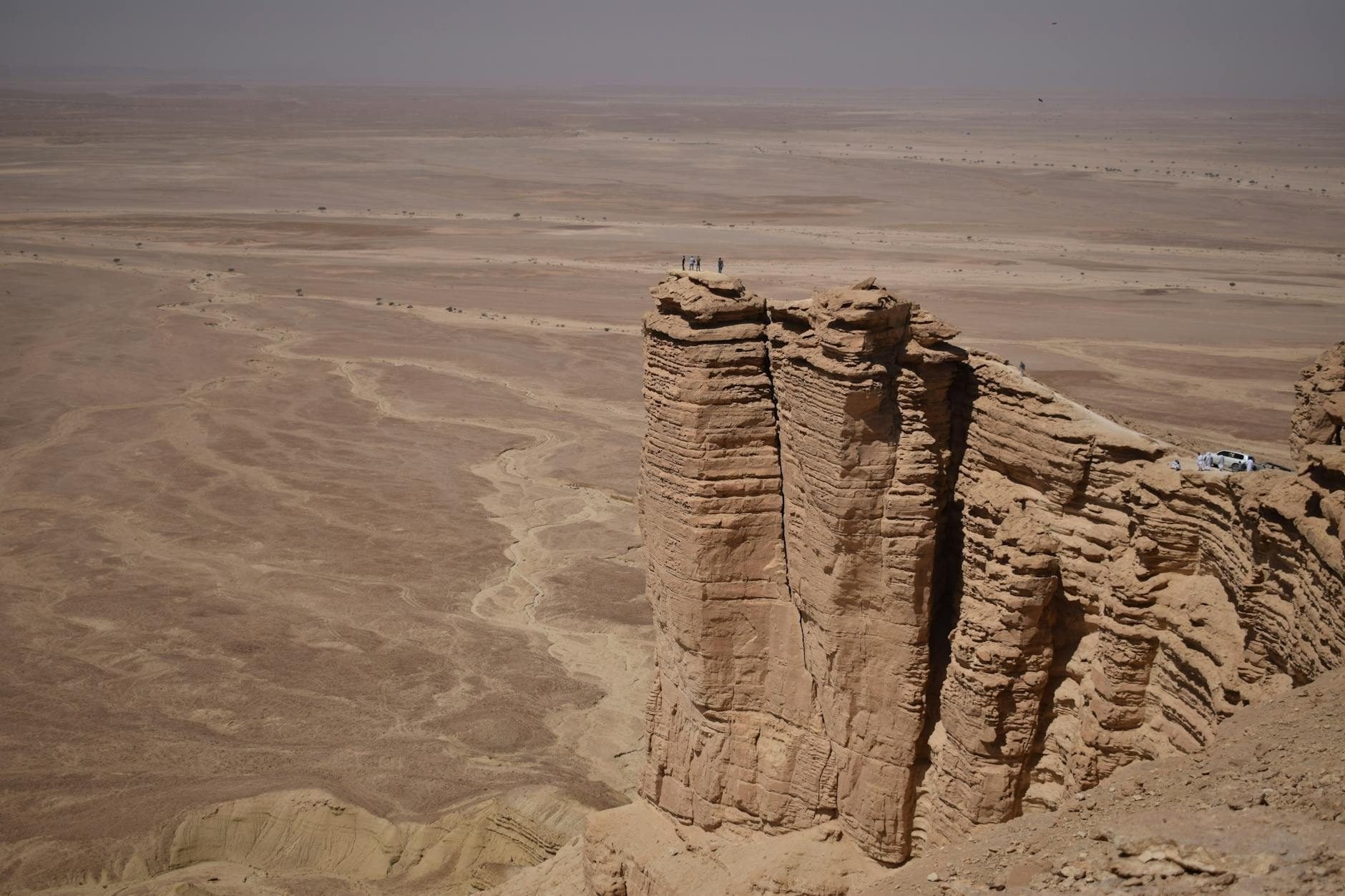
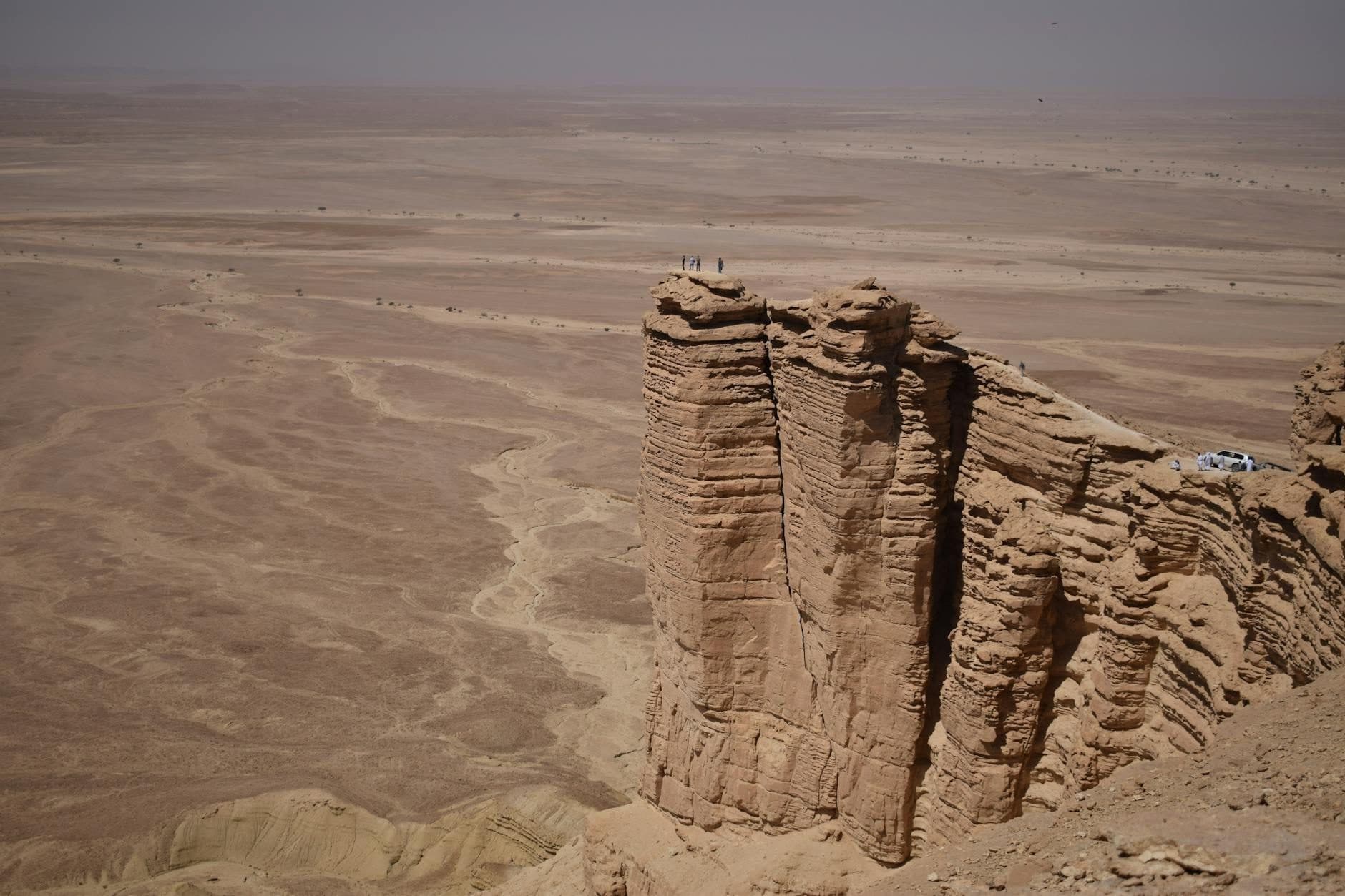
The short answer in Riyadh is four things: the National Museum, the clay fort at Al Masmak, the World Heritage district at Diriyah, and the Tuwaiq escarpment 100 km out of town. Everything else is an addition to those.
The city is spread out and built for driving, so group things by where they are rather than by what they are. The full picture of the capital sits on the Riyadh destination page.
| What | Where |
|---|---|
| National Museum | Al Murabba, central |
| Al Masmak and the old souq | Old centre |
| At-Turaif and Bujairi | Diriyah, 20 minutes out |
| Wadi Hanifa | Below Diriyah |
| Edge of the World | 100 km north-west, four-wheel drive |
Start at the National Museum
The National Museum of Saudi Arabia is the country's principal museum, and the right first stop on any trip, because the sites you see afterwards make more sense for having been here. Its halls run in sequence - geology, pre-Islamic Arabia, the life of the Prophet, the successive Saudi states, unification - so you can walk the whole span without doubling back. It opened in 1419 AH and holds some 3,700 objects, among them statues, scripts and sculptures, with interactive and multimedia displays through the galleries and gardens outside for a break in the middle.
There is no ticket, and lockers at the entrance take large bags, since some halls restrict oversized belongings. The National Museum and Murabba pairs it with the surrounding neighbourhood, and The National Museum: what to expect and how to visit covers the practicalities.
See where the state began at Al Masmak
Al Masmak is a mud-and-clay fort in the middle of the old city, built in the 14th century of the hijri calendar under Imam Abdullah bin Faisal as a residence and a centre of power. It is small and defensive by design: high solid walls, only two entrances, narrow openings for gun barrels, and towers at the four corners of the courtyard. Inside are the gate, a mosque, the majlis, a well and the former residential quarters, now display halls.
The building is the exhibit. Its gate still carries the crack made by Prince Fahad bin Jiluwi's spear during the 1902 battle for the city, thrown at Ajlan bin Rashid and missing. Masmak Fort and the old souq puts it together with the market quarter around it, and there is more detail in Masmak Fort: what to expect and how to visit.
Walk At-Turaif at Diriyah
At-Turaif was the seat of the Emirate of Diriyah, the first Saudi state, from 1727 to 1818, and has been on the World Heritage List since 2010. What survives is mud-brick Najdi architecture at a scale found nowhere else: thick walls, stepped parapets and triangular openings cut high for light and air. It has been restored and opened as a museum quarter, so the visit is a walk through streets rather than a look over a fence.
Next to it, the Diriyah Museum occupies an 18th-century palace and runs through the history of the region, the story of the House of Saud and the tribe that lived here before Diriyah was settled in 1446. The Al-Bujairi heritage park alongside is palm-shaded open ground with green space and water. The restored district has a restaurant and cafe area of its own alongside it, which is why Diriyah works as an evening as much as a history stop. At-Turaif: what to expect and how to visit covers the ground in detail.
Follow Wadi Hanifa
Wadi Hanifa is the reason Riyadh grew where it did, because it carried the water, and through the 20th century it became the city's dumping ground before a rehabilitation programme cleared it and rebuilt the streambed as a working wetland. It now runs 120 kilometres through the capital as the city's largest natural park, with shaded trails, landscaped gardens, picnic and barbecue areas and restaurants along the edges. You can sit by the water at the Stone Dam or walk the greenery at Al Ulayb Park. No reservation is needed and there is no ticket.
It passes directly below Diriyah, so the historic district and the valley go together, as on Wadi Hanifah and Bujairi.
Get out to the escarpment
The Tuwaiq range runs some 800 km across central Arabia, and at a point about 100 km north-west of the city the wall breaks off in the 1,131-metre cliff known as the Edge of the World. Below it the plain runs flat to the horizon with nothing on it. Samar trees and acacias grow in the valley, ghada and other plants hold the high dunes, and marine fossils turn up in the rock because this was seabed long before it was desert.
There is no ticket and no infrastructure of any kind out there - no water, no food, no fuel, and mobile coverage that drops - and the last stretch is rough track requiring a four-wheel drive. Wear shoes you can climb in. the Edge of the World day trip takes the whole day with a driver and vehicle sorted.
Fitting it together
Riyadh in one day compresses the museum, the fort and Diriyah for a short stopover. With longer, Riyadh & Al Ahsa adds the oasis to the east. For orientation before you arrive, read Riyadh: a first-timer's guide, and for the seasons, when to visit Riyadh through the year.