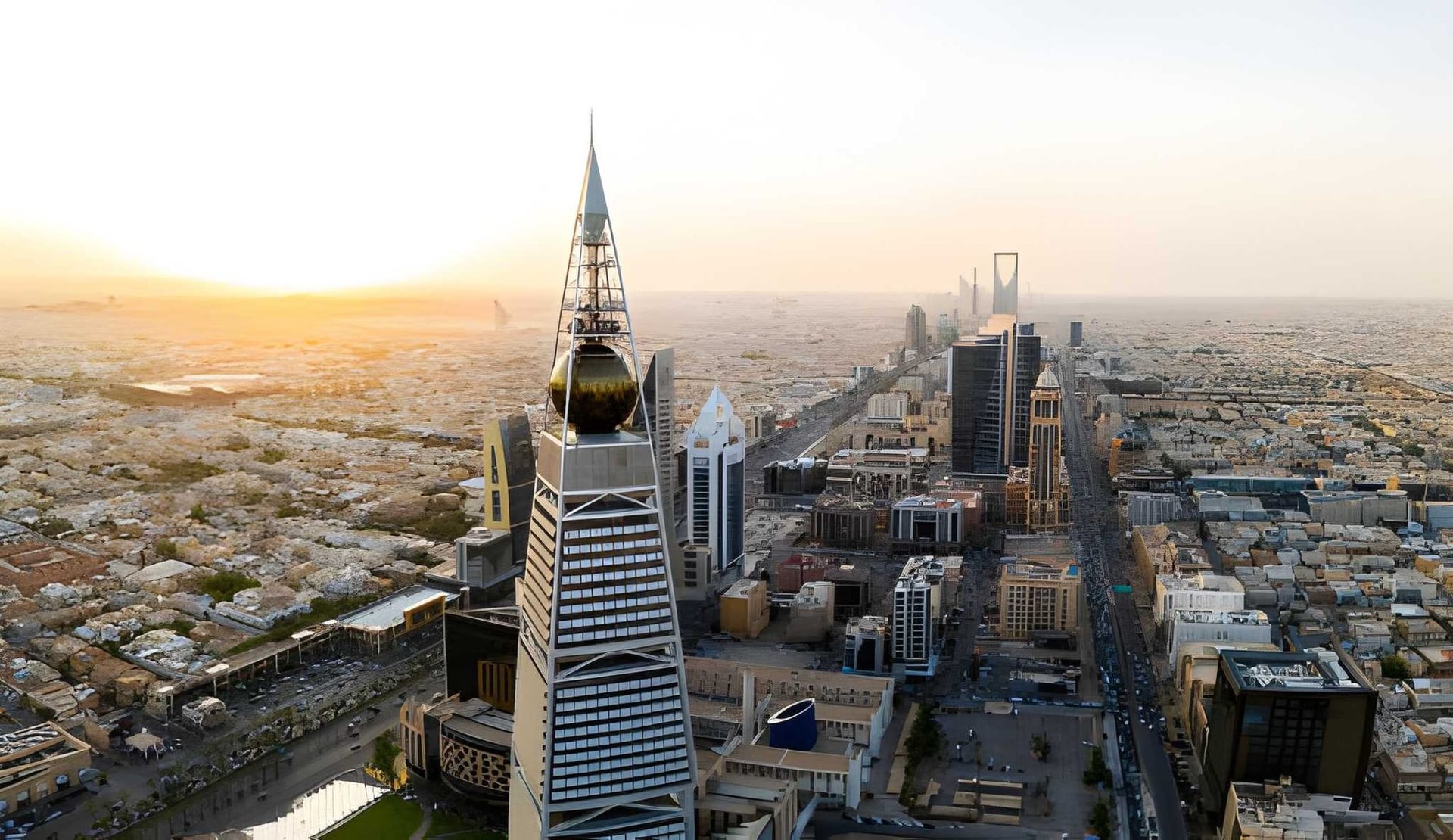
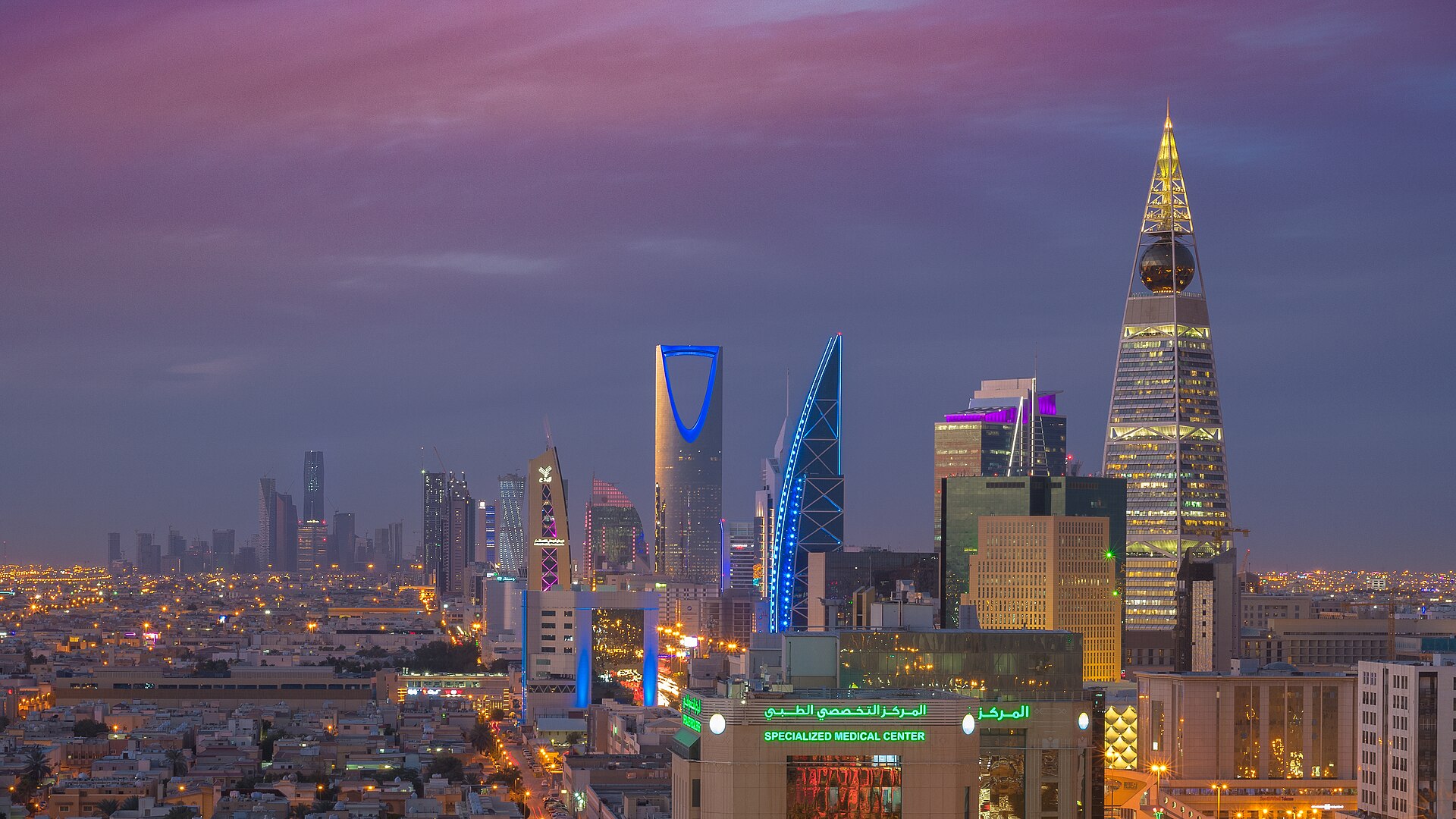
This is the trip for understanding where the modern country came from and how it was fed. Riyadh holds the founding sites and they are close together, with At-Turaif at Diriyah, the mud-brick capital of the first Saudi state, just outside the city.
The second half moves east to the Al Ahsa oasis, the largest oasis in the world by palm count and a UNESCO World Heritage cultural landscape. Around 2.5 million palms are watered from natural springs in the middle of desert, and it has been farmed continuously since the Neolithic, so it is a working oasis rather than a preserved one.
The days are unhurried, and both the caverns at Al Qarah and the museum halls in Riyadh are listed as suited to families. It suits families and anyone who wants the history laid out in the order it happened.
Day by day
Arrive Riyadh
You are met at the airport and driven to your hotel. Riyadh is the country's main air hub, so it is usually the arrival point whether or not it is the reason for the trip.
The rest of the day is yours. Distances inside the city are large and it is built for driving, so your vehicle and driver stay with you if you want to go out in the evening.
The National Museum and Al Masmak
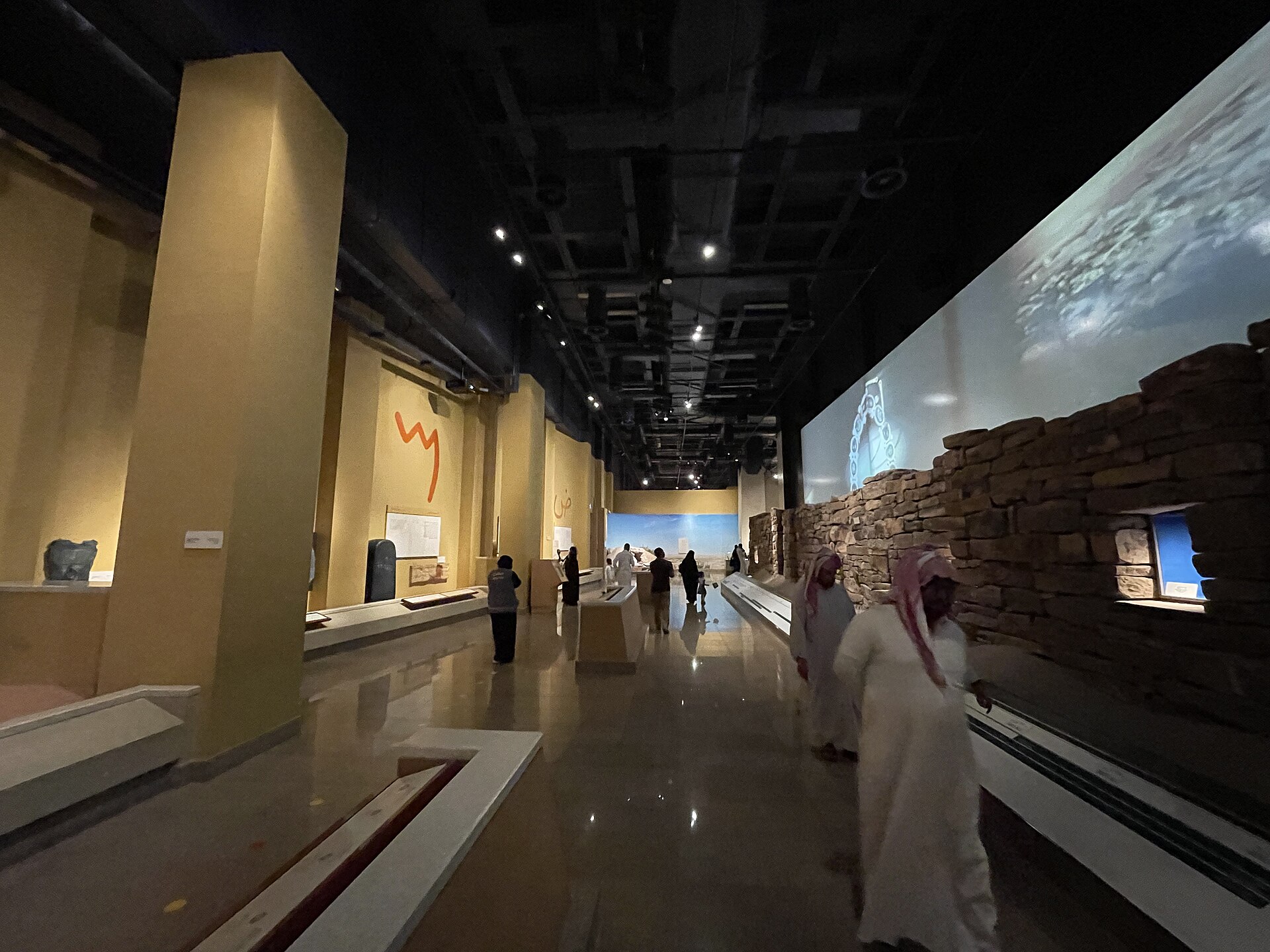
You start at the National Museum of Saudi Arabia, in the Al Murabba neighbourhood. It is arranged as a sequence of halls that run in order, so you can walk the whole span in one visit without doubling back: geology, pre-Islamic Arabia, the life of the Prophet, the successive Saudi states and the unification. It opened in 1419H and holds around 3,700 objects, from statues to inscriptions and sculpture. Large bags go into lockers at the entrance, as some halls restrict oversized belongings.
Doing this first is deliberate. The sites later in the week are far easier to read once you have the sequence.
In the afternoon it is a short drive into the old quarter to Al Masmak, the mud-and-clay fort where the capture of the city in 1902 began the state that exists today. It was built in the 14th century of the hijri calendar under Imam Abdullah bin Faisal as a residence and a seat of government: four corner towers, thick clay walls, a single studded door, and a spearhead still lodged in that door from the 1902 battle. It is small, and that is the point — this was a garrison building, not an ornamental palace.
Diriyah and Wadi Hanifa
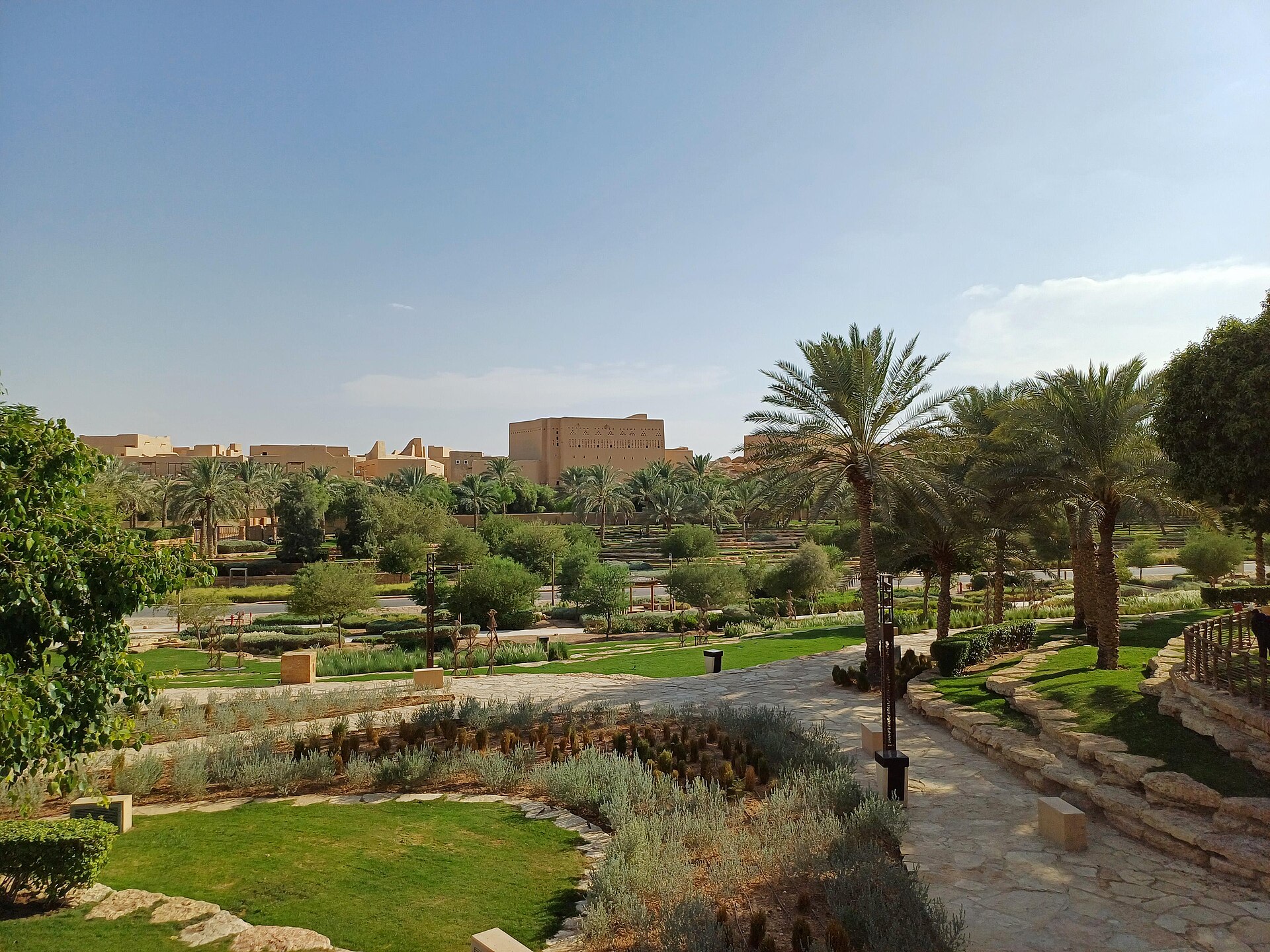
About 20 minutes from the centre, At-Turaif is the mud-brick district at Diriyah that served as the capital of the first Saudi state and has been a UNESCO World Heritage Site since 2010. The Emirate of Diriyah ran from 1727 to 1818 and this was its seat: palaces, a mosque and defensive walls in the Najdi style, all mud brick, on the edge of the valley. It is the most complete surviving Najdi architecture at this scale — thick walls, triangular openings cut high for light and air, stepped parapets — and because the district has been restored and opened as a museum quarter you walk through the streets rather than around a fence.
Wadi Hanifa runs directly below. The valley carried the water that made Riyadh grow where it did, was used through the 20th century as the city's dumping ground, and has since been cleared and rebuilt as a working wetland with a treatment system in the streambed. It now runs 120 kilometres through the capital as a green corridor of shaded paths, gardens and picnic areas, with no reservation needed. You finish there in the late afternoon and eat in the Diriyah restaurant quarter afterwards.
East to Al Ahsa, and Qasr Ibrahim
You travel east to Al Ahsa, which is reachable by road or by rail from the Gulf coast, and check in for two nights.
The afternoon is at Qasr Ibrahim in Al-Kut, Hofuf, a fortified palace also known as Qasr Al-Qubba spanning over 18,000 square metres. It was built during the Al-Jabri dynasty, between 1436 and 1534 CE, when Hofuf was a centre of trade and governance. It mixes military and religious building in one compound: thick stone walls, watchtowers and soldiers' barracks alongside domes, arches and a prayer hall with a mihrab, with horse stables and inner courtyards behind them.
If there is time you also stop at Masjid Al-Jalaniah, a mudbrick mosque dating to the 12th century AD, standing among palm groves and fed by nearby springs.
The oasis and the caverns of Al Qarah
A full day in the oasis. Al Ahsa spans more than 85 square kilometres and was inscribed on the UNESCO World Heritage List in 2018 for the landscape as a whole system — gardens, canals, springs, wells and drainage works, together with the forts, mosques and archaeological sites inside them. It is recognised as the largest palm oasis in the world, with more than 2.5 million palms, and its dates have been a livelihood here for generations.
In the afternoon you go up to Al Qarah Mountain, a limestone hill inside the oasis that runs about 1.5 kilometres and is cut through by 28 narrow, high-sided caverns. Al Nashab is the most widely known of them. The rock draws heat out of the air, so the passages hold a steady temperature while the oasis outside is well past 40 degrees — which is why they were used as shelter in the first place. The caves are walkable and floodlit in sections, and you enter from the visitor centre at the base.
Depart
Depending on your flight, there is time for a last stop before you transfer to Dammam, which has an international airport and is connected to Al Ahsa by rail. Onward travel back to Riyadh can be arranged instead if you prefer to fly from there.
What is included
- Private air-conditioned vehicle with driver throughout
- Licensed English-speaking guide in Riyadh, Diriyah and Al Ahsa
- Five nights' hotel accommodation, three in Riyadh and two in Al Ahsa
- Daily breakfast
- All entrance fees for the sites named in the itinerary
- Airport transfers and the transfer between Riyadh and Al Ahsa
- Bottled water in the vehicle
- A contact number for the duration of the trip
What is not
- International and domestic flights
- Saudi entry visa, which you apply for yourself through the official portal
- Travel insurance
- Lunches and dinners
- Personal spending and gratuities
The places on this trip
Send us your dates
We come back with the itinerary written out and one clear cost.