Why Asir looks nothing like the rest of the country
The Asir escarpment catches monsoon cloud. The ground is green, terraced and farmed, with juniper forest instead of desert, and the mountains behind it are the Sarawat range. Al Soudah, the highest peak in Saudi Arabia, is within reach of the town. That climate is the entire reason Saudis themselves travel here in summer, and it is why the region reads as a different country from the rest of the map.
Practically, this means Abha is not a stop you slot in for the same reasons as anywhere else. Elsewhere you plan around heat; here you plan around cloud, altitude and mountain roads.
When to go
Summer is the high season, which is the reverse of everywhere else in Saudi Arabia. Outside it the town is quieter and still cool, because the altitude does not go away. The seasonal detail is in the best time of year to visit Abha.
It helps to compare Abha with the other western mountain town, Taif, because travellers often weigh the two against each other.
| Abha | Taif | |
|---|---|---|
| Where | Asir highlands in the south-west, in the Sarawat range | Sarawat range, east of Makkah |
| Known for | The escarpment, juniper forest, terraced farmland, Al Soudah | Rose farms, the Al Hada mountain road and its cable car |
| The air | Cool enough that summer is the high season | Mild when the lowland is at its worst |
| Getting in | Its own airport, or the long road up from Jeddah | Reached from Jeddah; roughly 90 minutes from Makkah |
Getting there
Abha has its own airport, which is the shortest way in from Riyadh or the coast and the reason Riyadh and Abha works as a two-centre trip. The alternative is to drive, and the climb from the coast is described in driving from Abha to Jeddah. Once you are there, distances are short but the roads are mountain roads; getting to and around Abha covers what that means in practice.
What sits around the town
The attractions are outward-facing rather than in the centre. Cable cars run down the escarpment, Asir National Park has marked trails, and Al Habala Park stands at high altitude on the cliff edge, named for the rope ladders once used to reach the village below it. The park has its own cable car and is listed by the tourism authority as suited to families. The official material for the region also points visitors at the local markets, historic landmarks and traditional villages around Abha and Khamis Mushait.
Rijal Almaa
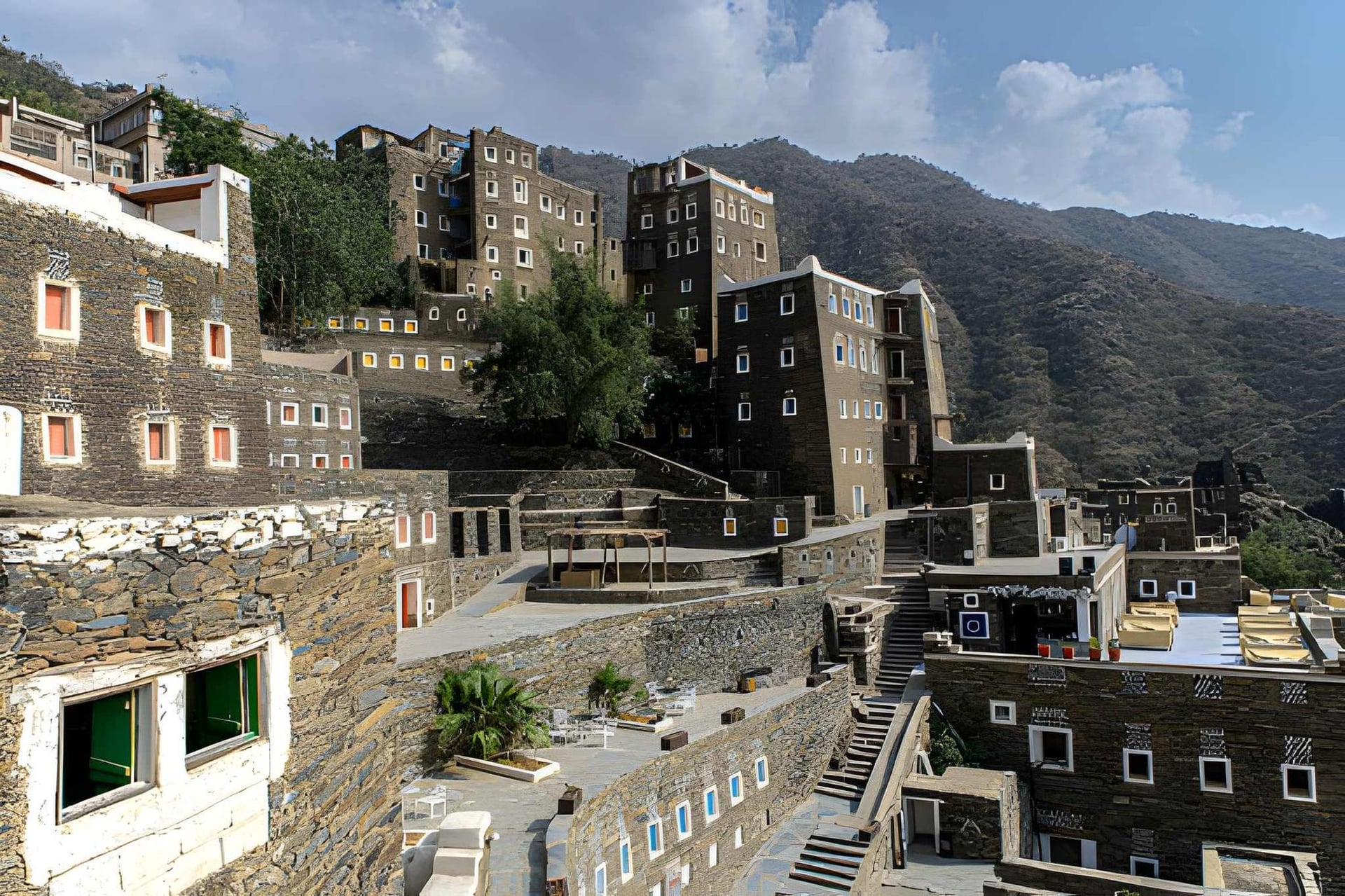
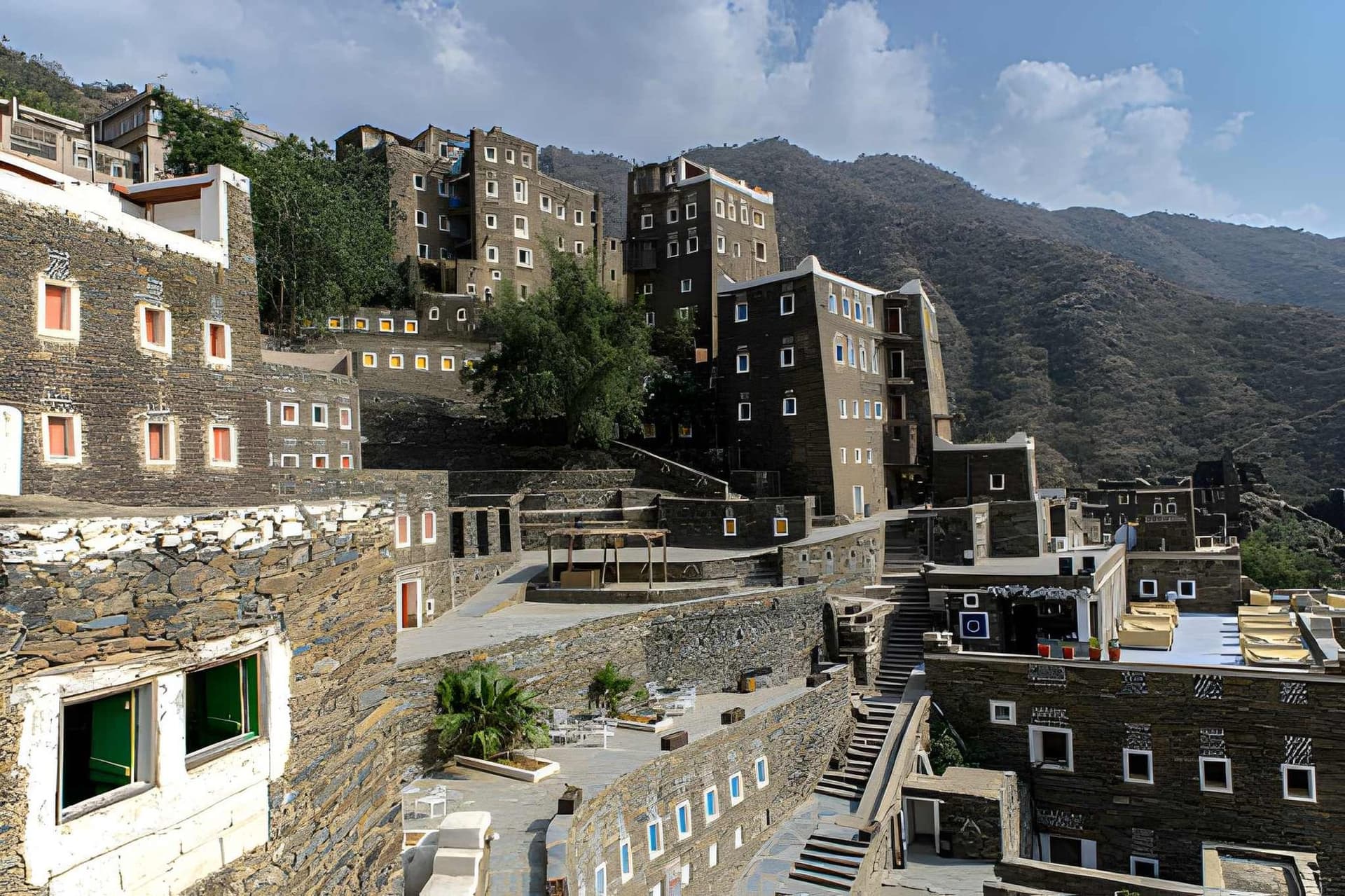
The single strongest reason to come is 45 kilometres away, down the escarpment road. Rijal Almaa Heritage Village is a village of stone tower houses with about 700 years of history behind it, built of basalt laid in courses with lines of white quartz set into the outer walls to shed rain. The houses stand stacked so tightly up the mountainside that the village reads as one building from the valley floor.
Inside, the walls carry Al-Qatt Al-Asiri, geometric bands of bright colour painted by the women of the house straight onto the plaster. UNESCO added the practice to its intangible heritage list in 2017. Several houses are open as a museum, with a visitor centre at the village; the museum runs to 20 sections of traditional pieces, old manuscripts and farming, building and transport tools, and there is no ticket to enter the village. The drive down is a large part of why people make the trip, which is why the Rijal Almaa village outing is built around the road as much as the destination.
How long to give it
Two or three days covers the town, the escarpment and Rijal Almaa without rushing the drives, which is the shape of an Abha short break. How many days you need in Abha works through the alternatives. Longer trips usually push south to Najran on Abha and Najran, or west to the coast; if you are coming up from sea level, Jeddah and Abha is the standard pairing. For a specific list of what to do once you are there, see things to do in Abha.
Practical notes
Saudi Arabia's tourist eVisa, a one-year multiple-entry visa allowing a total stay of up to 90 days within that year (not 90 days per visit), applied for through the official online portal. We are not a visa service. Pack for mountain weather rather than desert weather; the whole point of Asir is that it is not hot in the way the rest of the country is.