What At-Turaif was
The district was founded in the 15th century and became the seat of the Emirate of Diriyah, the first Saudi state, which ran from 1727 to 1818. Through the 18th and early 19th centuries its political and religious role grew, and the citadel at At-Turaif became the centre of the temporal power of the House of Saud.
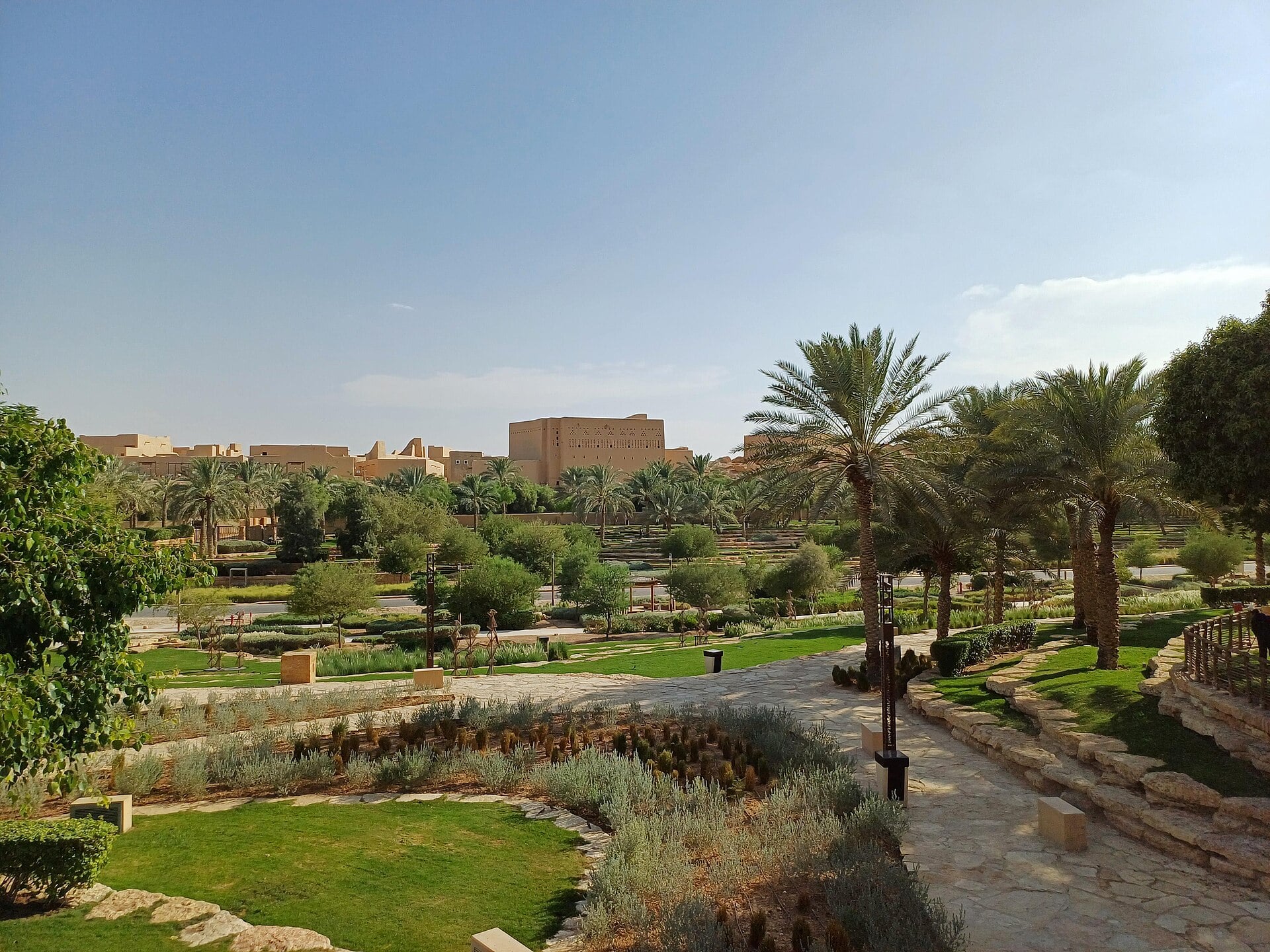
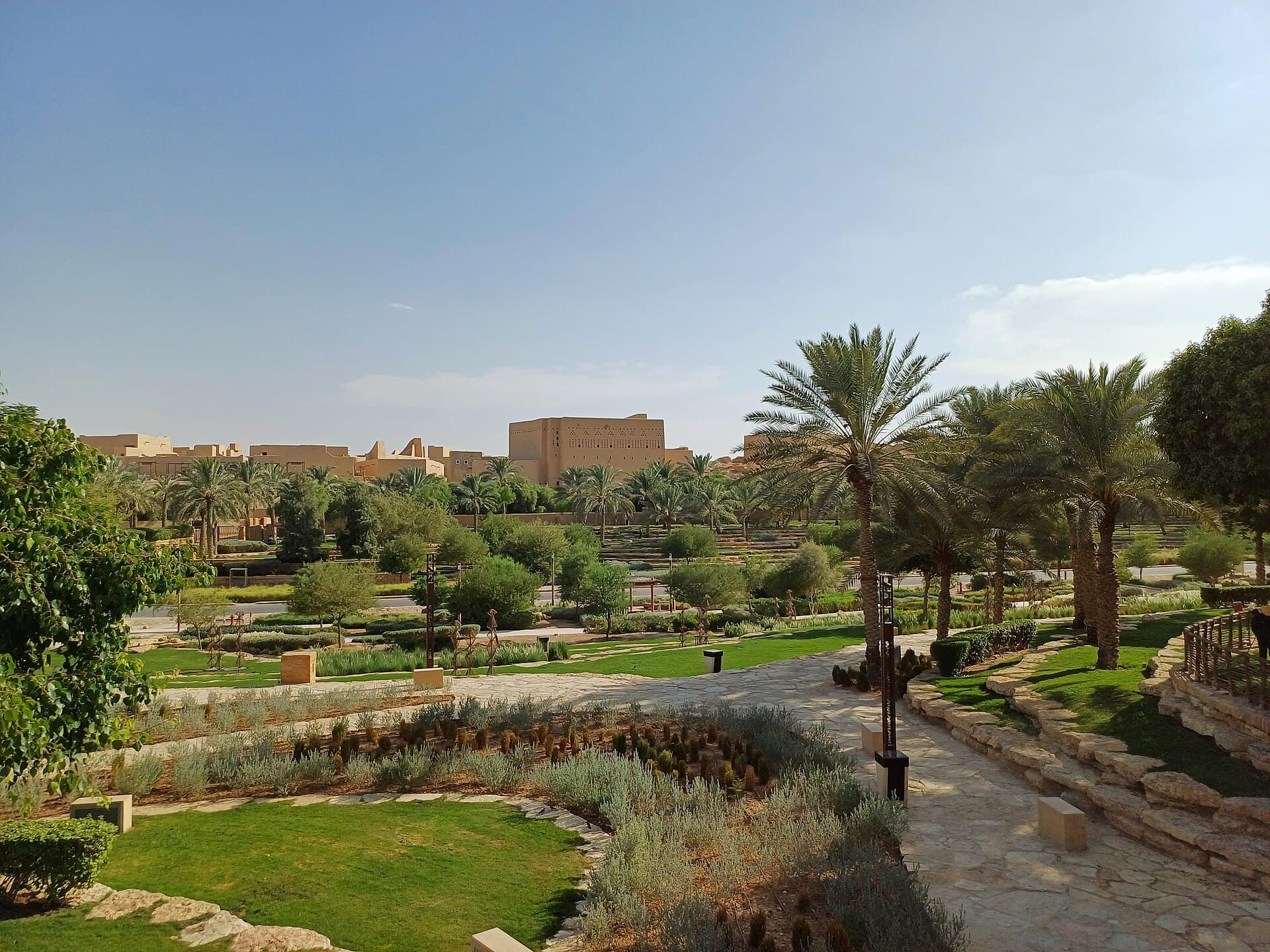
It stands north-west of Riyadh, on the edge of the Wadi Hanifa valley, in the town of Diriyah. Everything is built in mud brick, in the Najdi style specific to the centre of the Arabian peninsula.
What you walk through
Palaces, a mosque and defensive walls survive, and the district is the most complete example of Najdi architecture at this scale: thick walls, triangular openings cut high for light and air, and stepped parapets along the roofline. Once you have seen those three features here you will recognise them everywhere in central Arabia.
The district has been restored and opened as a museum quarter, so unlike most sites of its age you walk through the streets rather than around a perimeter fence. Our At-Turaif page goes through the quarter building by building.
Several museums sit inside the district, so the visit is not only architecture. The Diriyah Museum occupies an 18th-century palace and runs galleries on the history of the region, the story of the House of Saud, and the tribe that lived here before Diriyah was settled in 1446 - the palace itself being an example of the same Najdi building style you have been walking through outside.
Getting there and how long to allow
Diriyah is about 20 minutes from central Riyadh, which makes At-Turaif a half-day rather than a separate destination. Diriyah and At-Turaif runs it with a guide and hotel pick-up, which is the difference between reading mud-brick walls as scenery and reading them as a plan of a working capital.
Driving from Riyadh to Diriyah covers doing it under your own steam. Because the restaurant and cafe area at Al-Bujairi sits alongside the district, this is one of the few historic sites in the country that works as an evening as much as a history stop.
Al-Bujairi itself is laid out as a heritage and tourism park, with palm trees, planting and open green ground around the eating area, so the transition from the walled district to dinner happens on foot rather than by getting back in a vehicle. Plan the visit late in the day and the two halves join up.
The three founding sites of Riyadh
At-Turaif is one of three places in and around the capital that between them explain where the modern state came from. Doing all three in the wrong order is the commonest way to waste them.
| Site | What it covers | Where |
|---|---|---|
| National Museum | The peninsula from prehistory to unification, in sequence | King Abdulaziz Historical Centre, central Riyadh |
| Al Masmak | The 1902 capture of the city that began the modern state | The old centre, near the museum in Al Murabba |
| At-Turaif | The first Saudi state, 1727 to 1818, in mud brick | Diriyah, about 20 minutes north-west |
The museum first, then the fort, then At-Turaif is the order that makes each one land, and The National Museum: what to expect and how to visit explains why the museum repays going early. If you only have a weekend, Things to do in Riyadh sorts the rest of the city's options.
What sits below it
Wadi Hanifa runs directly beneath the district. It was the reason Riyadh grew where it did, because it carried the water, and after decades as the city's dumping ground it was rebuilt as a green corridor with walking and cycling paths, picnic areas and restaurants. Wadi Hanifah and Bujairi combines the valley with the Bujairi side of Diriyah, which is the natural way to turn a site visit into a full afternoon and evening.
Planning around it
Riyadh short break builds a short stay in the capital around the founding sites, and At-Turaif is the piece that puts the rest in context. Riyadh: a first-timer's guide is the place to start if you have not been to Riyadh before, since the city is built for driving and distances inside it are large.