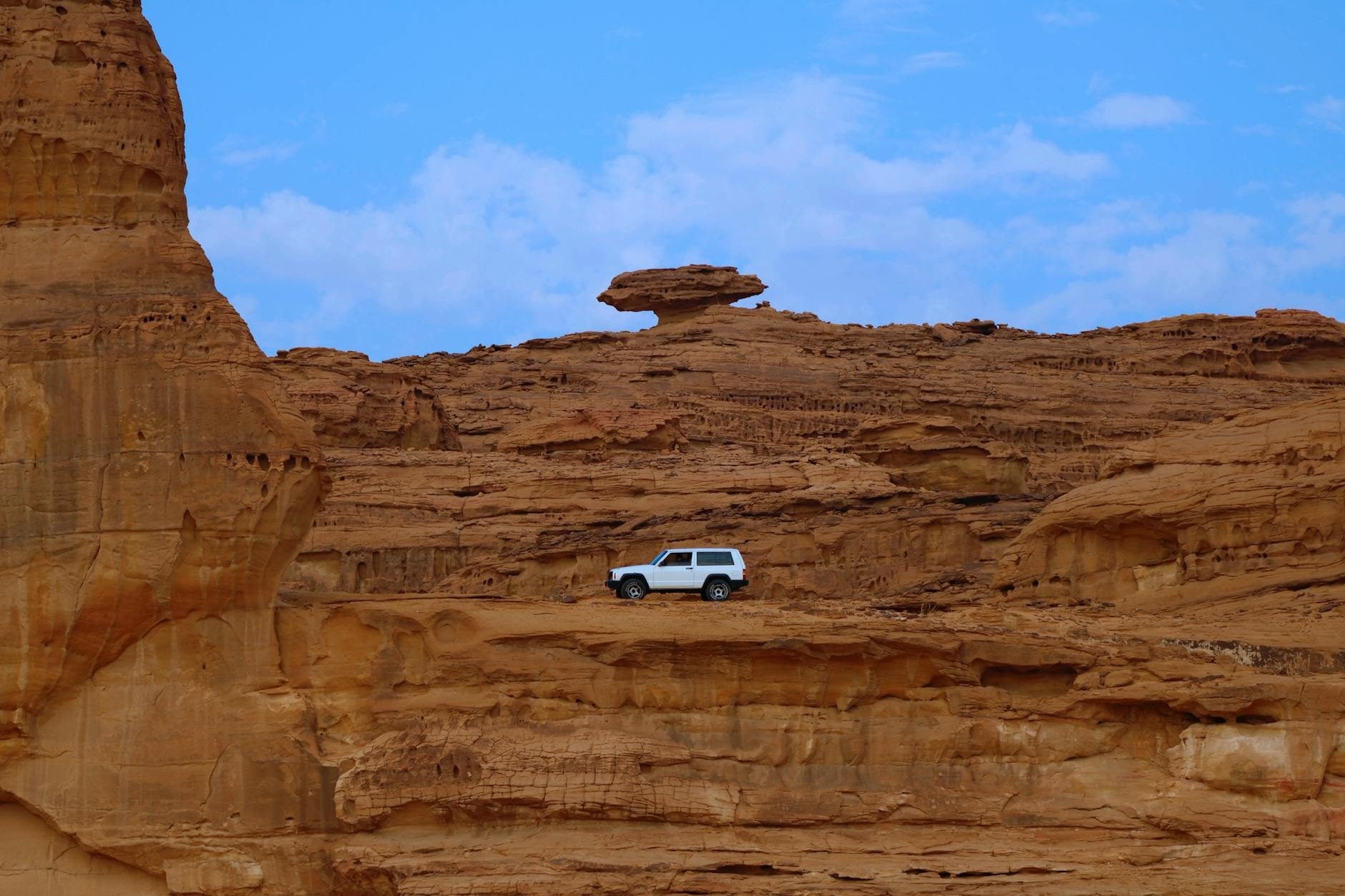
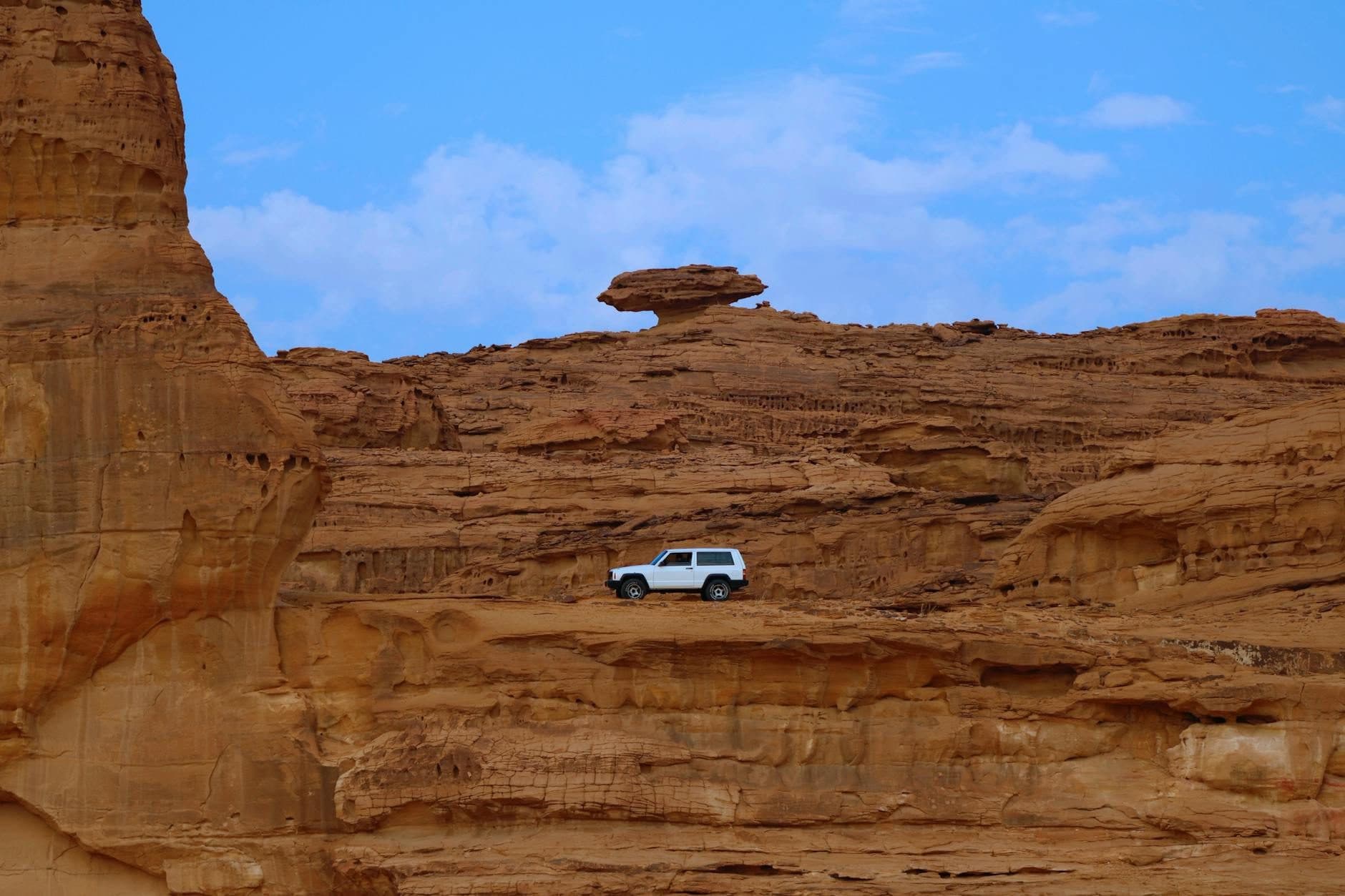
AlUla is a sandstone valley in the north-west of Saudi Arabia, and it holds the country's first UNESCO World Heritage Site. A first visit comes down to four sites within a short drive of one another, a season that runs October to March, and three or four days on the ground.
The valley was farmed and settled for thousands of years because it has water, and it sat on the incense road running north out of southern Arabia. That is why the archaeology here is so concentrated in so small an area. It is also the part of the country that has been built out for visitors most deliberately - licensed guides, transport between the sites, a season of events - so it is the easiest place in Saudi Arabia to spend several days without having to solve the logistics yourself. The wider overview sits on the AlUla destination page.
The four sites
Everything a first visit needs is on the valley floor or just above it.
| Site | What it is | How you visit |
|---|---|---|
| Hegra | More than 110 Nabataean tombs cut into sandstone outcrops | Guided tour only; daily numbers are capped |
| Dadan | Cliff-cut capital of the Dadanite and Lihyanite kingdoms | Guided visit, usually paired with Jabal Ikmah |
| Jabal Ikmah | Canyon walls carrying hundreds of pre-Arabic inscriptions | Short level walk; there is no ticket |
| AlUla Old Town | Mud-brick town built from the 12th century | Walk in; opens between 8am and 9am |
Hegra is the anchor. It was the southern capital of the Nabataean kingdom, occupied from before the 1st millennium BCE, and it is the largest conserved Nabataean site south of Petra. More than 110 monumental tombs stand across the desert floor, 94 of them with decorated facades, alongside some 50 pre-Nabataean inscriptions and cave drawings. One tomb has a name attached to it: Hinat, excavated in 2008, whose reconstructed face is shown at the Hegra Visitor Centre.
Dadan was the capital of the Dadanite and Lihyanite kingdoms, and its tombs were cut as square openings almost 50 metres up a red cliff wall, two of them guarded by carved lions. From the valley floor they read as a row of dark squares; the scale only registers when you notice how small the people below them look. A short distance away, Jabal Ikmah is a narrow canyon whose walls carry hundreds of inscriptions in Dadanitic, Thamudic, Minaic and Nabataean scripts - dedications, names and offerings rather than royal proclamations. The two are normally taken together, as on Dadan and Jabal Ikmah.
AlUla Old Town is the fourth. Hundreds of clay houses stand shoulder to shoulder along alleys narrow enough to stay shaded through the day, walled by fourteen gates and overlooked by a fort of around the 10th century, 45 metres up. The settlement grew on the incense route and on the pilgrim road from Damascus to Makkah. The restored lane now holds shops and restaurants: most of the town opens between 8am and 9am, fills after 3pm, and runs to about 11pm for shops and 1am for restaurants.
When to go
October to March is the workable window. Summer in the valley is severe, and it is not something you can design around - outdoor experiences in the surrounding reserve are paused over the hot months and return when it cools. The month-by-month detail is in when to visit AlUla, month by month.
How long you need
Two days is the minimum that works: Hegra on one, Dadan and Jabal Ikmah on the other, with an evening in the Old Town on either. That compressed shape is set out in 48 hours in AlUla. A third day buys Elephant Rock at dusk, the reserve, and time that is not scheduled - and it is the difference between seeing the valley and understanding it. How many days do you need in AlUla? works through the trade-offs.
Getting there and getting around
Jeddah is the usual arrival point for the west coast and for AlUla, so most itineraries reach the valley from there or from Riyadh. Once you are in it, the sites are spread out and the distances are driving distances rather than walking ones - Elephant Rock is a 20-minute drive north-east of the Old Town on Highway 70, and Maraya sits about 20 minutes from the centre in the Ashar valley. Most sites are visited by guided tour with transport included, which is why hiring your own vehicle solves less here than it does elsewhere. Getting to and around AlUla covers the connections.
Where to base yourself
The choice is between staying near the Old Town, which is the one part of AlUla with a genuine evening, and staying out in the valley for the quiet and the sky. Both work; they suit different trips. Where to base yourself in AlUla sets out the options.
Fitting AlUla into a longer trip
Few people fly to Saudi Arabia for AlUla alone, and it pairs cleanly in several directions. Riyadh & AlUla puts the founding sites of the modern state next to the ancient ones. AlUla & Tabuk carries on north into the sandstone and canyon country toward the Jordanian border, and Jeddah, AlUla & Tabuk adds the Red Sea port at the start.
Two things worth knowing before you book
Hegra is not a site you can wander into. Access is by guided tour with an AlUla Rawi, the local storyteller-guides, moving between the tomb clusters by vehicle, and the number of people admitted each day is limited - so it is booked before you travel, not on arrival. Hegra with a licensed guide is the standard way in.
The second is a listing that most travel writing gets wrong. Jabal Ikmah was inscribed on UNESCO's Memory of the World Register, which recognises documentary heritage. That is a different list from the World Heritage List, which in AlUla covers Hegra. Both matter; they are not the same thing. For what fills the days beyond the four sites, see things to do in AlUla.