What Masmak actually is
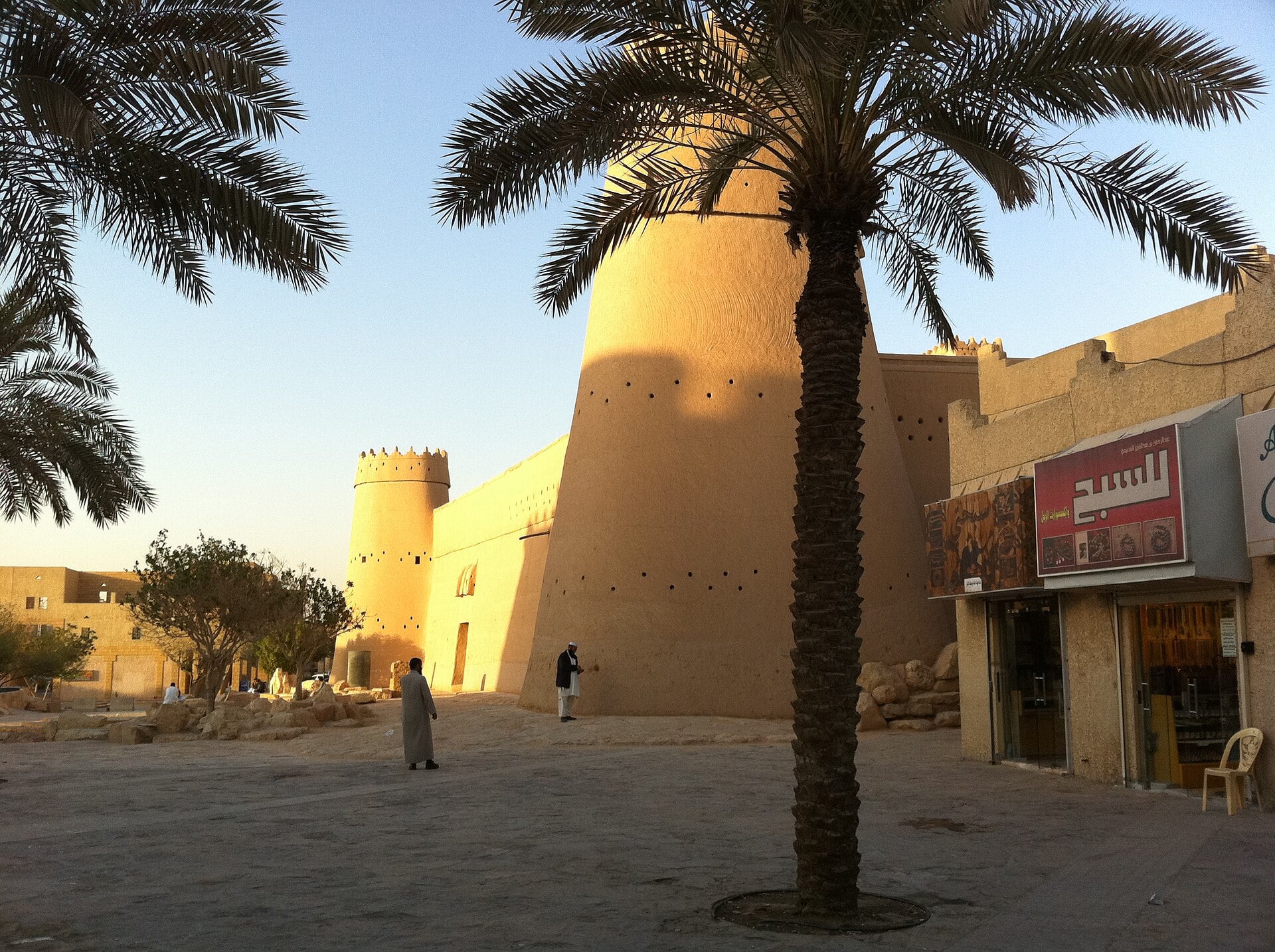
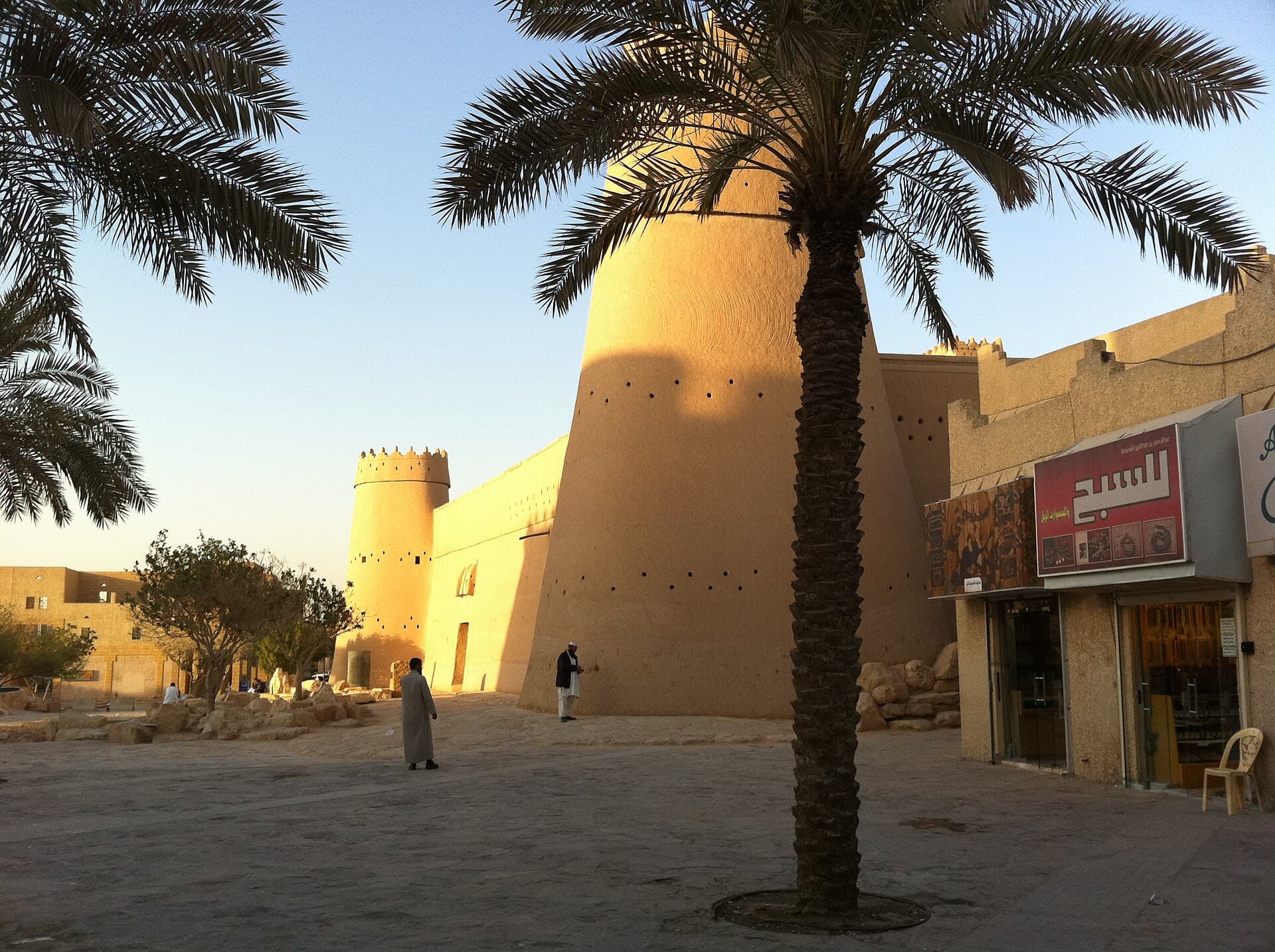
Masmak is a fort of mud and clay standing in the old centre of Riyadh. It was built in the 14th century of the hijri calendar, during the reign of Imam Abdullah bin Faisal, as his residence and the centre of power and money. It was also built to hold: the walls are solid and high, there are only two entrances, and the openings cut through the walls are small, sized for gun barrels rather than for light.
That is the adjustment to make on the way in. Al Masmak is not a palace in the ornamental sense. It is a garrison building, and it is compact, so the interest is concentrated rather than spread across a large site.
Why it matters
In 1902 the battle to regain Riyadh began at this fort, and the state that exists today dates from that event. The building is now a museum of the founding of the kingdom. The residential units of the ruler and his guests have been turned into display halls, and the story of the unification is carried by visual presentations and by historical remains hung along the walls.
The spear in the gate
One object does more work than any display case. Prince Fahad bin Jiluwi rode with the army of King Abdulaziz in the 1902 battle and threw his spear, meaning to aim at Ajlan bin Rashid. He missed. The tip of the spear settled in the gate of the fortress and made a deep crack, and the remains of it are still there in the door you walk through on the way in.
How the building is laid out
The fort divides into six parts, and holding them in mind makes the visit read in order rather than as a set of rooms:
- the gate, on the western side
- the mosque
- the majlis, or the diwaneyah as it is known locally
- the well, on the north-eastern side
- the towers at the four corners of the courtyard
- the residential units of the ruler and his guests, now the display halls
The courtyard is the orientation point. From it the four corner towers, the gate and the living quarters all line up, and the defensive logic of the place becomes obvious in a way that no label explains as well.
How to visit
The fort sits directly in the old centre of the city, so it pairs with the quarter around it rather than needing an outing of its own. That is how we build it. Masmak Fort and the old souq is a half day on foot around the fort and the market streets beside it with a private guide, and Riyadh in one day folds it into a wider circuit of the city with a driver, which matters because distances inside Riyadh are large and the city is built for driving.
If Riyadh is more than a stopover, a Riyadh short break leaves room for the founding sites in the centre and the country outside the city in the same visit. The tourism authority lists Masmak as suitable for all ages, and as a site for families and friends as much as for people with an interest in the period.
What to pair it with
Two other stops belong in the same conversation, and they answer different questions.
| Stop | What it covers | Practical note |
|---|---|---|
| Masmak | The fort itself and the 1902 capture of Riyadh | In the old centre; display halls are indoors |
| National Museum | The Arabian Peninsula from prehistory to the modern state, told through some 3,700 objects across halls that run in sequence | In the Al Murabba neighbourhood, central Riyadh; no ticket is needed to enter |
| At-Turaif, Diriyah | The first Saudi state, 1727 to 1818, in Najdi mud brick; a World Heritage Site since 2010 | About 20 minutes from central Riyadh, so a half day |
Of the two museums, the National Museum is the better first stop if the trip continues to AlUla, Diriyah or Najran, because those sites are far easier to read once the sequence is in your head. Both sit in the old centre, which makes the pair a single half-day rather than two separate outings. There is more detail in The National Museum: what to expect and how to visit, and At-Turaif: what to expect and how to visit covers the mud-brick district at At-Turaif on the edge of the city.
When to go
The display halls are indoors, so the fort is not governed by the season in the way the open sites outside the city are. If the trip also takes in the Tuwaiq escarpment, settle the dates first with The best time of year to visit Riyadh. For arrival, districts and how much time the city needs, start with Riyadh: a first-timer's guide and Things to do in Riyadh.