What Al Ahsa is
Al Ahsa is a working oasis in the Eastern Province, and it is the largest in the world by palm count: around 2.5 million date palms watered from natural springs in the middle of desert. It was inscribed on the UNESCO World Heritage List in 2018, and the Guinness Book of Records recognises it as the largest palm oasis anywhere.
The point that catches most first-time visitors out is what the listing actually covers. The Al-Ahsa Oasis is a serial property — gardens, canals, springs, wells and a drainage lake, together with the historical buildings, urban fabric and archaeological sites inside them. It is the whole water system that is listed, not one monument. The oasis spans more than 85 square kilometres and it has been farmed continuously from the Neolithic to the present, which makes it one of the longest-running agricultural landscapes anywhere. It is still a working oasis rather than a preserved one, and there is no entry ticket.
Where it is and how you reach it
Al Ahsa sits inland from the Gulf coast and is reachable by road or by rail. Dammam and Al Khobar is the coastal pair of cities that most people arrive through: Dammam has an international airport and rail connections inland to Riyadh and to Al Ahsa. That position is the practical argument for treating the Eastern Province as one trip rather than two.
The three things to see first
| Site | What it is | Entry |
|---|---|---|
| Al-Ahsa Oasis | Gardens, canals, springs and wells across more than 85 square kilometres | No ticket |
| Al Qarah Mountain | A limestone hill about 1.5 km long cut through by 28 caverns | Reached from a visitor centre at the base |
| Qasr Ibrahim | A fortified palace of more than 18,000 square metres in Al-Kut, Hofuf | No ticket |
Al Qarah Mountain
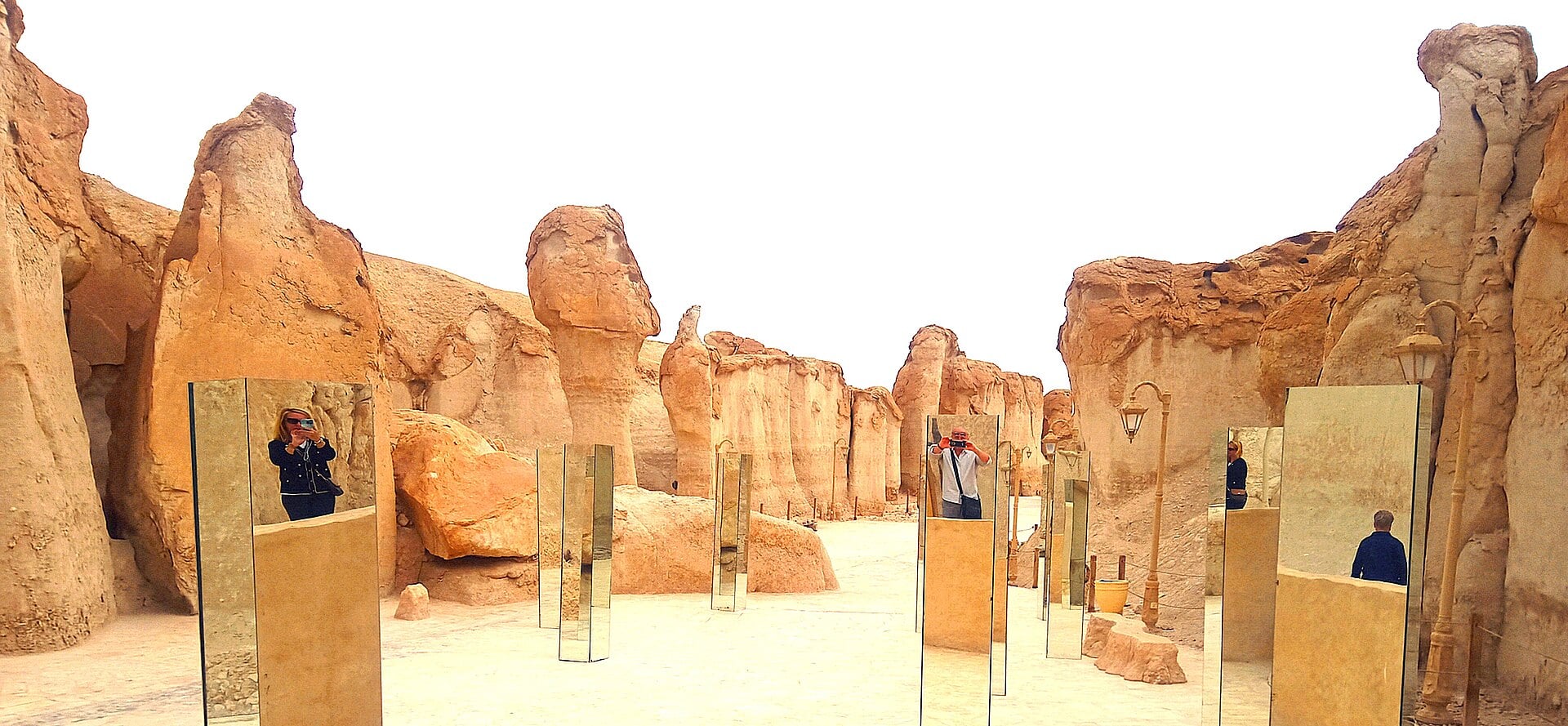
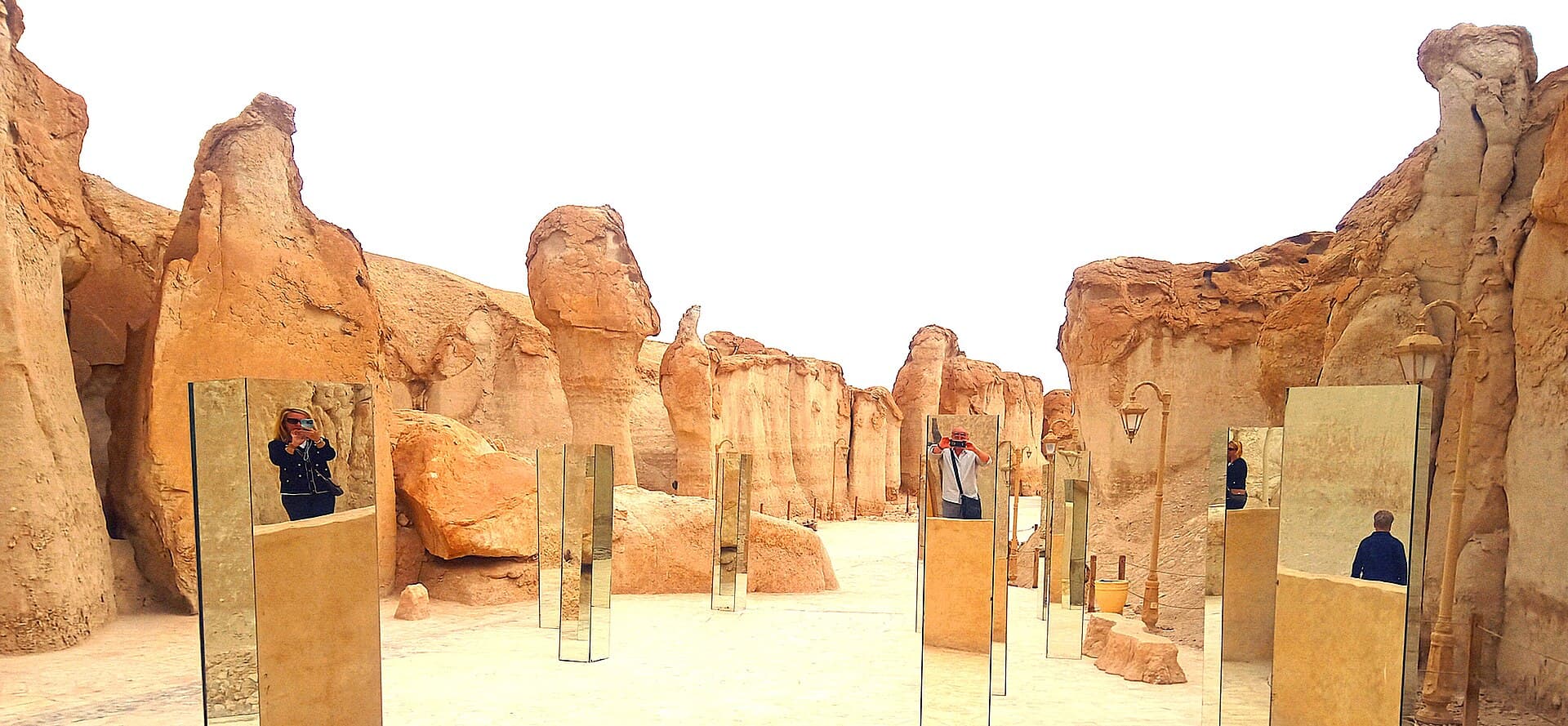
Al Qarah Mountain rises straight out of the oasis floor and was formed over millennia by water erosion, abrasion and seismic activity. It runs about 1.5 kilometres and is cut through by 28 narrow, high-sided caverns, one of which is Al Nashab. The rock draws heat out of the air, so the passages hold a steady temperature while the oasis outside is well past 40 degrees — which is why they were used as shelter rather than found as a curiosity. The caves are walkable and floodlit in sections, and they are reached from a visitor centre at the base, which makes this the easiest thing in Al Ahsa to combine with the oasis itself. The Al-Qarah caves half day does that pairing.
Qasr Ibrahim and old Hofuf
Qasr Ibrahim, also known as Qasr Al-Qubba or Qasr Al-Kut, stands in Al-Kut in Al-Hofuf and covers over 18,000 square metres. It was built during the Al-Jabri dynasty, between 1436 and 1534 CE, when Hofuf was a centre of trade and governance. The building mixes military and religious architecture: domes and arches, a prayer hall with a mihrab, thick stone walls, watchtowers and soldiers' barracks, along with horse stables and inner courtyards. There is no entry ticket. Hofuf old souq and Ibrahim Palace takes it together with the old market, which is the other half of what makes Hofuf worth a morning.
If you have a second day
Al Asfar Lake — the name means yellow lake — is one of the largest natural water bodies in the Gulf, formed by decades of seasonal rainfall and now a nature reserve; it reads blue in summer and pale in winter. Bayt Al-Bay'ah, in the Al-Rawda neighbourhood of Al-Kut, was built in 1788 CE by Sheikh Abdul Rahman Al-Mulla and shows the traditional architecture of the First Saudi State in its pointed interior arches. Sahoud Palace was built between 1790 and 1800 and named after the large cannon that once guarded its grounds. Masjid Al-Jalaniah, standing among palm groves and fed by nearby springs, dates back to the 12th century AD and is built of mudbrick. Handcraft Castle is recognised by UNESCO as part of the Creative Cities Network for craft and folk art. The Touristic City of Jawatha, north-east of Hofuf, opens daily from 8:00 a.m. to midnight. Things to do in Al Ahsa works through these in more depth.
Al Ahsa is not a substitute for AlUla
People planning a first trip often ask whether to choose between the two World Heritage destinations. They are different in kind. AlUla is a sandstone valley of carved monuments, with Hegra — the country's first World Heritage Site — at its centre; Al Ahsa is a living agricultural landscape whose value is the system that keeps it alive. If you want the full picture of the other one before deciding, read AlUla: a first-timer's guide.
How to fit Al Ahsa into a trip
The oasis, Al Qarah and Hofuf sit close enough together that a Al Ahsa short break covers the core comfortably. From the capital, Riyadh & Al Ahsa is the standard pairing, and Riyadh, Al Ahsa & Dammam adds the Gulf coast at the end so the rail and airport connections work in your favour. Whichever shape you choose, the month matters, because the caverns stay cool precisely because the outside does not — The best time of year to visit Al Ahsa sets out the year.