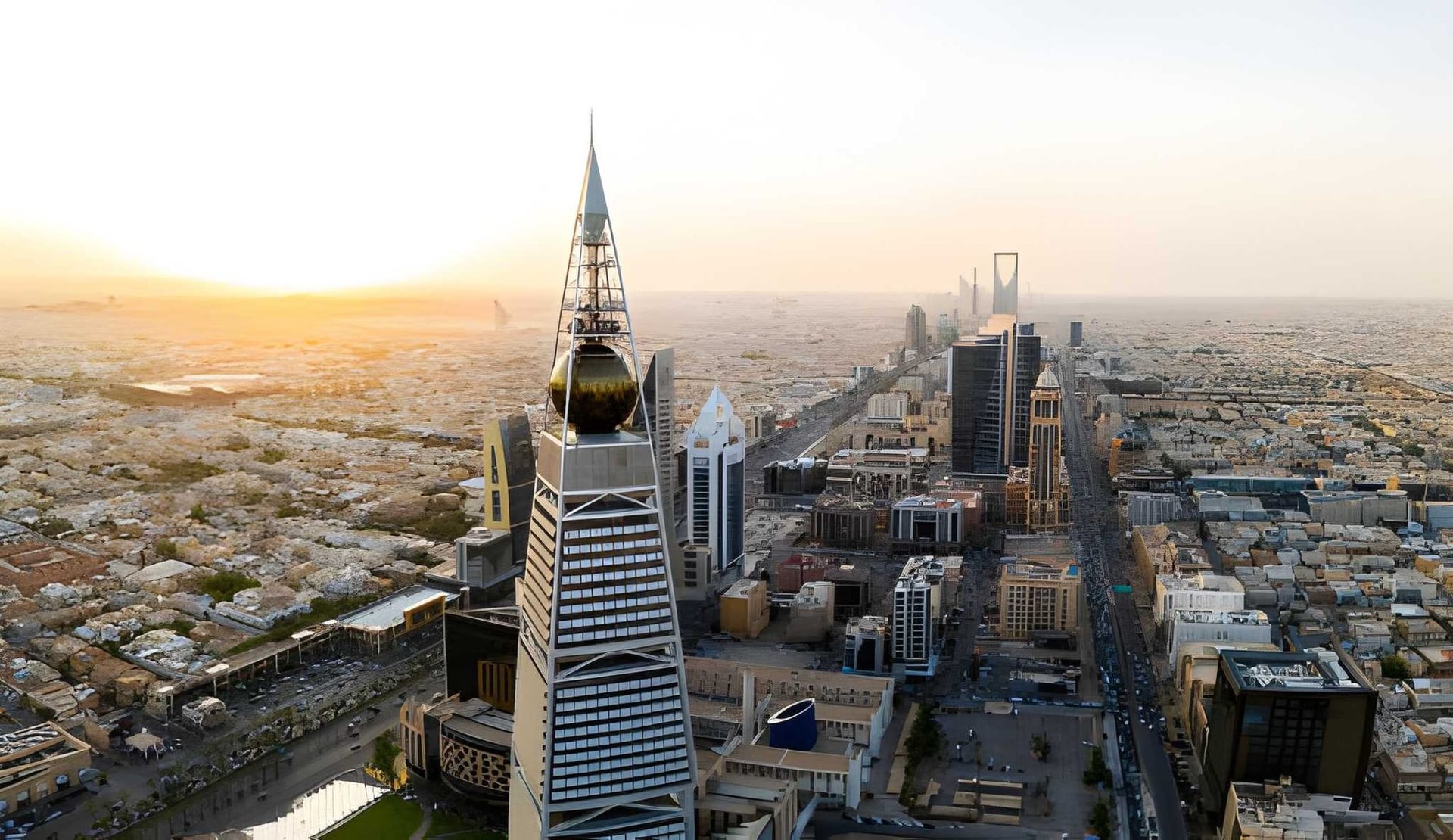
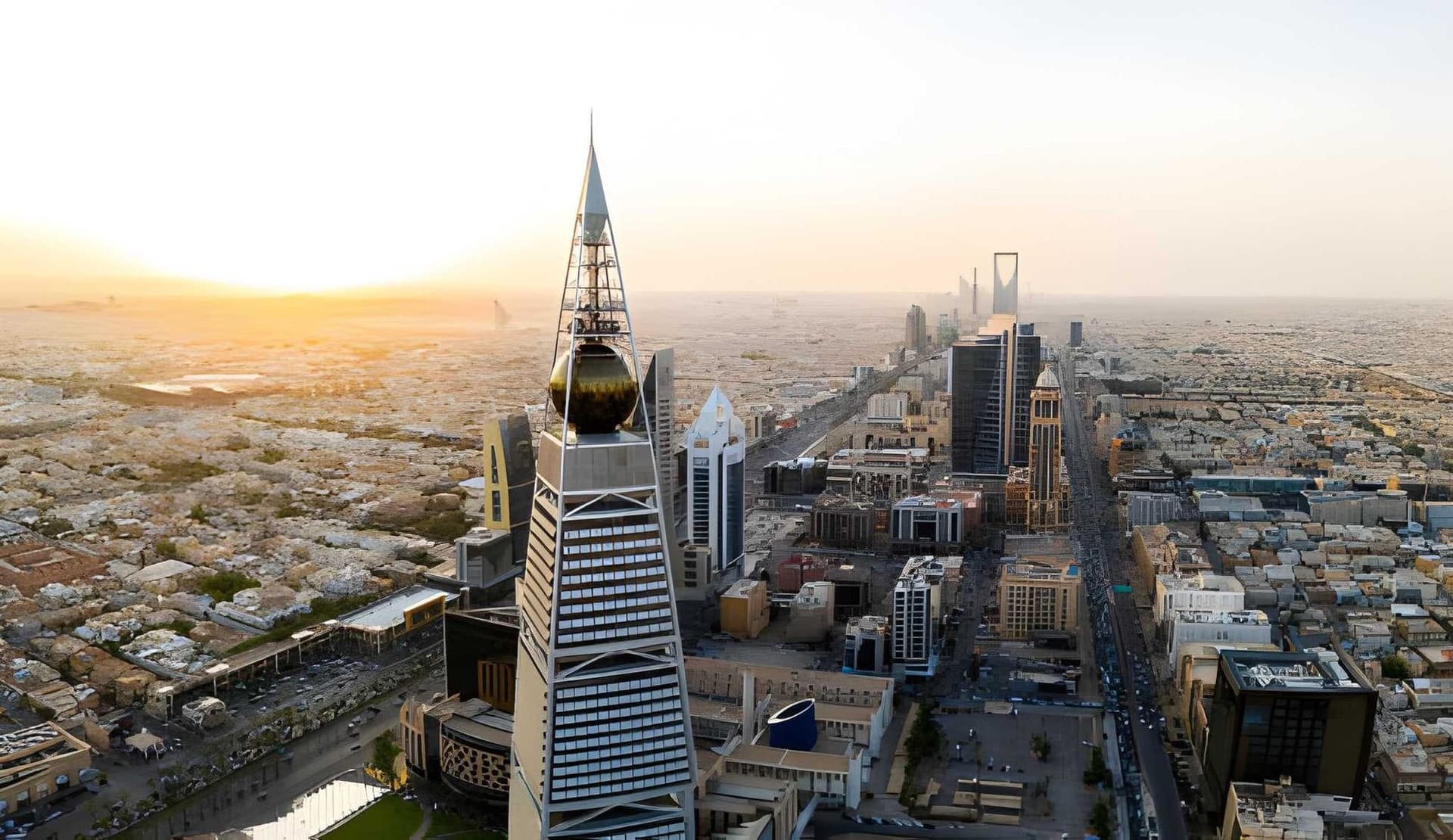
Riyadh is the capital of Saudi Arabia and its main air hub, so it is usually the arrival point whether or not it is the reason for the trip. It is also the clearest place in the country to see where the modern Saudi state came from, and two or three days is enough to do that properly.
The city is built for driving and the distances inside it are large, so plan around a car and a driver rather than around walking between sights. The overview of what the city holds is on the Riyadh destination page.
Where the founding sites are
The two that explain the country are close together in the old centre. Al Masmak is the mud-and-clay fort where the capture of the city in 1902 began the state that exists today. It was built in the 14th century of the hijri calendar under Imam Abdullah bin Faisal, as a residence and a centre of power: four corner towers, thick clay walls, two entrances and narrow openings cut for gun barrels. Inside, the gate still carries the crack left by Prince Fahad bin Jiluwi's spear, thrown in that 1902 battle and missing its target.
The National Museum of Saudi Arabia stands in the Al Murabba neighbourhood nearby, inside the King Abdulaziz Historical Centre. It opened in 1419 AH and runs some 3,700 objects - statues, scripts, sculptures - through a sequence of halls that goes in order, from prehistory and pre-Islamic Arabia to the life of the Prophet, the successive Saudi states and unification. There is no ticket. Large bags go in the lockers at the entrance, because some halls restrict oversized belongings.
Take the museum first if you can. AlUla, Diriyah and Najran all read better afterwards.
Diriyah, just outside the city
About 20 minutes from the centre, Diriyah is the mud-brick town that was the capital of the first Saudi state. Its At-Turaif district was inscribed on the World Heritage List in 2010, and it was the seat of the Emirate of Diriyah from 1727 to 1818: palaces, a mosque and defensive walls, all in mud brick, in the Najdi style specific to central Arabia.
It is the most complete surviving Najdi architecture at this scale - thick walls, stepped parapets, triangular openings cut high for light and air - and it has been restored as a museum quarter, so you walk the streets rather than around a fence. A restaurant and cafe area sits alongside it, which makes it an evening as easily as a history stop. Diriyah and At-Turaif covers it in half a day.
Green space and the escarpment
Wadi Hanifa runs 120 kilometres through the capital and passes directly below Diriyah, which means the two can be done together. It is the city's largest natural park: shaded trails, landscaped gardens, water channels and barbecue areas, with restaurants along the valley edges. No reservation is needed and there is no ticket.
The bigger landscape is 100 km north-west, where the Tuwaiq escarpment - some 800 km of it across central Arabia - breaks off at a 1,131-metre cliff known as the Edge of the World. Below the wall the plain runs flat to the horizon with nothing on it. Treat this one seriously: the final approach is rough track needing a four-wheel drive, there is no water, food or fuel out there, and mobile coverage drops. Go with other people or with a guide, and take what you need. Edge of the World, half day handles the vehicle and the timing.
How long, and when
Two days covers the old centre, the National Museum and Diriyah. A third adds the escarpment, which eats most of a day by itself. How many days do you need in Riyadh? sets out the versions, and things to do in Riyadh lists what fills them.
Winter is the season out on the cliffs; the middle of the day at the escarpment is exposed and hot, and sunrise and sunset are the two times worth planning around.
Practicalities
Visitors from 66 eligible countries can apply online for the Saudi tourist eVisa, a one-year multiple-entry visa allowing a total stay of up to 90 days within that year (not 90 days per visit), covering tourism, events, visits to family and Umrah, but not Hajj. Apply through the official government portal - no agent is needed, and nobody can obtain it faster on your behalf.
For the mechanics of moving around a city with long distances between everything, see getting to and around Riyadh; for which district to sleep in, where to base yourself in Riyadh.
Where Riyadh leads next
Riyadh short break keeps it to the capital. Riyadh, AlUla & Tabuk runs north-west into the sandstone country, and Riyadh & Jeddah crosses the country to the Red Sea coast. If you would rather drive the north-west leg yourself, driving from Riyadh to AlUla covers the road.