What is inside
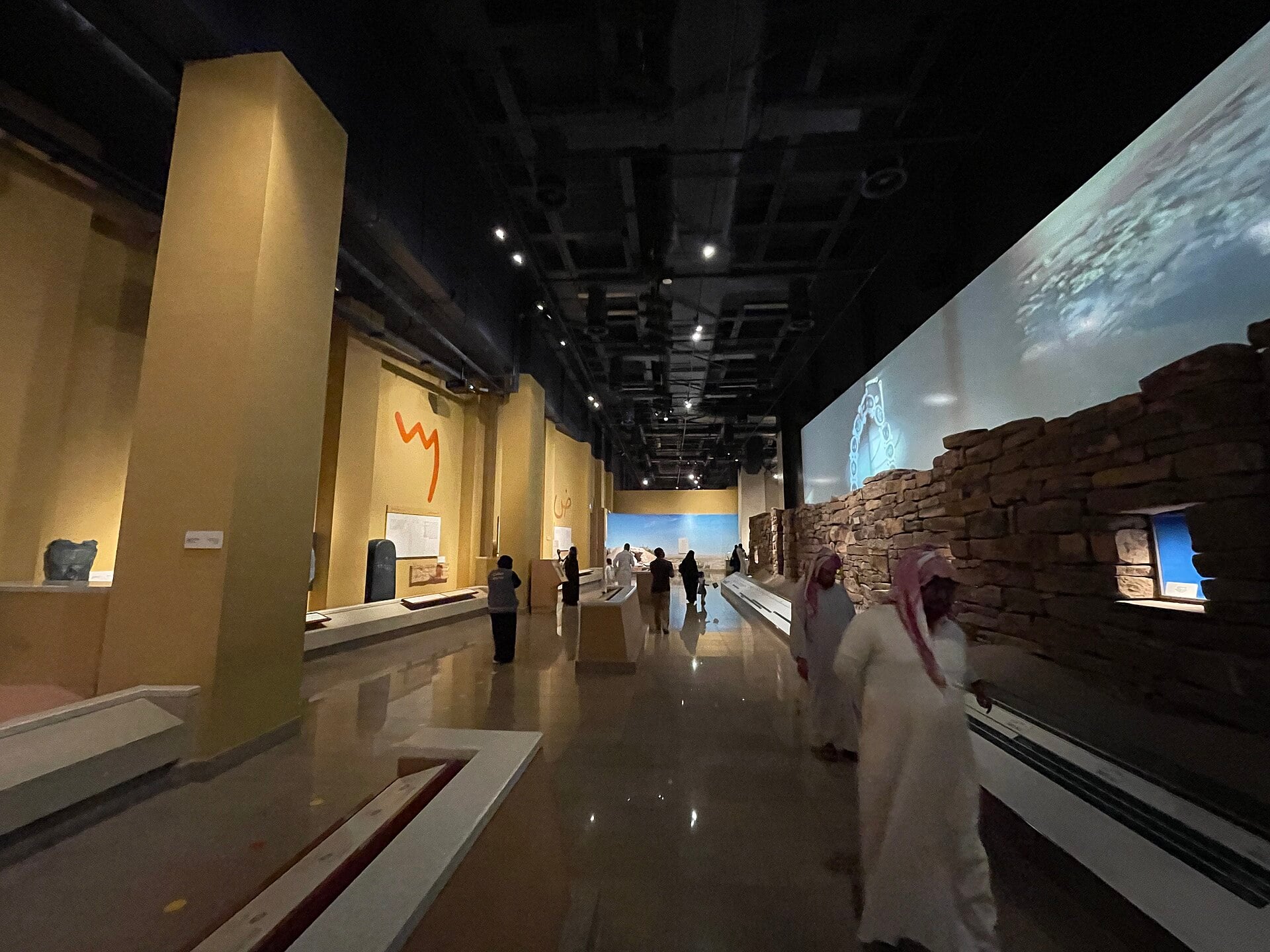
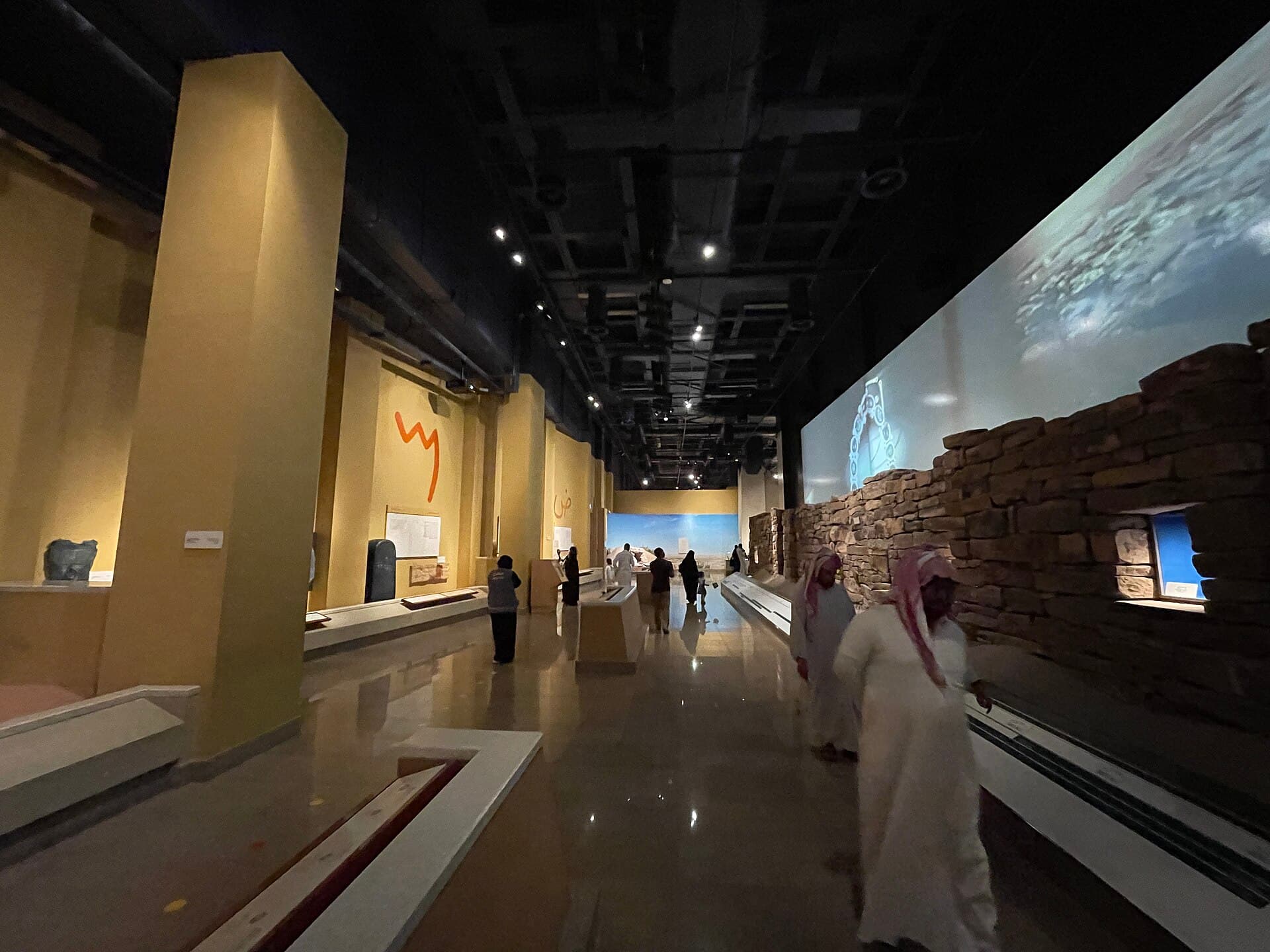
The museum is arranged as a sequence of halls that run in order, so it is possible to walk the whole span in one visit without doubling back: geology, pre-Islamic Arabia, the life of the Prophet, the successive Saudi states, and the unification. That structure is the reason it works as a first stop rather than a rainy-afternoon filler.
It holds around 3,700 artefacts, including statues, scripts and sculptures, and the displays are interactive in places, with multimedia presentations alongside the objects. The museum opened in 1419 of the hijri calendar. Our National Museum of Saudi Arabia page sets out the halls one by one.
The span is the point. Most national museums cover a country; this one covers a peninsula, and it starts with the rock rather than with the people. By the time the halls reach the founding of the first Saudi state you have already been walked through the trade routes, the languages and the pre-Islamic kingdoms that the archaeological sites elsewhere in the country belong to.
Where it is
The museum stands in the Al Murabba neighbourhood in the heart of Riyadh, inside the King Abdulaziz Historical Centre and near King Abdulaziz palace. Al Masmak, the clay fort where the capture of the city in 1902 began the state that exists today, stands nearby in the old quarter, which makes the two a single half-day rather than two separate outings.
Gardens surround the building, including the National Museum Garden, with green space and seating, so there is somewhere to sit between halls without leaving the site. For a museum this size that matters more than it sounds: the sequence of halls is long, and a break in the middle of it is easier to take when you do not have to go anywhere to find one.
Practical points
- There is no ticket for entry.
- The tourism authority lists it as suitable for all ages, and for families and friends as well as museum-goers.
- Store large bags in the lockers at the entrance, because some halls restrict entry with oversized belongings.
- The halls run in a fixed sequence, so allow enough time to reach the end rather than starting and turning back.
Why it is worth doing early
Saudi Arabia's headline sites are ancient, scattered and thinly captioned. Walk into a valley of Nabataean tombs cold and you get sculpture; walk in having seen the peninsula laid out in order and you get a trade route with a date on it. The sites at AlUla, Diriyah and Najran are all easier to read after this museum, which is why it belongs at the start of a trip rather than the end.
At-Turaif: what to expect and how to visit is the clearest example: the mud-brick capital of the first Saudi state makes far more sense once the sequence of those states has been laid out in front of you.
Half-days in the capital
Riyadh is built for driving and distances inside it are large, so the city divides naturally into half-day blocks rather than wandering. These are the three that cover the founding of the state.
| Half-day | What it covers |
|---|---|
| The National Museum and Murabba | The peninsula from prehistory to unification, plus the surrounding gardens |
| Masmak Fort and the old souq | The 1902 capture of Riyadh, and the quarter around the fort |
| Diriyah and At-Turaif | The mud-brick capital of the first Saudi state, about 20 minutes out |
The National Museum and Murabba covers the first of those with a guide and hotel pick-up, and Masmak Fort and the old souq the second. If your time in the city is short, Riyadh in one day runs the museum and the old centre together in a single day.
Planning around it
Riyadh short break builds a stay in the capital around these sites, and Riyadh & Jeddah pairs Riyadh with the Red Sea coast for people who want the two halves of the country in one trip. For working out how long the capital needs, How many days do you need in Riyadh? is the place to look, Things to do in Riyadh covers what else is worth a slot, and Riyadh: a first-timer's guide sets out how the city fits together for anyone arriving for the first time.