Walk the oasis
The oasis is the reason Al Ahsa is on the map, and walking a section of it is the one thing not to skip. The Al-Ahsa Oasis spans more than 85 square kilometres and holds around 2.5 million date palms, watered from underground springs in the middle of desert. It was inscribed on the UNESCO World Heritage List in 2018, and the listing covers gardens, canals, springs, wells and a drainage lake together with the historical buildings and archaeological sites inside them — the working system rather than a single monument. It has been farmed continuously since the Neolithic and still is. There is no entry ticket.
Because it is a landscape rather than a single site, it rewards being shown around by someone who knows the canals and springs. The oasis and the date farms covers a section on foot with a guide, and Date farms and the oasis takes in the farms that the oasis exists for.
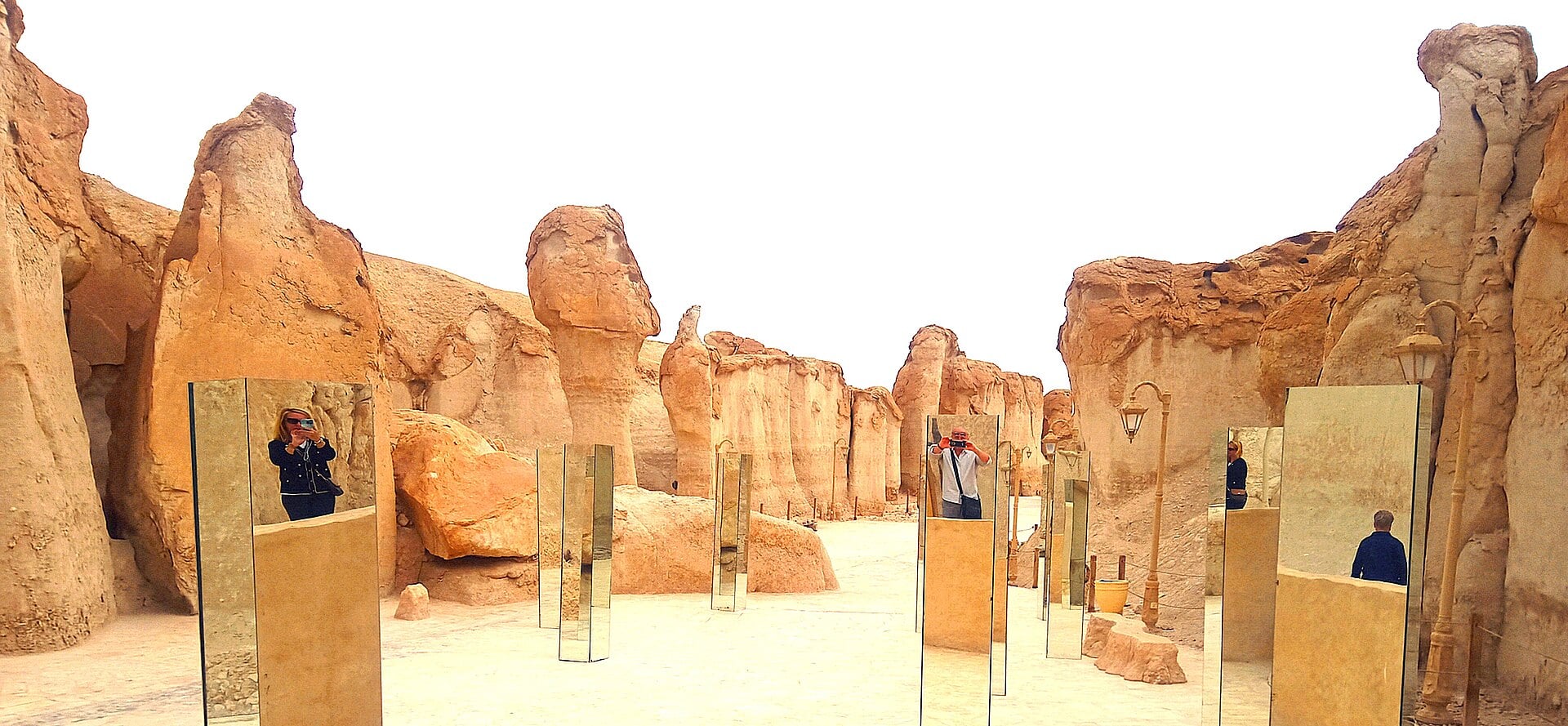
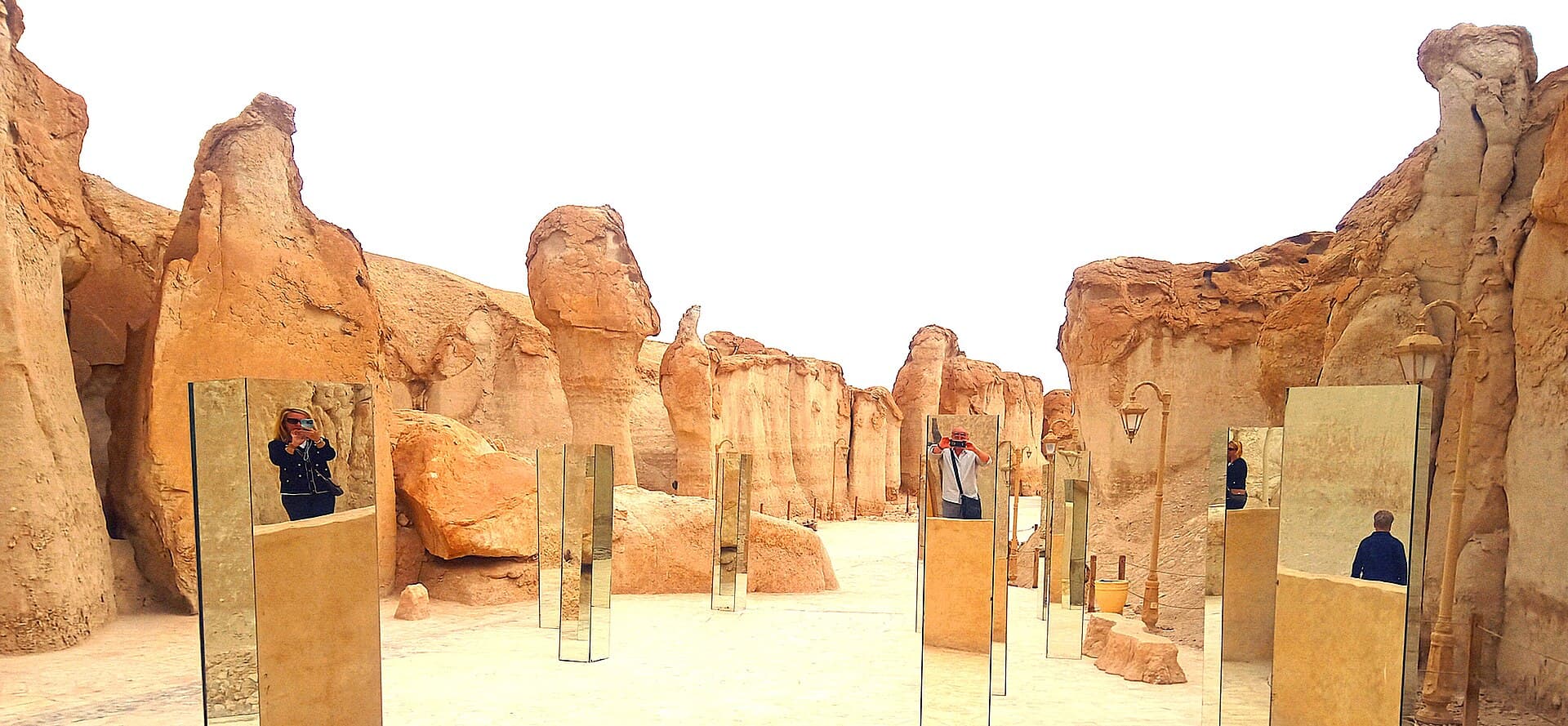
Go into the caverns at Al Qarah
Al Qarah Mountain is a limestone hill that rises out of the oasis, shaped over millennia by water erosion, abrasion and seismic activity. It stretches about 1.5 kilometres and is cut through by 28 narrow, towering caverns, one of them Al Nashab. The rock pulls heat out of the air, so the passages hold a steady temperature while the ground outside is well over 40 degrees. That is why they were used as shelter for centuries rather than treated as a novelty. The caves are walkable, floodlit in sections and entered from a visitor centre at the base. Al-Qarah caves is the half day for it.
Tour Qasr Ibrahim in Hofuf
Qasr Ibrahim — also called Qasr Al-Qubba or Qasr Al-Kut — covers more than 18,000 square metres in Al-Kut, Al-Hofuf, and was built under the Al-Jabri dynasty between 1436 and 1534 CE, when Hofuf was a centre of trade and governance. Inside are domes and arches, a prayer hall with a mihrab, thick stone walls, watchtowers and soldiers' barracks, plus horse stables and inner courtyards. There is no entry ticket. Hofuf old souq and Ibrahim Palace puts it together with the old market.
| What to do | What you are looking at | Entry |
|---|---|---|
| Walk the oasis | Gardens, canals, springs and 2.5 million palms | No ticket |
| Al Qarah caverns | 28 caverns through a 1.5 km limestone hill | Visitor centre at the base |
| Qasr Ibrahim | Fortified palace of 1436–1534 CE | No ticket |
| Al Asfar Lake | One of the largest natural water bodies in the Gulf | Nature reserve |
See Al Asfar Lake
Al Asfar Lake sits among dunes. Its name means yellow lake and it changes colour through the year, reading blue in summer and pale in winter. It was formed by decades of seasonal rainfall and is now a nature reserve protecting the region's wildlife and desert plants. It is the counterweight to a day of forts and caves.
Work through the heritage buildings
Four are worth naming. Bayt Al-Bay'ah, in the Al-Rawda neighbourhood of Al-Kut, was built in 1788 CE by Sheikh Abdul Rahman Al-Mulla, and its pointed interior arches show the traditional architecture of the First Saudi State. Sahoud Palace was built between 1790 and 1800 and named after the large cannon, Sahoud, that once guarded its grounds; it was one of the significant defensive structures in the region. Masjid Al-Jalaniah, surrounded by palm groves and fed by nearby springs, dates to the 12th century AD and is built of mudbrick. Handcraft Castle is recognised by UNESCO as part of the Creative Cities Network for craft and folk art, and it is where the craft traditions are set out properly.
Give a family day to Jawatha
The Touristic City of Jawatha lies north-east of Al Hofuf and opens daily from 8:00 a.m. to midnight, which makes it the one thing here that will absorb a full day and an evening with children in tow.
Fit it into a longer trip
Al Ahsa works as a short trip on its own through Al Ahsa short break, or paired with the capital on Riyadh & Al Ahsa. If you want the Gulf coast as well, Riyadh, Al Ahsa & Dammam finishes on the seafront and uses the airport and rail links there. For how the destination hangs together before you book, read Al Ahsa: a first-timer's guide; and if you are weighing Al Ahsa against the country's other World Heritage draw, Things to do in AlUla covers what Hegra and the AlUla valley offer instead.