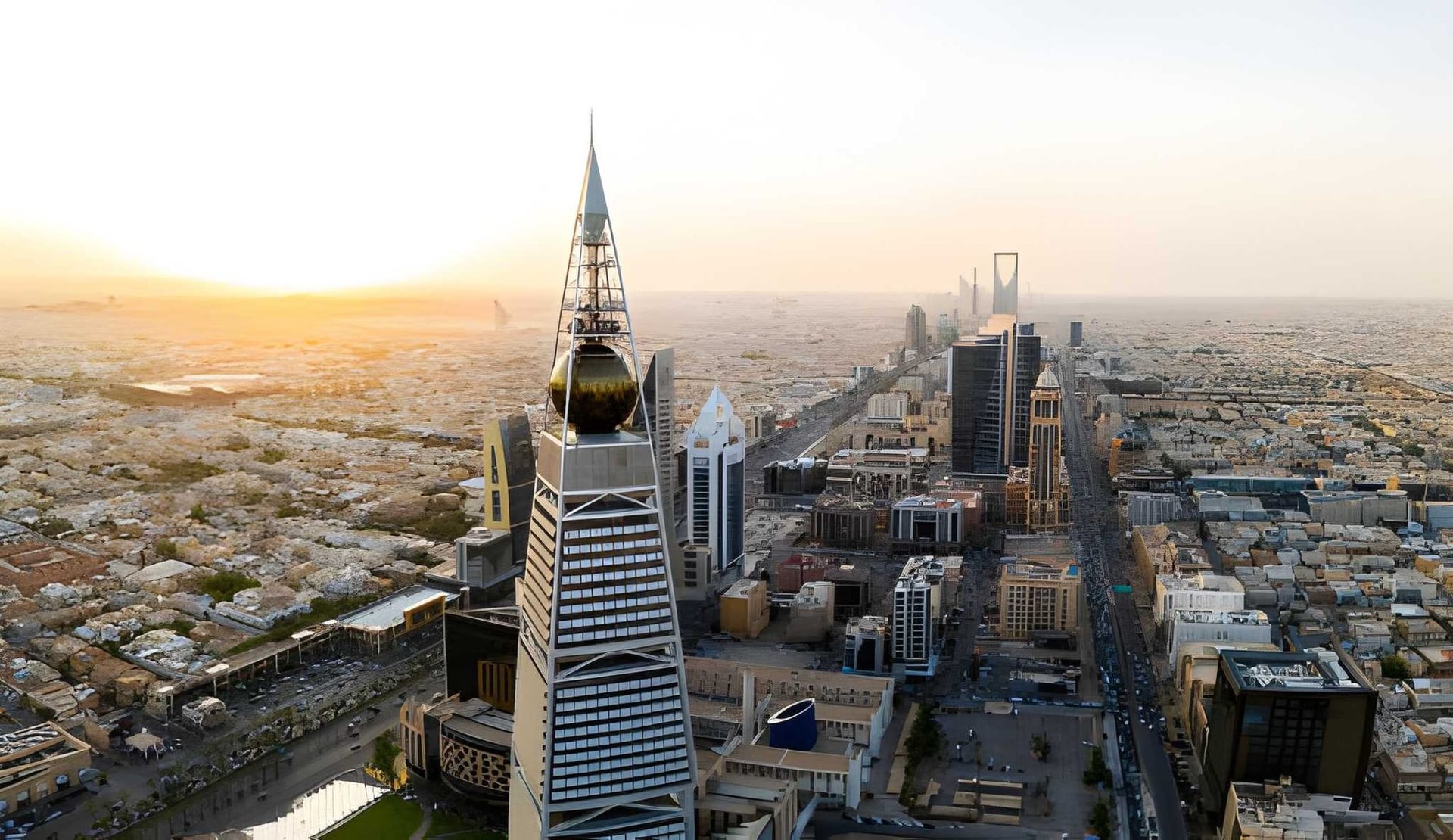
An eastward line across the country. Riyadh for the sites the modern Saudi state was founded on, Al Ahsa for an oasis that has been farmed continuously since the Neolithic, and Dammam and Al Khobar on the Gulf coast to finish.
This is a cultural route rather than a strenuous one. The days are museums, mud-brick quarters and palm groves, with short walks and the driving done for you. The one sustained walk is through the caverns at Al Qarah.
The order is chosen so the country explains itself: the National Museum sets the peninsula out from prehistory to unification in one sequence of halls, and everything after it is easier to read.
Day by day
Arrive Riyadh
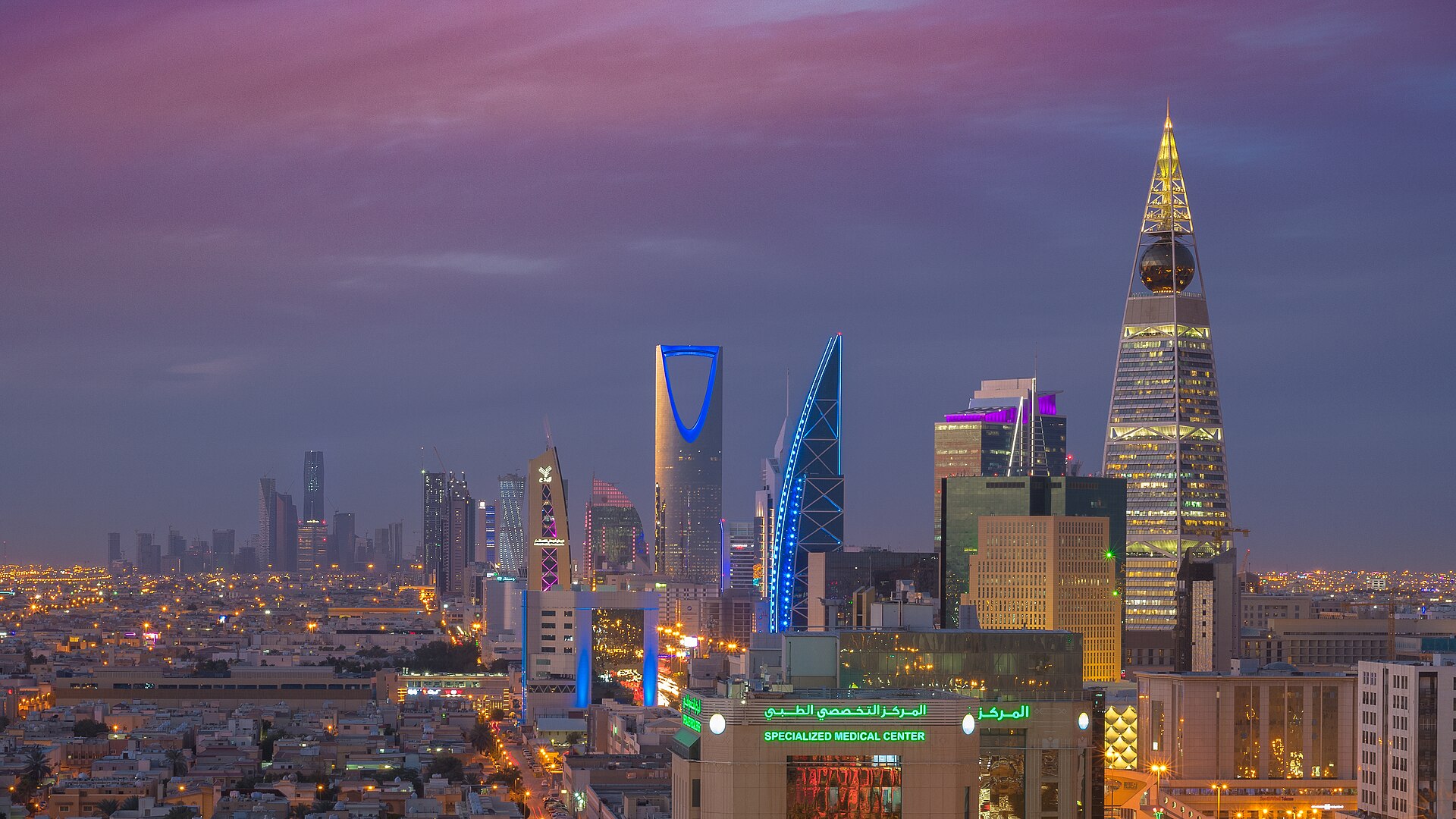
You are met at the airport and driven to your hotel. Riyadh is the country's main air hub, so it is usually the arrival point whether or not it is the reason for the trip. Distances inside the city are large and it is built for driving, so your vehicle and driver are with you from the airport onwards. The rest of the day is left clear.
The founding sites
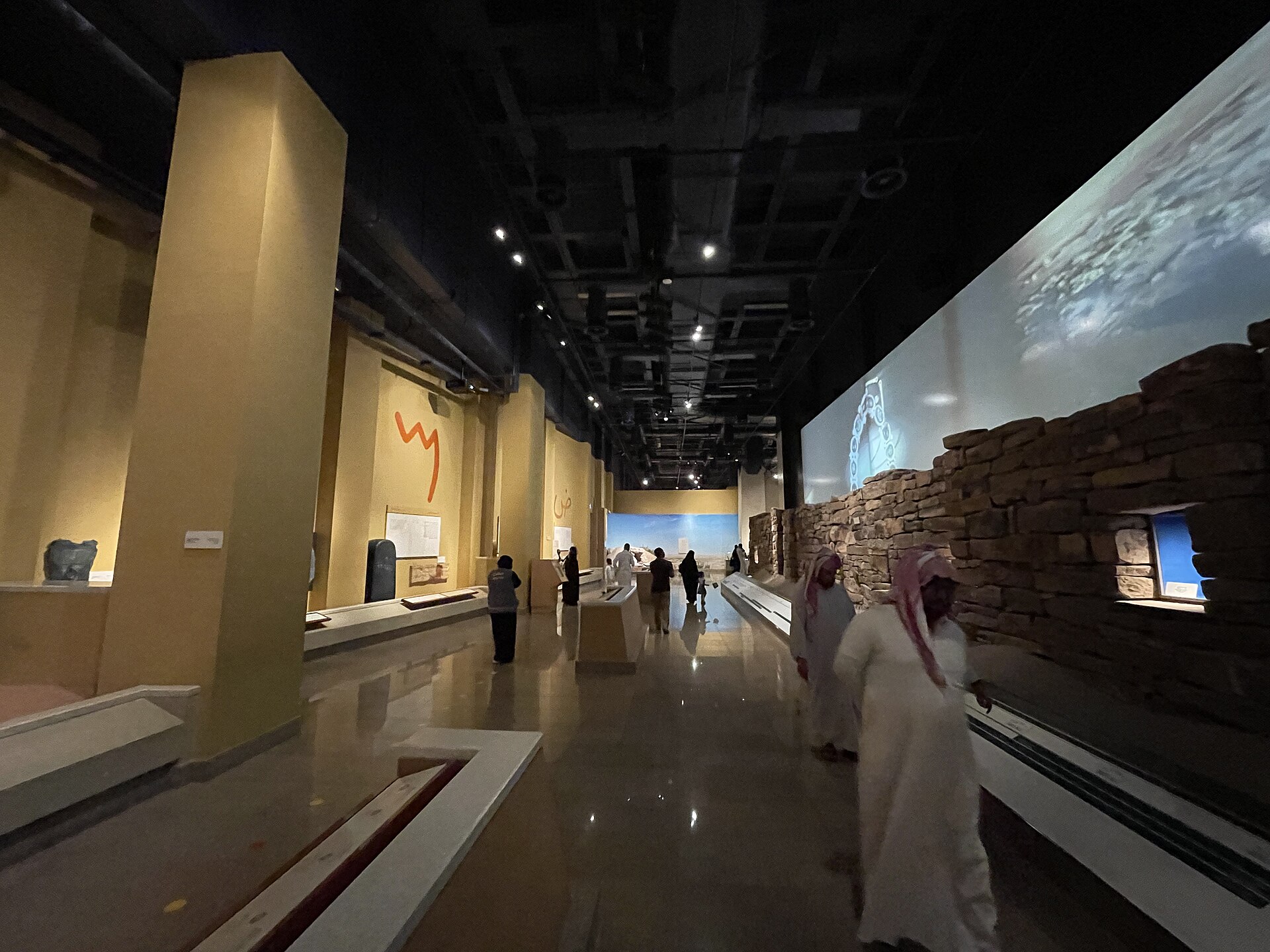
The morning goes to the National Museum of Saudi Arabia, inside the King Abdulaziz Historical Centre in central Riyadh. It is arranged as a sequence of halls that run in order, so you walk the whole span in one visit without doubling back: geology, pre-Islamic Arabia, the life of the Prophet, the successive Saudi states and the unification. Then Al Masmak, the mud-and-clay fort in the old centre where the capture of the city in 1902 began the state that exists today. Four watchtowers, thick clay walls and a single studded door: it is small, and that is the point, because this was a garrison building rather than an ornamental palace. The two sit close enough together to make one half-day, so the afternoon is free.
Diriyah and Wadi Hanifa
About twenty minutes from the centre, At-Turaif is the mud-brick district that was the capital of the first Saudi state and has been a UNESCO World Heritage Site since 2010. The Emirate of Diriyah ran from 1727 to 1818 and this was its seat: palaces, a mosque and defensive walls in the Najdi style, on the edge of the Wadi Hanifa valley north-west of Riyadh. It is the most complete surviving Najdi architecture at this scale, with thick walls, triangular openings cut high for light and air, and stepped parapets, and because it has been restored as a museum quarter you walk the streets rather than a perimeter. Wadi Hanifa runs directly below it: the valley that carried the water Riyadh grew on, flowing 120 kilometres through the capital and rebuilt from a dumping ground into a chain of parks, shaded trails and water channels. The restaurant and cafe area beside At-Turaif holds the evening.
East to Al Ahsa
The drive east takes up the morning. Al Ahsa lies inland from the Gulf coast and is reachable by road or rail; you travel by road with your driver, which keeps the timing yours. The afternoon is spent at Qasr Ibrahim in Al-Kut, Hofuf, a fortified palace of more than 18,000 square metres built during the Al-Jabri dynasty between 1436 and 1534, when Hofuf was a centre of trade and governance. It holds a prayer hall with a mihrab under domes and arches, thick stone walls, watchtowers, soldiers' barracks, horse stables and inner courtyards. There is no ticket to enter.
The Al-Ahsa Oasis
The day is given to the Al-Ahsa Oasis, inscribed on the UNESCO World Heritage List in 2018 and the largest palm oasis in the world, with around 2.5 million palms watered from natural springs in the middle of the Eastern Province desert. The listing is for the landscape as a system rather than for any single monument: gardens, canals, springs, wells and drainage works, together with the historic buildings and archaeological sites inside them. It has been farmed continuously since the Neolithic, and it is still a working oasis rather than a preserved one, which is the difference you notice on the ground.
Al Qarah Mountain, then the coast
The morning is at Al Qarah Mountain, a limestone hill inside the oasis running about 1.5 kilometres and cut through by 28 narrow, high-sided caverns, among them Al Nashab. The rock draws heat out of the air, so the passages hold a steady temperature while the oasis outside is well past 40 degrees, which is why they were used as shelter rather than found as a curiosity. The caves are walkable and floodlit in sections, reached from a visitor centre at the base. In the afternoon you continue to the Gulf coast and check in.
Dammam and Al Khobar
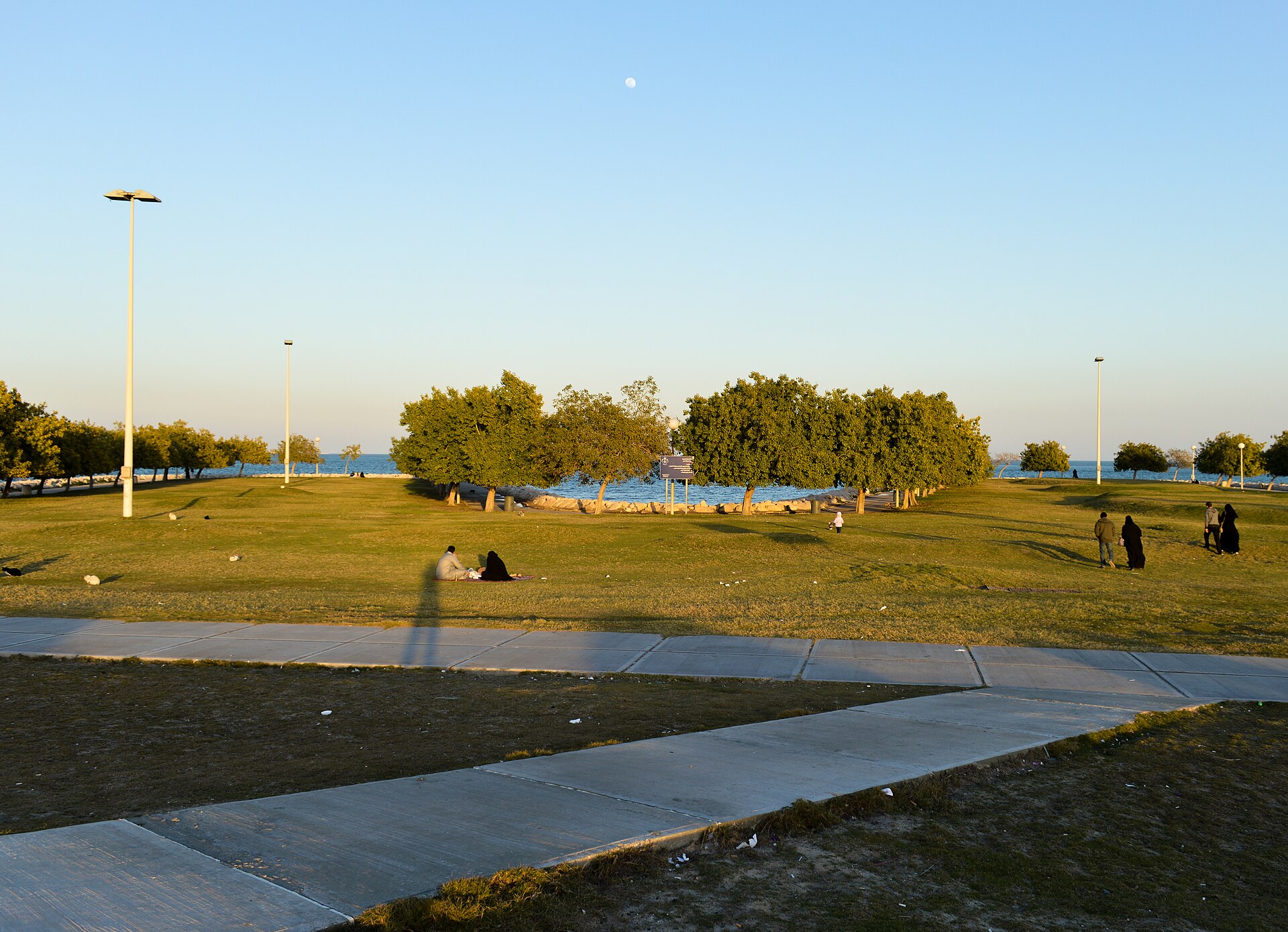
The last full day is deliberately light. This is the industrial and administrative heart of the oil region and it reads that way: a place people live and work rather than a heritage quarter. The Khobar seafront is the main public space, with trees, lakes, wooden huts and stone benches, walking and cycling paths, and a fountain shaped as a shell with a pearl at its centre. Out on the peninsula stands the water tower that lights up at night. The causeway to Bahrain leaves from here.
Departure
Dammam has an international airport and you are driven there for your flight. If you are staying on in the Kingdom, rail runs inland from here to Al Ahsa and Riyadh, and that leg can be arranged instead.
What is included
- Seven nights' accommodation with daily breakfast
- Private air-conditioned vehicle with driver throughout, including all road transfers between Riyadh, Al Ahsa and the Gulf coast
- English-speaking guide on all sightseeing days
- Site entry and permits where these are required
- Meet and assist at the airport on arrival and departure
- Bottled water in the vehicle
- Flexible daily start times, set with you the evening before
- A 24-hour contact number for the duration of the trip
What is not
- International flights to and from Saudi Arabia
- The Saudi entry visa, which is applied for through the official government portal
- Travel insurance
- Lunches, dinners and drinks unless stated in the itinerary
- Tips and personal spending
The places on this trip
Send us your dates
We come back with the itinerary written out and one clear cost.