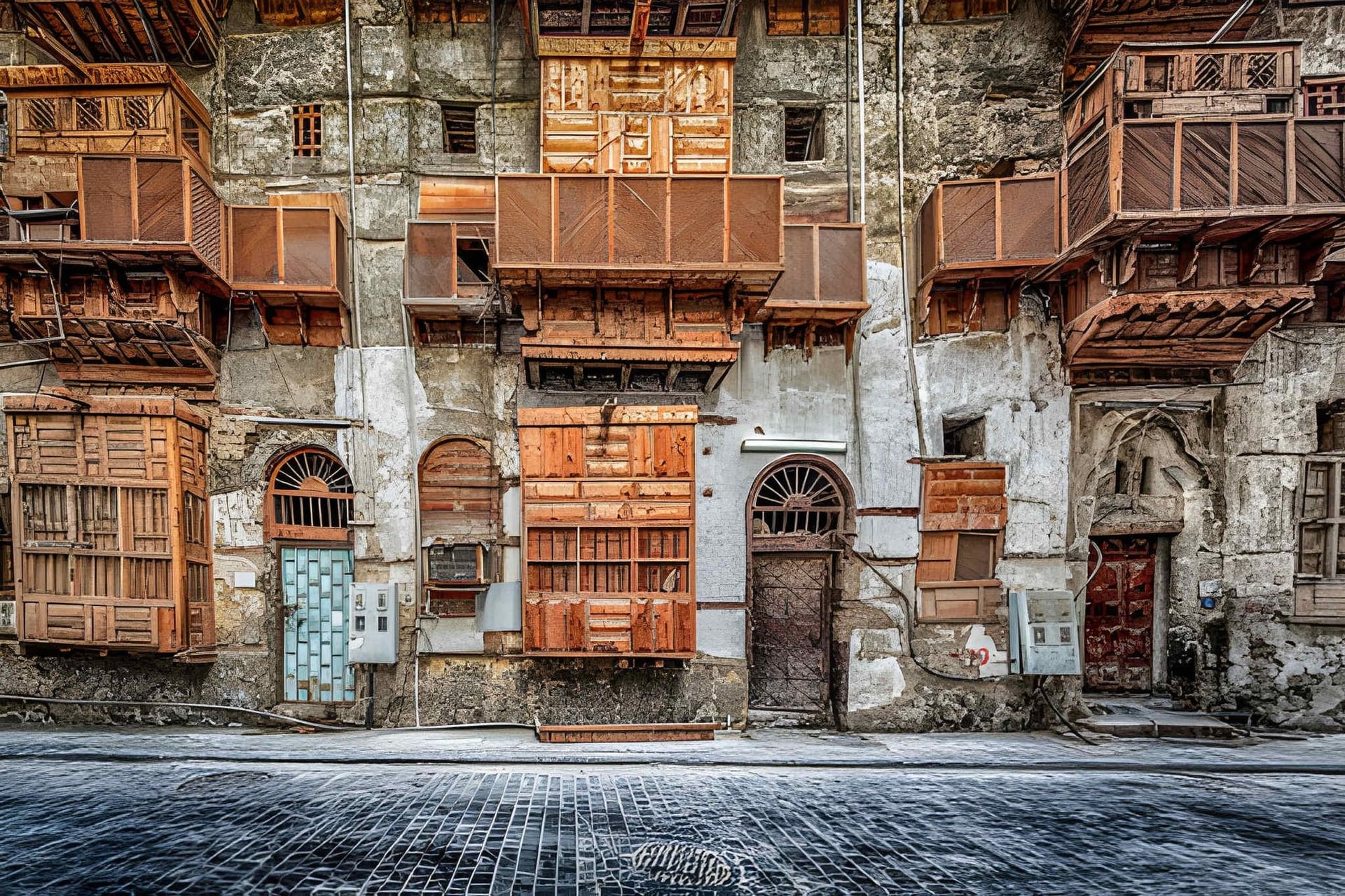
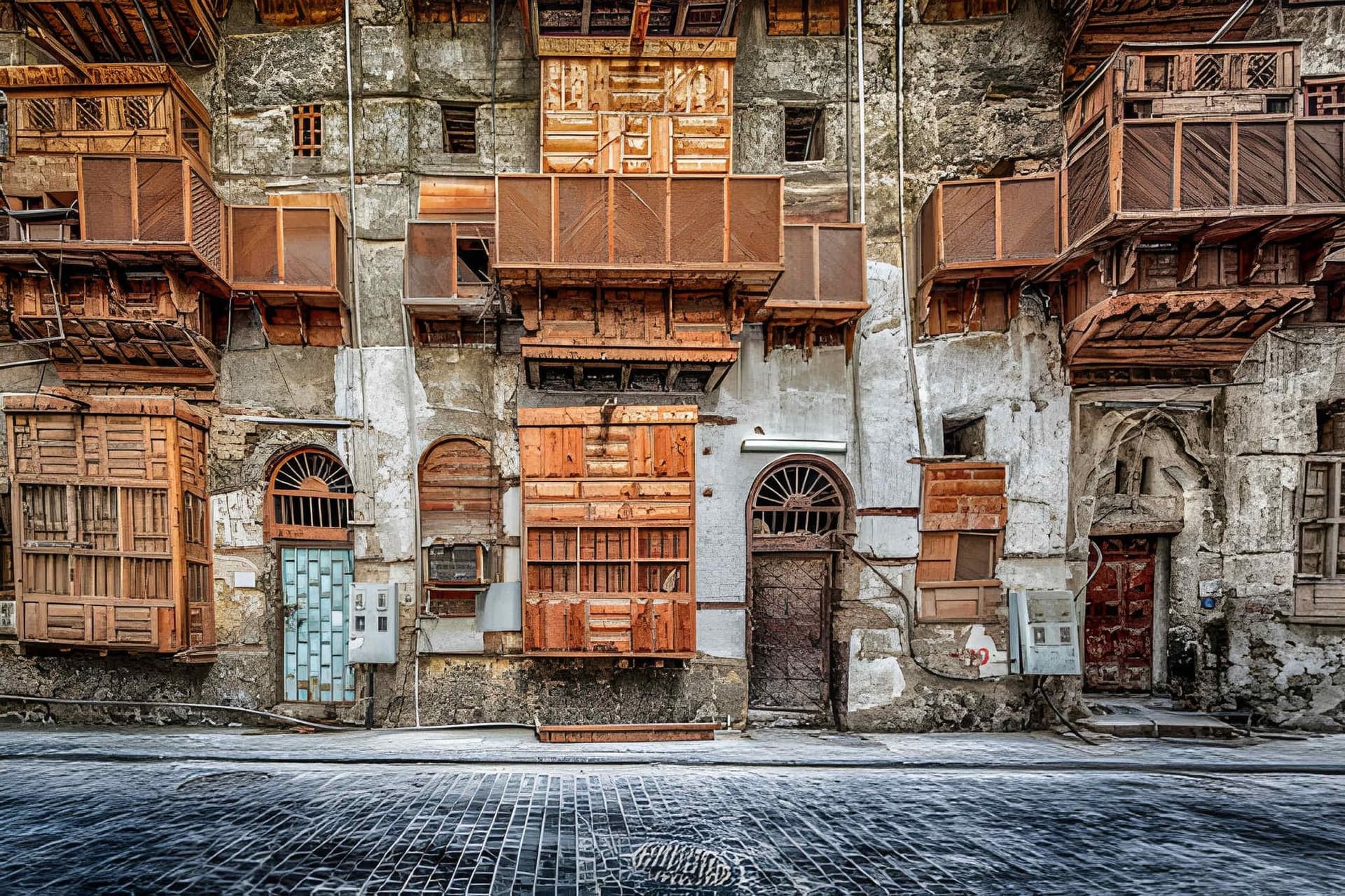
Jeddah is the Red Sea port and Saudi Arabia's second international airport, and it serves as both the arrival point for the west coast and a two-day stop in its own right. The reason to stop is Al-Balad, the old merchant quarter, on the UNESCO World Heritage List since 2014.
It is the most relaxed of the big Saudi cities, and the usual base for diving on this stretch of coast. The overview is on the Jeddah destination page.
Al-Balad, and why it looks the way it does
Jeddah has been a major port on the Indian Ocean trade routes since the 7th century AD, channelling goods towards Makkah and receiving pilgrims arriving by sea. Those two roles - trade and pilgrimage - paid for the quarter that survives, and made the city a multicultural centre with a building tradition of its own.
Historic Jeddah is built of coral stone quarried from the sea, in tower houses several storeys high, raised by the merchant families of the late 19th century. Their facades are covered in roshan - carved wooden bay windows that let air move through the rooms while keeping the street from seeing in - and the style mixes Red Sea coastal coral building with crafts picked up along the trade routes.
Be clear about the condition of the place before you go. A good part of the quarter is propped, and restoration is running building by building, so what you walk through is half ruin and half work site rather than a finished heritage attraction. That is also what makes it worth walking slowly. A guide is the difference between seeing old walls and reading them: Al-Balad walking tour covers the quarter on foot, and Al-Balad: what to expect and how to visit sets out what to expect.
The waterfront
The corniche runs for more than 30 kilometres along the city's sea edge, and it is where Jeddah goes in the evening - a public waterfront of walkways, art and open space rather than a single sight. King Fahd's Fountain stands offshore in the middle of it, throwing water 312 metres up, and it is visible from most of the city. Further along, the Art Promenade is a quieter residential stretch by the sea running down to the marina.
The sea itself
Jeddah is the southern access point for this part of the Red Sea, a coastline of more than 1,700 km with reefs that have had very few divers on them - which is the whole proposition here, coral in a condition that has become rare in the northern Red Sea. More than 90 islands lie off the coast. A half day is enough for a first look, as on Red Sea snorkelling; serious reef time means going north, which is what Jeddah & Umluj is for.
How long to stay
| Time | What it covers |
|---|---|
| One day | Al-Balad on foot and the corniche at dusk |
| Two days | Adds the sea, and a second unhurried pass through the old quarter |
| Three days | Adds a day trip inland or up the coast |
Two days is the usual answer. How many days do you need in Jeddah? works through it, and things to do in Jeddah lists what goes in each of them.
Getting around, and getting out
Jeddah sits on the Haramain high-speed line, which connects it with Madinah and Makkah. That matters for one reason in particular: Madinah is open to visitors of any faith, with access to certain sacred areas including Al Masjid an Nabawi restricted to Muslims, while Makkah is closed to non-Muslims entirely. It is widely assumed to work the other way round, and it does not. Jeddah & Madinah puts the two cities together.
Within the city, distances are driving distances. Getting to and around Jeddah covers the connections, and where to base yourself in Jeddah covers which part of the city to sleep in - near the old quarter or out along the water.
Entry, in plain terms
Travellers from 66 eligible countries can apply online for the Saudi tourist eVisa. It is a one-year, multiple-entry visa allowing a total stay of up to 90 days within that year (not 90 days per visit), and it covers tourism, events, visiting family and Umrah, but not Hajj. Applications go through the official government portal directly - this is not something an agent needs to do for you.
Where Jeddah leads
Most itineraries use the city as a start rather than a finish. Jeddah short break stays put; Jeddah, AlUla & Tabuk runs north-east into the sandstone valley and on to the far north-west; Riyadh & Jeddah pairs the coast with the capital. If you would rather take the north-west leg by road, driving from Jeddah to AlUla covers the drive.