Where you are going, and why it is worth the road
Al Ahsa lies inland from the Gulf coast in the Eastern Province, and the drive takes you out of Riyadh and across desert to reach it. What is at the end is not a town so much as a working landscape: the Al-Ahsa Oasis spans more than 85 square kilometres and holds around 2.5 million date palms watered by natural springs, which makes it the largest oasis in the world by palm count. UNESCO inscribed it in 2018, and the listing covers the whole system - gardens, canals, springs, wells and drainage works, together with the historic buildings and archaeological sites inside them - rather than any single monument. It has been farmed continuously since the Neolithic and it is still farmed now.
That is the thing to hold on to on the drive. This is not a preserved site with a fence around it; the archaeological remains sit inside a landscape that is still doing its job. The first-timer's guide to Al Ahsa covers the orientation in more detail.
Road is not the only option
Before committing to the car, it is worth checking the alternative. Al Ahsa is reachable by road or by rail from the Gulf coast, and Dammam has rail connections running inland to both Riyadh and Al Ahsa, as well as an international airport. Services and timetables change, so check the current position rather than relying on a schedule someone published last year. If you are driving anyway, the practical advantage is the return leg: the Riyadh and Al Ahsa journey uses a car for exactly that reason, and the Riyadh, Al Ahsa and Dammam route carries on to the coast instead of turning back.
Arrive hot, go underground
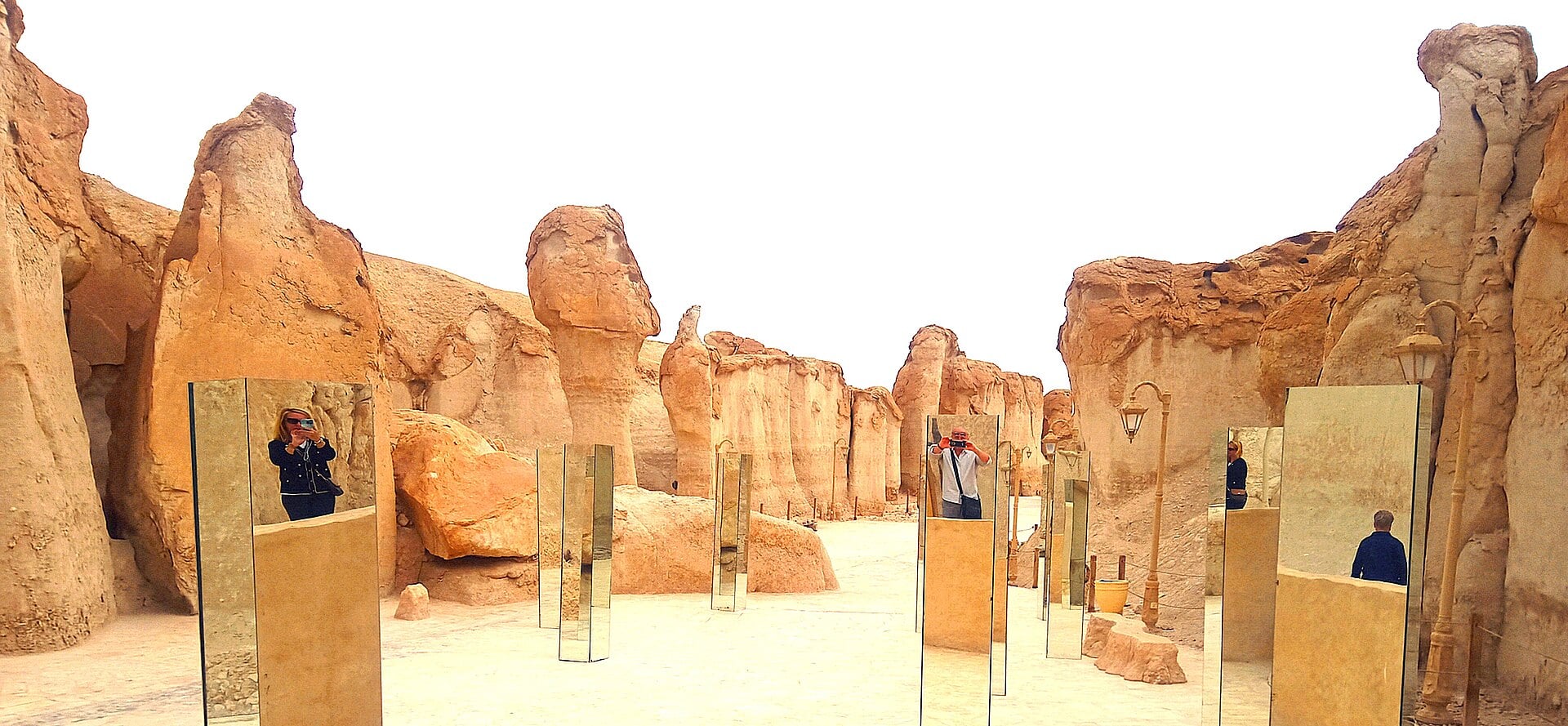
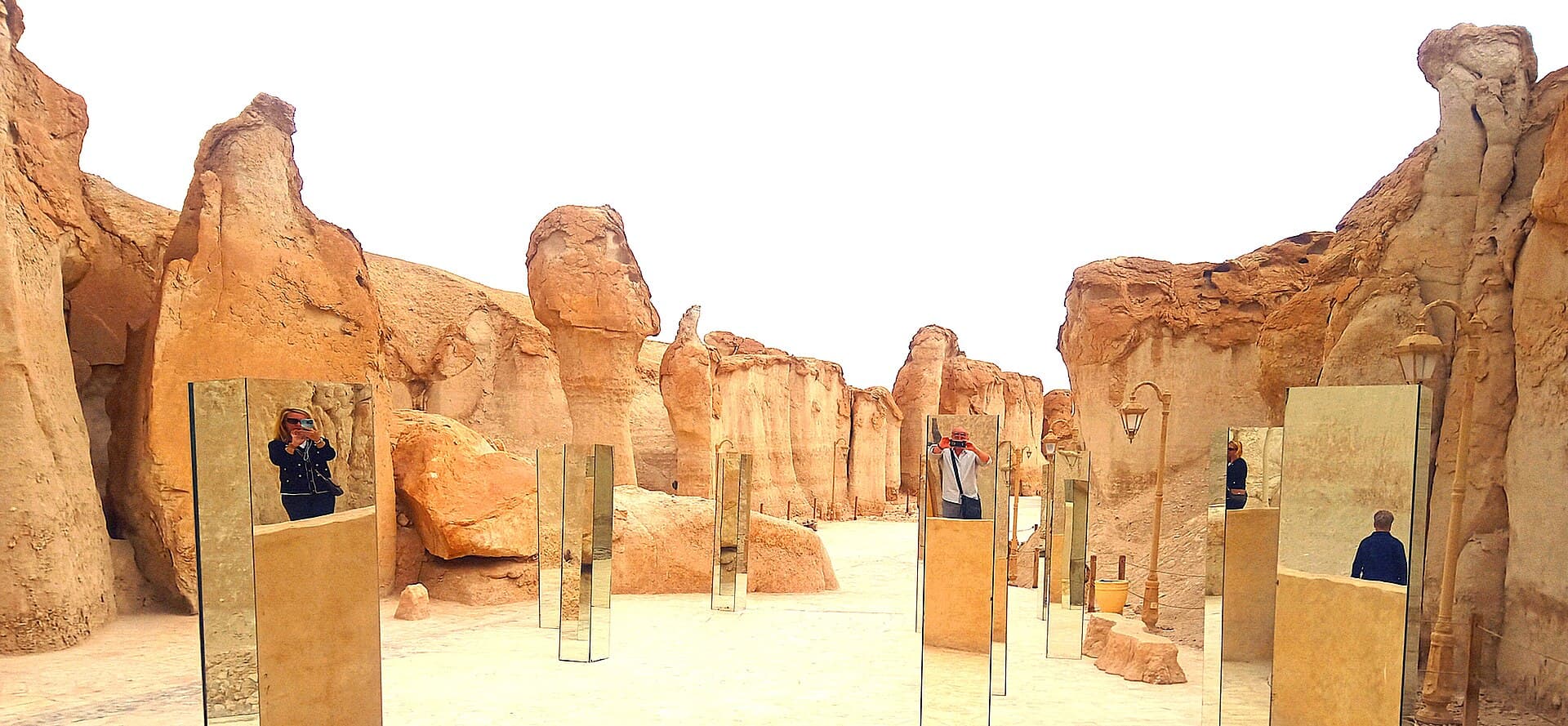
The obvious first stop after a long drive is the one that gets you out of the heat. Al Qarah Mountain is a limestone hill inside the oasis, running about 1.5 kilometres and cut through by 28 narrow, high-sided caverns, among them Al Nashab. The rock draws heat out of the air, so the passages hold a steady temperature while the oasis outside is well past 40 degrees - which is why they were used as shelter rather than found as a curiosity. Sections are floodlit and the caves are reached from a visitor centre at the base. The Al Qarah caves half day is the simplest way to fit it into an arrival afternoon.
The rest of the oasis
| Stop | What is there | Entry |
|---|---|---|
| Qasr Ibrahim, Al-Kut, Hofuf | A fortified palace of more than 18,000 square metres from the Al-Jabri dynasty, 1436 to 1534 CE: domes, arches, a prayer hall with a mihrab, watchtowers, barracks, stables and inner courtyards | No ticket needed |
| The oasis itself | Palm groves, springs and canals, with forts and Islamic architectural sites scattered through them | No ticket needed |
| Al Qarah Mountain | 28 caverns through a limestone hill about 1.5 km long | Reached from a visitor centre at the base |
| Al Asfar Lake | One of the largest natural water bodies in the Gulf, formed by decades of seasonal rainfall and now a nature reserve; blue in summer, pale in winter | Nature reserve |
Two more sit in the same area. Sahoud Palace was built between 1790 and 1800 and named after the large cannon that once guarded its grounds, and the Touristic City of Jawatha, north-east of Al Hofuf, opens daily from eight in the morning until midnight. Hofuf's old souq pairs naturally with the fortified palace on the Hofuf souq and Ibrahim Palace half day, and things to do in Al Ahsa runs through what else fits around them.
Timing the drive
Heat is the governing factor here rather than distance. The caverns at Al Qarah hold their temperature when the oasis outside is over 40 degrees, which tells you plainly what the surface conditions can be, so the time of year does more to shape this trip than the road does - the best time of year to visit Al Ahsa sets out the months that work. Leaving Riyadh early is the standard approach, which also means settling how you are getting around the capital beforehand; getting to and around Riyadh covers that side.
Whether to continue to the Gulf or return the way you came is the other decision. Dammam and Al Khobar are a short run further out, with the seafront along the Gulf as the main public space and the causeway to Bahrain leaving from there, and Dammam's airport makes a one-way trip workable rather than forcing the return drive.