What two days in the valley can actually cover
AlUla is a sandstone valley in the north-west holding four separate sites within a short drive of one another: the Nabataean tombs at Hegra, the cliff-cut capital at Dadan, the inscription canyon at Jabal Ikmah, and the mud-brick Old Town. Two days covers all four without rushing, provided you accept the one constraint the valley imposes - Hegra cannot be entered on your own. Access is by guided tour with an AlUla Rawi, the local storyteller-guides, moving between tomb clusters by vehicle, and daily numbers are capped. Book it before you travel, not on arrival.
The second thing that shapes a 48-hour plan is that the Old Town keeps different hours from the archaeology. Most of it opens between eight and nine in the morning, but it comes alive after three in the afternoon, with shops running to about eleven at night and most restaurants to around one. That hands you your evenings and frees both mornings for the sites.
| Day one | Day two | |
|---|---|---|
| Morning | Hegra, on a tour booked in advance | Dadan and Jabal Ikmah |
| Late afternoon | The valley viewpoints, or a first pass through the Old Town lane | Elephant Rock as the light drops |
| Evening | Old Town shops and restaurants | Stargazing, or a performance if the calendar has one |
Day one: Hegra, then the Old Town
Hegra is the largest surviving Nabataean city after Petra and the first property in Saudi Arabia inscribed on the UNESCO World Heritage List. UNESCO counts 111 monumental tombs, 94 of them decorated, with facades cut directly into sandstone outcrops standing on open desert floor and dating from the first century BC to the first century AD. The site also holds some fifty pre-Nabataean inscriptions and cave drawings. One tomb has a person attached to it: Hinat's burial was excavated in 2008, and the reconstruction of her face is shown at the Hegra Visitor Centre. A guided Hegra day is the mechanism, and what to expect at Hegra explains how the visit is structured.
Give the evening to AlUla Old Town. It is a labyrinth of mud-brick houses built from the twelfth century, on the incense route and the pilgrim road from Damascus to Makkah, walled with fourteen gates and overlooked by a fort of around the tenth century standing 45 metres up. The climb is the fastest way to understand the town's plan. The restored lane below now holds shops and restaurants, and it is the one place in the valley with a genuine evening.
Day two: the older kingdoms, then the rock
Start with Dadan, capital of the Dadanite and Lihyanite kingdoms more than two thousand years ago, cut into the cliff above the oasis. The tombs sit almost 50 metres up the rock wall as square openings in a line; two are guarded by carved lions, and the scale only registers once you notice how small the people below them look. Excavation is ongoing and much of the site is still unread.
Continue up the valley to Jabal Ikmah, a desert canyon whose walls carry more than 300 carved inscriptions in Dadanitic, Thamudic, Minaic and Nabataean scripts - the largest concentration of Dadanitic and Lihyanite writing anywhere. It is worth being precise about its status, because most travel writing gets it wrong: Jabal Ikmah is on UNESCO's Memory of the World Register, which recognises documentary heritage, and that is a different list from the World Heritage List. The canyon is short and mostly level, the inscriptions sit close to the path, and there is no ticket. A combined Dadan and Jabal Ikmah day links the two.
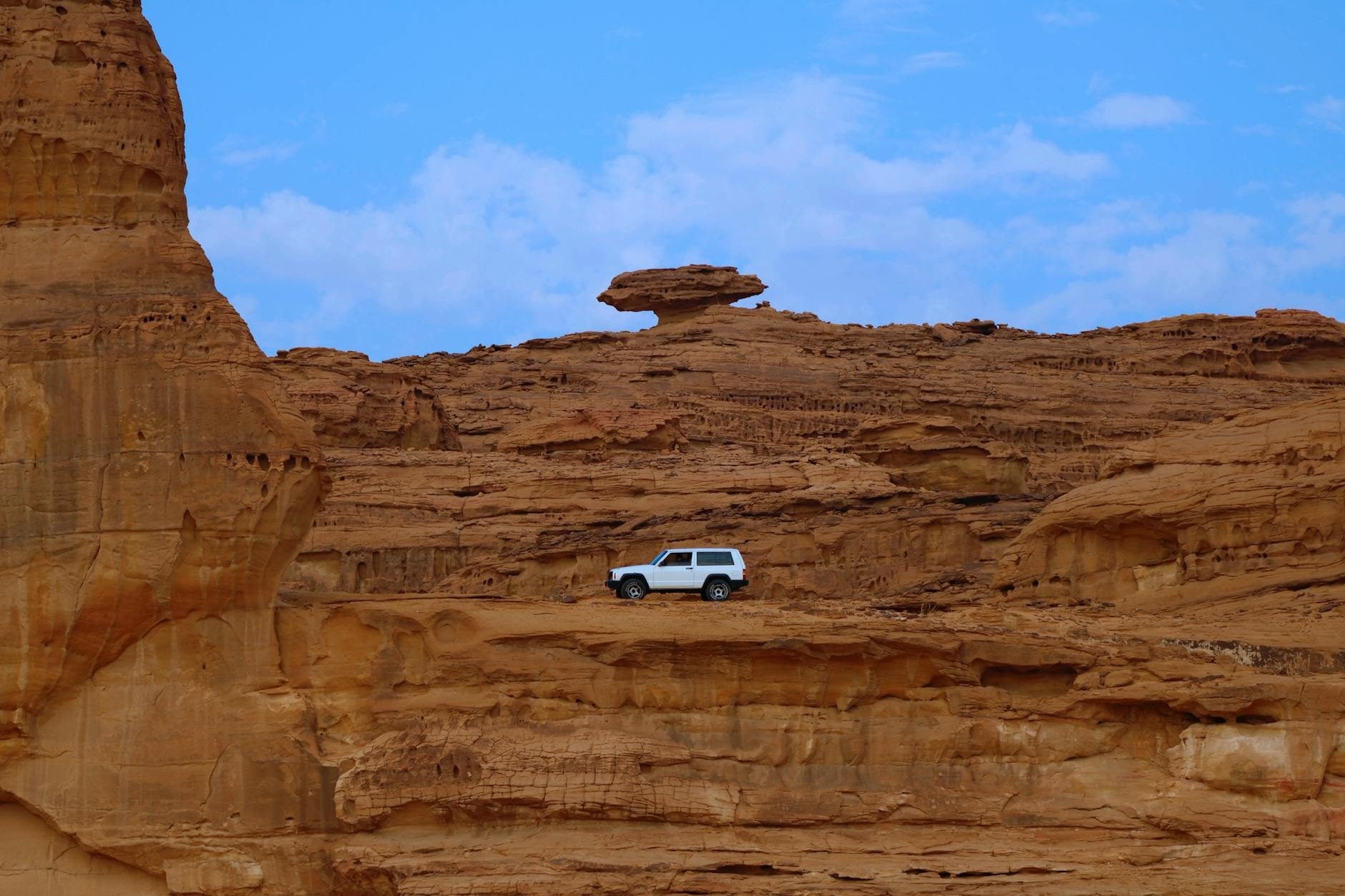
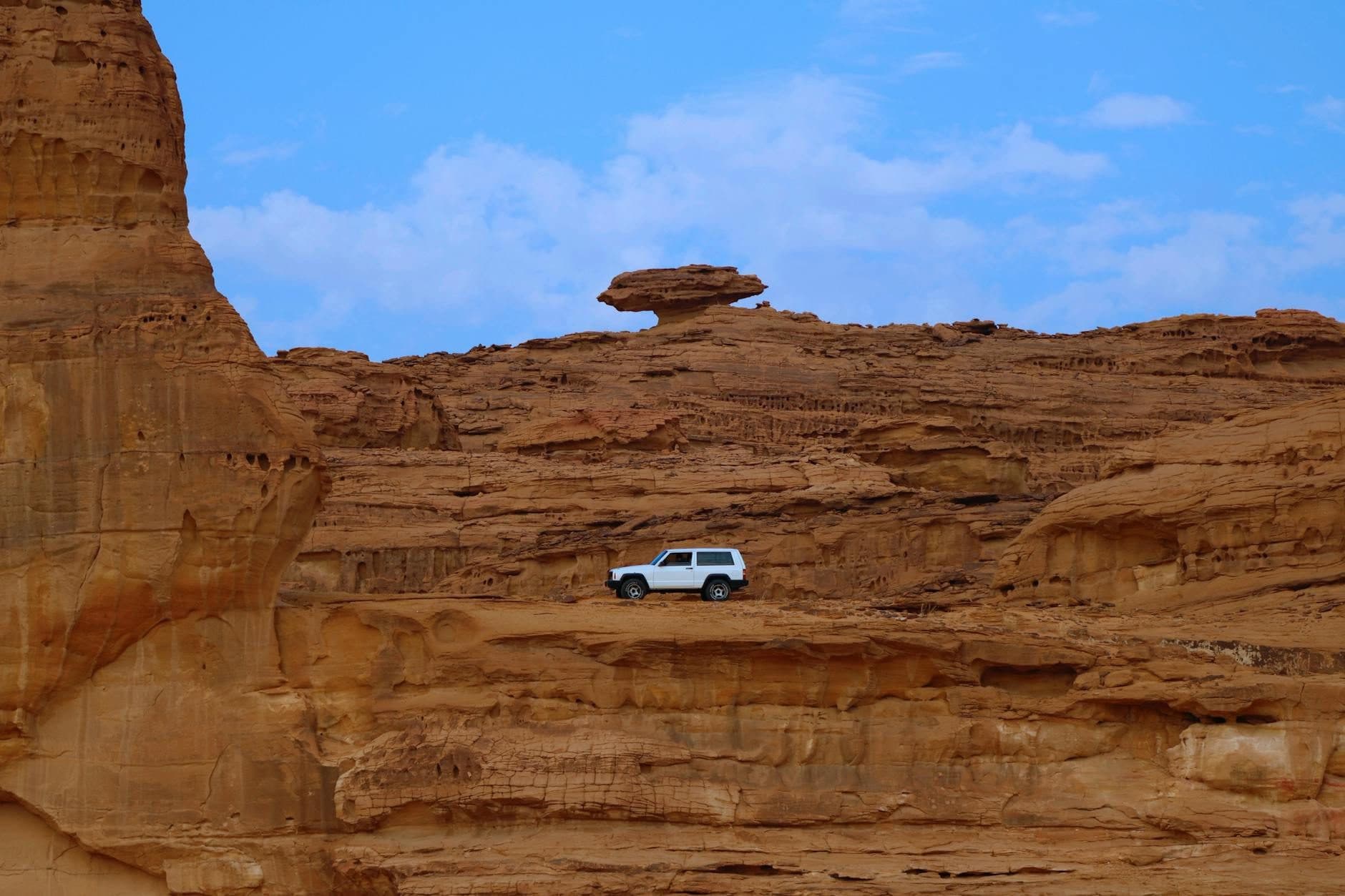
Hold the late afternoon for Elephant Rock, a 52-metre sandstone outcrop weathered into the shape of an elephant with its trunk to the ground, standing alone on open sand. Known in Arabic as Jabal AlFil, it is a twenty-minute drive north-east of the Old Town on Highway 70. The sandstone turns deep red as the light goes, sunken seating has been cut into the sand around the base, and there is no ticket. The sunset visit times the arrival for you.
What forty-eight hours will not reach
Two days leaves out the wider valley. Maraya, the mirrored concert hall in the Ashar valley twenty minutes from the centre of AlUla, is a venue rather than a monument, so what is on depends on the calendar - check before making the drive. Sharaan Nature Reserve holds Arabian ibex, Idmi gazelles, red-necked ostriches and rock hyraxes, but its experiences pause over summer and return in the cooler months; the Sharaan drive is a third-day item, not a 48-hour one. So is a night out under the valley sky on the stargazing evening.
If that list makes two days feel tight, it is - how many days you need in AlUla makes the case for three or four, and the AlUla short break is built around that longer stay. Either way, October to March is the workable window; summer in the valley is severe, as the seasonal guide sets out. For where to sleep between the two days, see where to base yourself in AlUla.