Why make this drive at all
Najran sits in southern Saudi Arabia between mountains, oases and desert, on the Yemeni border. It is remote, and very few visitors reach it. That is the honest starting point, and it is also the argument for going: at Al-Okhdood there is no crowd management to work around.
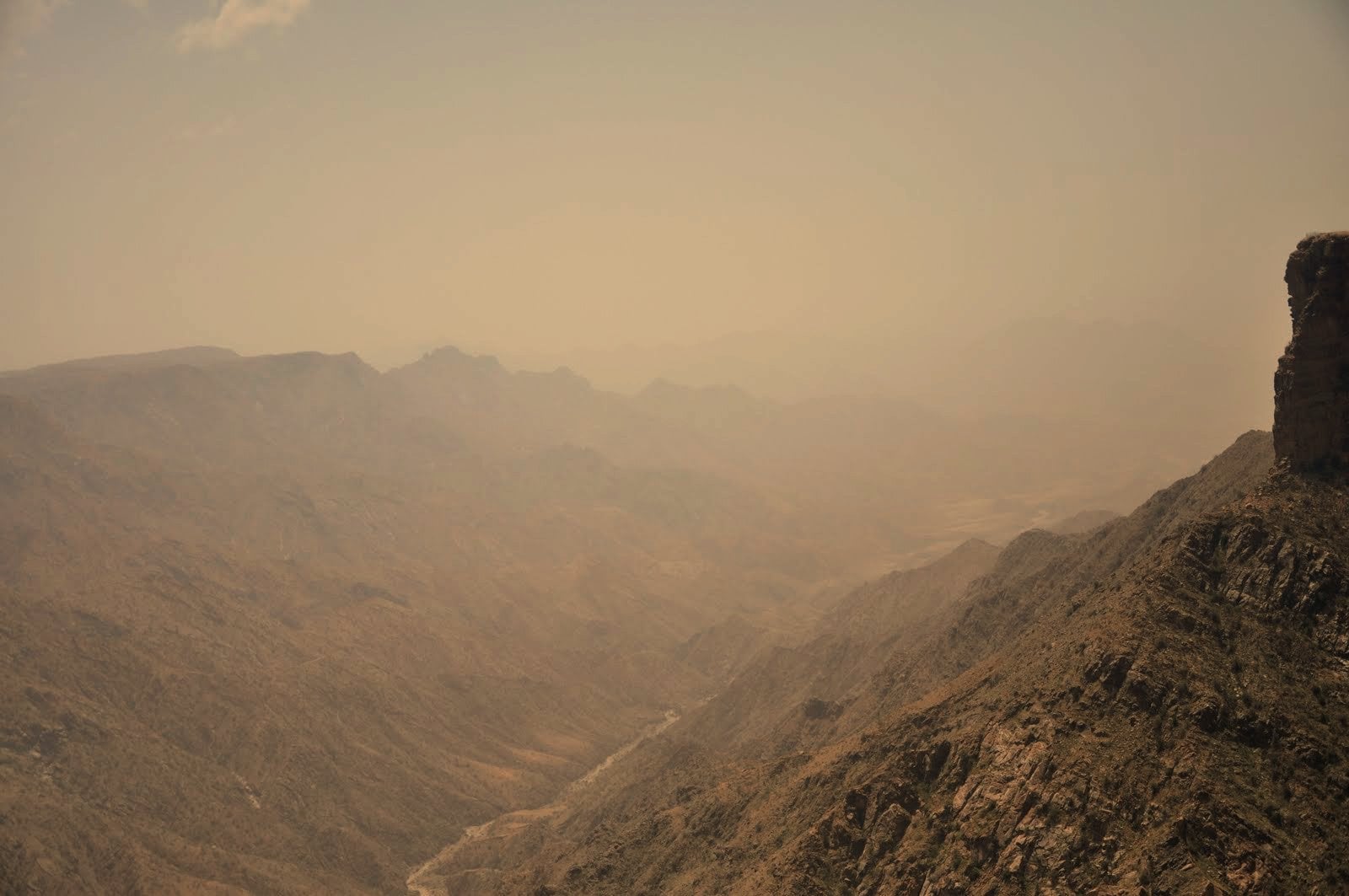
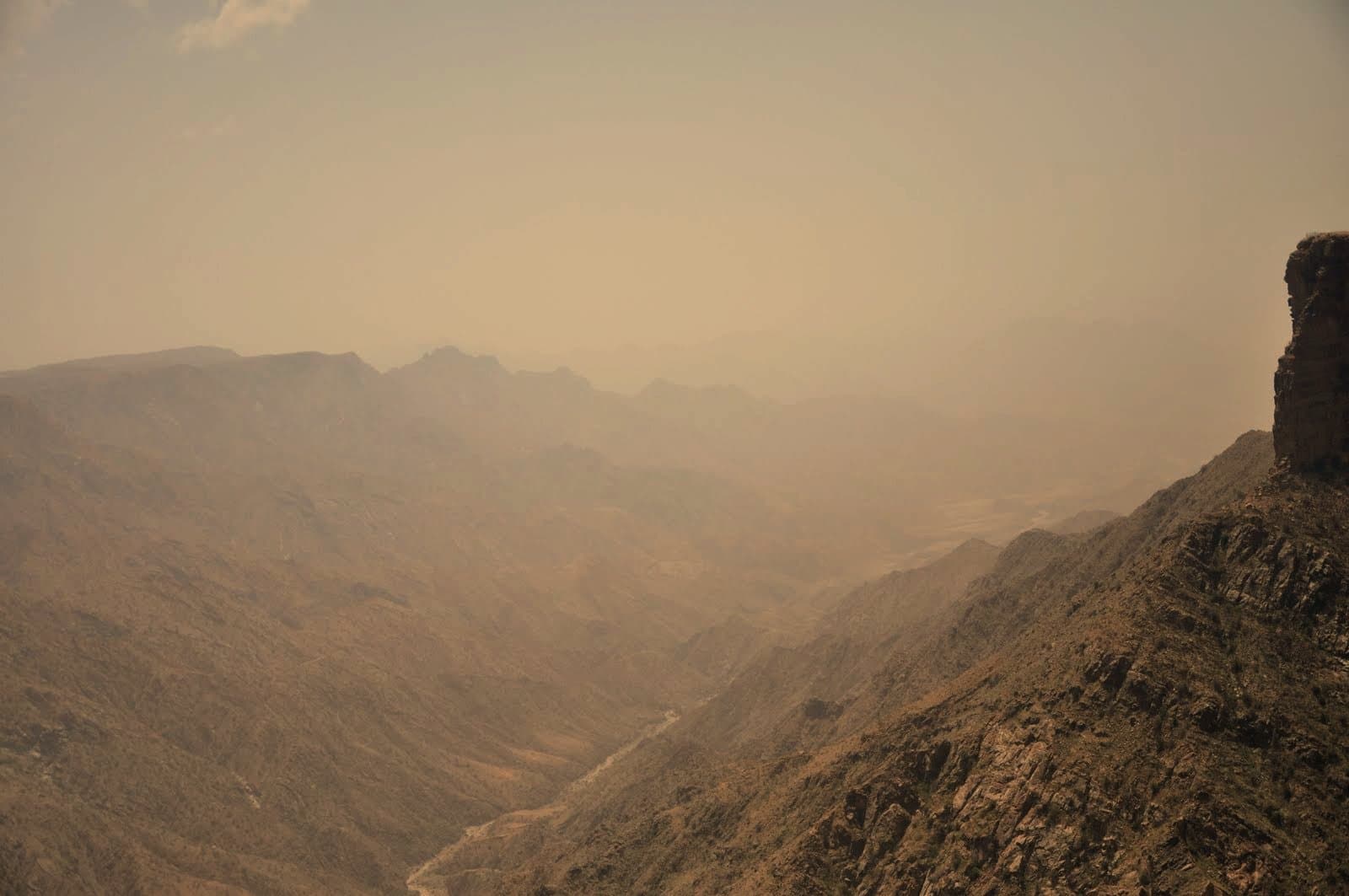
Abha is the natural place to leave from. It is the main town of the Asir highlands, cool and green where the escarpment catches monsoon cloud, and the road out of it leads into country of a completely different kind.
Al-Okhdood
Al-Okhdood lies south-west of Najran, a walled pre-Islamic city close enough to the surface that the street plan is still readable on the ground. Its history extends back to 1000 BC, and it stood on the caravan route that carried frankincense north out of southern Arabia.
What survives is the outline: stone walls, foundations, and blocks carved with inscriptions and with animal figures, together with the remains of the qasaba and the mosque. The site is connected to the story of Ashab Al-Okhdood, the people of the ditch, mentioned in the Quran and dated to around 300 BC. You can walk it during the day using the guidance prepared on site, and see the Rahha rock used for grinding wheat and pottery vessels used by the city's inhabitants. There is no ticket, and a visitor centre of about 300 square metres stands inside the site itself, built with materials drawn from the surroundings. Rare artefacts taken from the site are shown at the Najran Museum for antiquities and folk heritage. The Najran Regional Museum is a separate collection, holding inscriptions from civilisations reaching back to prehistoric times and documentary photographs of the caravan route.
Al-Ukhdud and the mud-brick palaces is the full day that puts the site together with the architecture around it.
Himā, north of the city
The Himā Cultural Area was inscribed on the UNESCO World Heritage List in 2021. It is a cluster of desert wells in an arid, mountainous area on one of the Arabian Peninsula's ancient caravan routes, surrounded by a substantial collection of rock art depicting hunting, fauna, flora and ways of life across a cultural continuity of 7,000 years.
Travellers and armies camping there left inscriptions and petroglyphs through the ages and until the late 20th century, most of them preserved in pristine condition, in scripts including Musnad, South Arabian, Thamudic, Greek and Arabic. A single site therefore carries the writing systems of the peninsula in sequence. The wells still hold water, which is unusual for a site of this age: the reason it was used has not stopped being true.
The architecture is the third reason
Najran's own building is distinct from the rest of the country: tall mud-brick houses with white-painted crenellations, closer to Yemeni building than to the Najdi style of the centre. Al-Aan Palace, also known as Saadan Palace, is one of several historic palaces that form the region's architectural legacy. Al Manjam Palace, in the village of Al Manjam, was built in 1688. In the Aba Al-Saud neighbourhood, beside the old heritage market, the historic Emirate Palace shows the architectural fabric of Najran's mud houses at full scale.
Drive or fly
Najran has an airport and so does Abha, so this is a choice.
| Option | Makes sense when |
|---|---|
| Private car and driver | You want the ground between highland and desert, and a vehicle at the far end: the two main sites sit on opposite sides of the city |
| Flying between the airports | Najran is a fixed short stop inside a longer itinerary and the travelling time has to come down |
How much time to give it
A night in Najran rather than a turn-around is what makes both sites possible without rushing either. Al-Okhdood is south-west of the city and Himā is north of it, so they do not combine into a single sweep, and the palaces are a third call again: the Emirate Palace stands in the Aba Al-Saud neighbourhood, while Al Manjam Palace is out in the village of Al Manjam. Abha and Najran is built on exactly that shape, using the highlands as the base and the desert city as the second half.
How many days do you need in Abha? is the companion question, because the days for both come out of the same trip.
What Abha adds at the other end
The highlands are the reverse of Najran in almost every respect: terraced and farmed rather than arid, and busiest in summer, which is the opposite of everywhere else in Saudi Arabia. Cable cars run down the escarpment, Asir National Park has trails, and Rijal Almaa, the painted stone village, lies below the town on the escarpment road. Abha markets and the old quarter covers the town itself, and Abha: a first-timer’s guide and things to do in Abha fill in the rest before you set off south.