Two different climates in one day
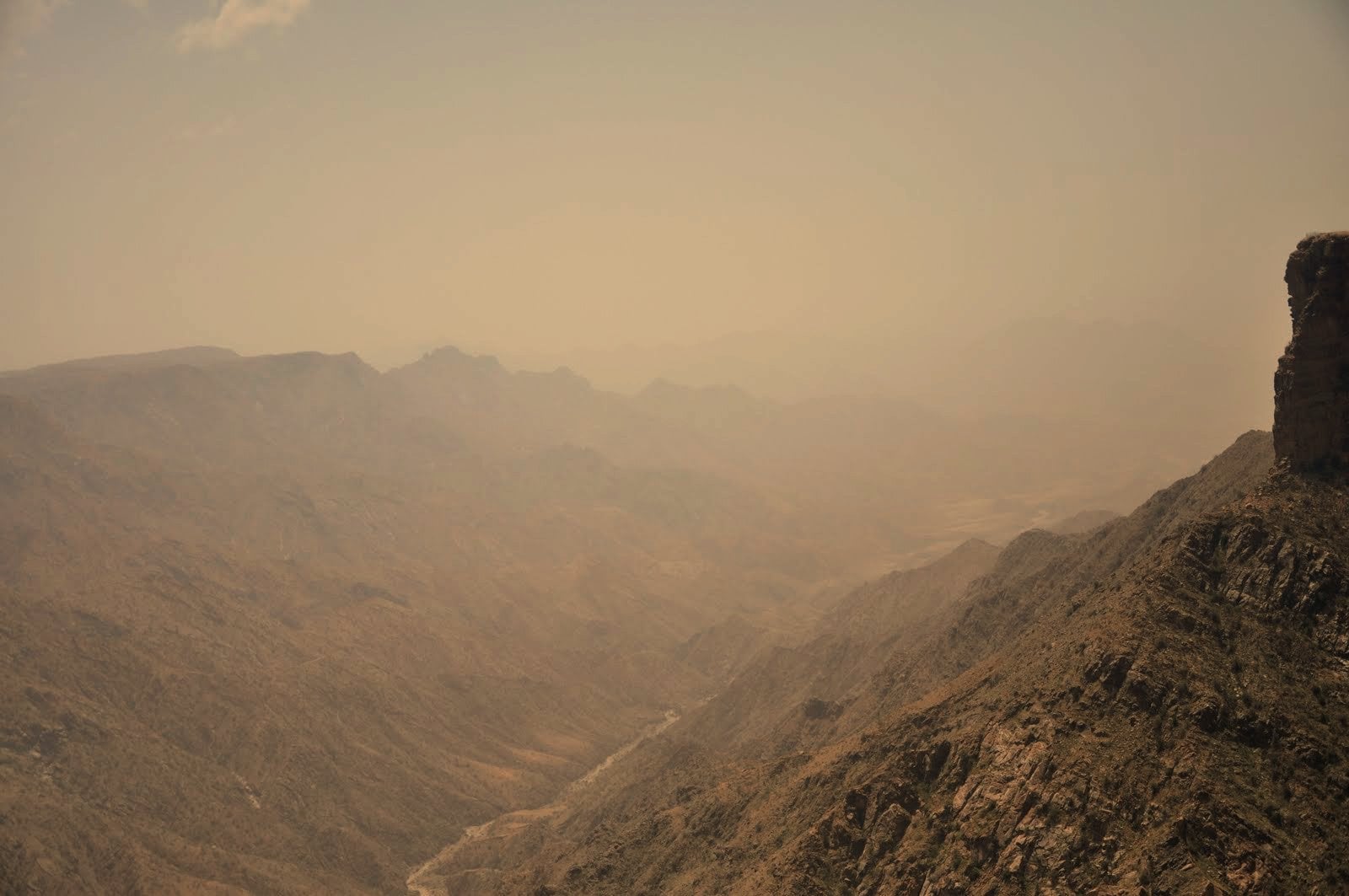
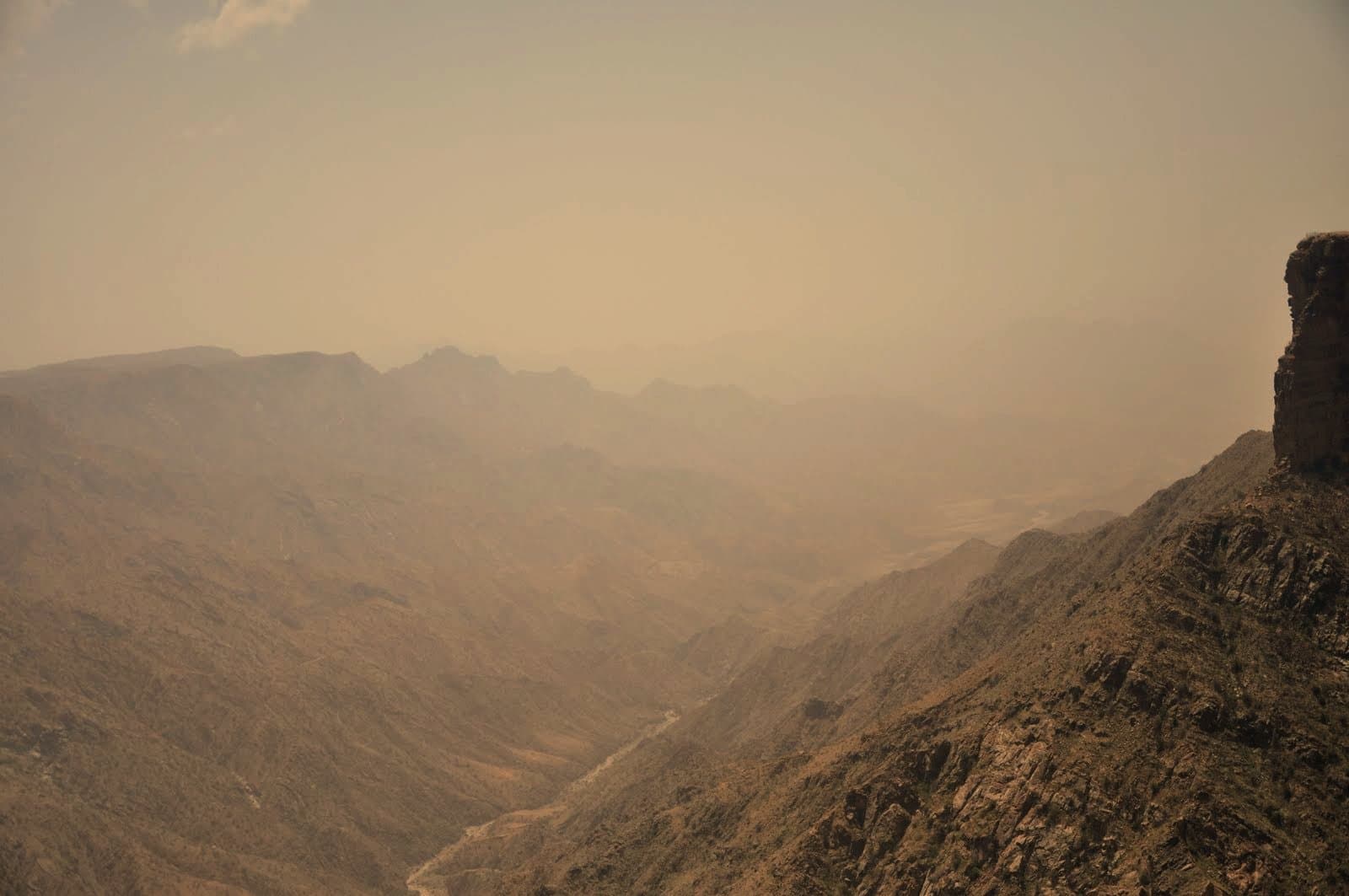
Abha is the main town of the Asir highlands in the south-west, high enough in the mountains to stay cool when the rest of the country is not. The Asir escarpment catches monsoon cloud, so the ground here is green, terraced and farmed, juniper forest rather than desert, and that climate is the entire reason Saudis themselves travel here.
Jeddah is the opposite end of that: the Red Sea port, a working coastal city, and the usual base for diving on this stretch of coast. The road between them is a descent out of one of those places into the other, which is worth more than the mileage suggests.
The stop that justifies the road
Rijal Almaa is 45 kilometres from Abha, below the town on the escarpment road, which makes it the obvious thing to build into a day that begins by going downhill.
Rijal Almaa Heritage Village is a village of stone tower houses whose architecture carries more than 700 years of history. The buildings are dark basalt laid in courses, several storeys high, with lines of white quartz set into the outer walls, and they stand stacked up the mountainside so tightly that the village reads as a single structure from the valley floor. The design was not only about looks: family members shared the multi-storey buildings, and the plan reflects the social life of the area.
Inside, the walls are painted in Al-Qatt Al-Asiri, geometric bands of bright colour applied by the women of the house directly onto the plaster. UNESCO added the practice to its intangible heritage list in 2017. One house, belonging to a man from Almaa, was turned into the village museum: 20 sections holding traditional pieces, old manuscripts and ancient farming, construction and transport tools. Qasabat Al-Owus Tower has the highest view over the landscape, and there is a visitor centre covering Asir from prehistoric times to the Saudi era. There is no ticket. Rijal Almaa village runs it as a half day if you are not driving through.
Drive or fly
Abha has its own airport, and Jeddah has the country's second international airport, so the road is a choice rather than a necessity.
| Option | Makes sense when |
|---|---|
| Private car and driver | You want Rijal Almaa, the escarpment road and the descent itself, and you would rather the travelling day did some work |
| Flying between the two airports | The mountain part of the trip is finished and Jeddah is a connection rather than a destination |
The honest test is whether you will stop. If the answer is no, the road has nothing to offer that the air does not.
Season decides more here than route does
Summer is the high season in Abha, which is the reverse of everywhere else in Saudi Arabia. The highlands are where people go when the lowland heat is at its worst, so the mountain end of this trip runs on a different calendar from the coast. The best time of year to visit Abha sets out how that plays against the rest of an itinerary.
What to see before you leave the mountains
Cable cars run down the escarpment, Asir National Park has trails through it, and Al Habala Park sits at high altitude, named for the rope ladders once used to reach the village on the cliff below; it has a cable car of its own and panoramic views where the sky meets the ground. Al Soudah is the highest peak in Saudi Arabia. Al-Soudah and the escarpment takes in that side of the range, and things to do in Abha has the rest.
Arriving on the coast
Historic Jeddah, known locally as Al-Balad, has been on the UNESCO World Heritage List since 2014. Jeddah has been a major Indian Ocean port since the 7th century AD and the point at which pilgrims arrived for Makkah by sea, and that pairing built the quarter: coral-stone tower houses, faced in the carved wooden bay windows called roshan. A good part of the quarter is propped and under restoration, so it is a working site rather than a finished one. The Jeddah Corniche runs for over 30 kilometres along the waterfront.
Making it a route rather than a transfer
Jeddah and Abha treats the two ends as one trip, and Jeddah, Taif and Abha puts the Taif mountains in between, so the itinerary climbs, drops and climbs again rather than making one long descent. Abha: a first-timer’s guide is the place to start if the highlands are new to you.