What Tabuk actually is
Tabuk is Saudi Arabia's north-west: sandstone desert, the old Hejaz Railway, and canyon country running up towards the Jordanian border. The province holds a large number of archaeological sites, and the landscape west and south of the city is the sandstone and canyon country the region is really known for.
The Saudi Tourism Authority describes the province as marking the start of the country's Red Sea coast, with seaside towns offering clear water and beaches, and as the setting of the story of the prophet Moses, who lived nearby for a decade. It is also the site of NEOM. The short version for a first visit: the province is the reason to come, and the city is the base you work from. Tabuk has an airport, which makes it the natural starting point for the far north-west.
The two historic sites in the city
Both belong to the same story. Tabuk sat on the road north to Damascus, and later on the railway that followed the same line.
| Site | What it is | Entry |
|---|---|---|
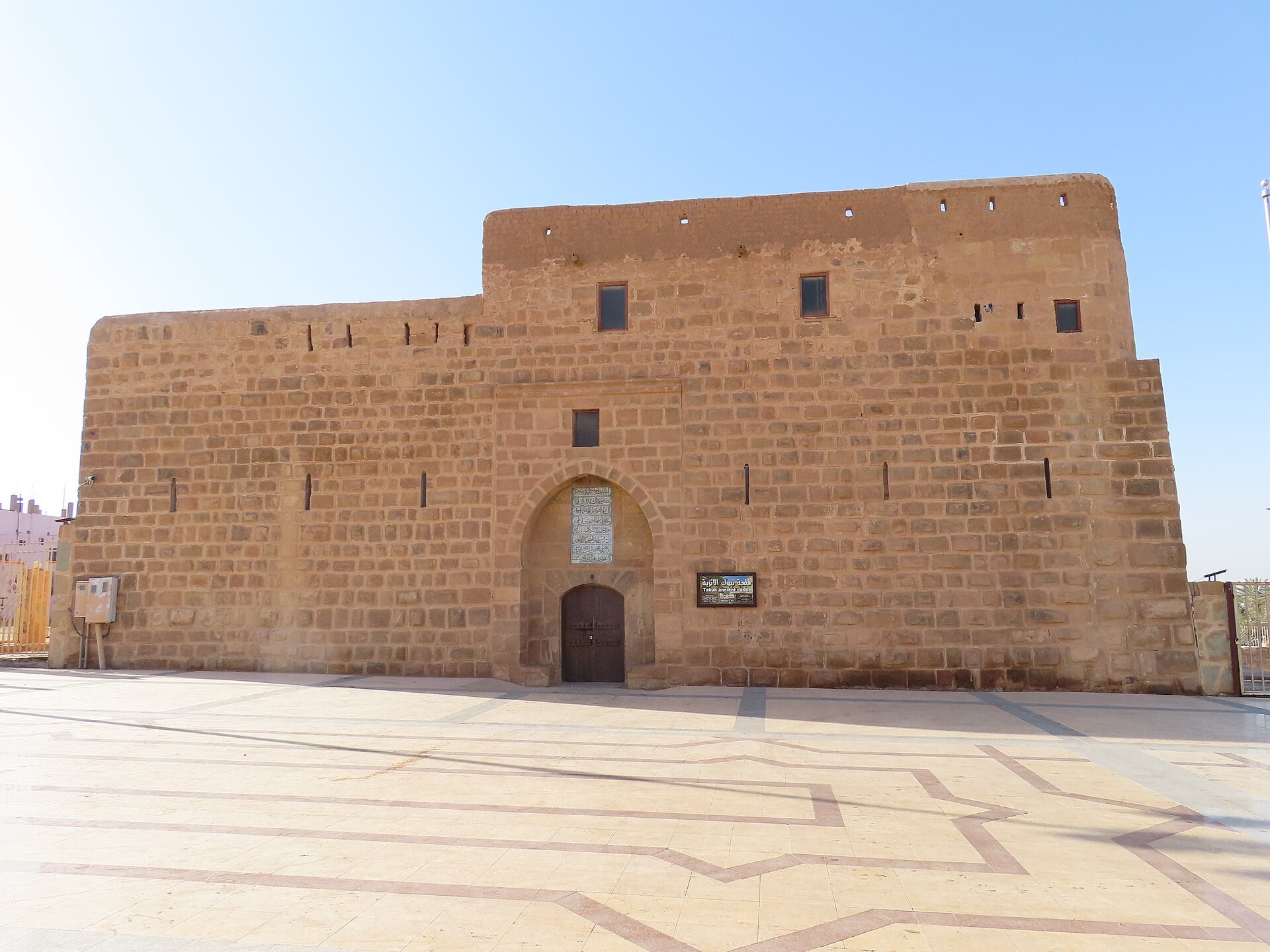
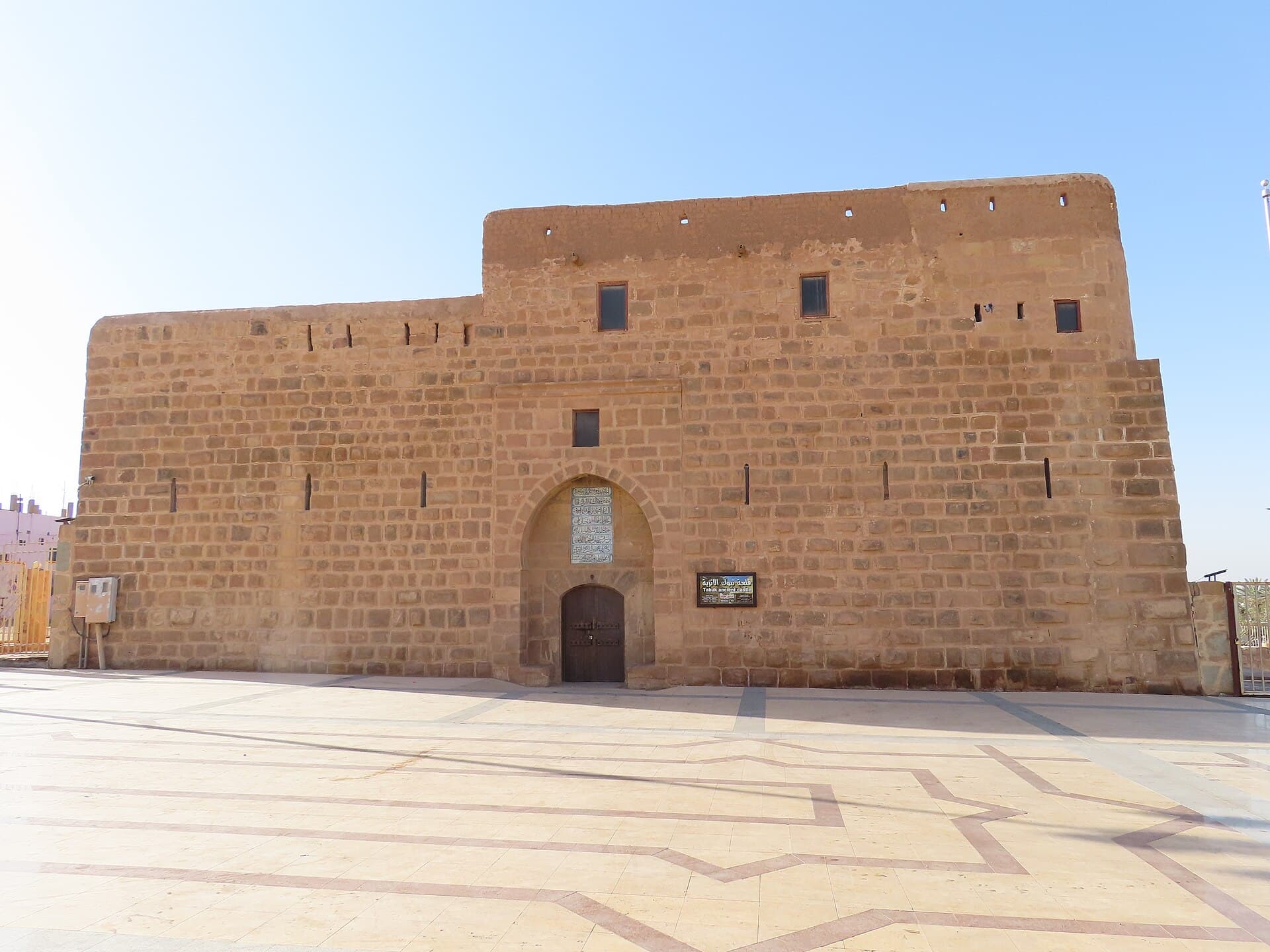
| Tabuk Castle | A fort of 1559 on the Damascus–Madinah road, holding inscriptions, old photographs and heritage exhibits | No ticket |
| Hejaz Railway station | A stop on the line begun in 1900 between Damascus and Madinah | No ticket |
Tabuk Castle was built on the old road connecting Damascus to Madinah. Its towers were used for monitoring and guarding that road, and it worked as a major station for pilgrims travelling to Masjid Al-Haram as well as for trade and travel caravans, which fed the growth of the regional economy. Its construction dates to 1559, and it has been restored several times, twice under Saudi Arabia. Inside there are archaeological inscriptions, old photographs and heritage exhibits covering historical and Islamic events in the Tabuk region, plus a room given over to documentary films. A guided half day that takes in the castle and the quarter around it is the Tabuk old town and castle tour.
The station in the city belongs to the Hejaz Railway, begun in 1900 and eight years in the building. Where the overland crossing from Damascus to Madinah had taken 45 days, the train did it in no more than five. Within Saudi borders the line runs from Halat Ammar in the north down to Madinah, through 23 stations set about 20 kilometres apart, each with rest houses and supply, maintenance and guard posts. The longest bridge in Saudi Arabia was built along its path, over Wadi Al-Akhdar, and a tunnel was cut through a mountain in the same area. The first train reached Madinah on 22 August 1908, and by 1914 the number of pilgrims carried had reached 300,000. The First World War damaged large parts of the line that year and the service was suspended.
The rest of the city
Al-Tawbah Mosque is the other landmark worth knowing. The site is connected to events from the Battle of Tabuk, and the markets and neighbourhoods of the city cluster around it, so it doubles as the orientation point for the old centre. The Tabuk Attraction Mud House — commonly known as the Mud House Museum — holds archaeological material and objects from the region's past.
Green space counts for more here than the phrase usually suggests. The city has around 44 gardens, and Prince Fahad Bin Sultan Park stretches over 500,000 square metres of grass, where families and friends gather over Saudi coffee flavoured with saffron and cardamom. For a fuller run through what to fill a day with, read Things to do in Tabuk.
What lies outside the city
The reason to give Tabuk more than one night is the province. West and south of the city the ground turns to sandstone and canyon; there are mountains in the north; and carved tombs sit out in the desert at Maghaer Shuaib among other sites. A Tabuk short break is built around getting into that landscape with a driver and a guide rather than trying to reach it unaided, because the distances are long and much of it lies off the main roads.
Pairing Tabuk with AlUla
Tabuk sits in the same corner of the country as AlUla, and the two are often run together: AlUla & Tabuk does exactly that, and it is also how you see Hegra, Saudi Arabia's first UNESCO World Heritage Site, on the same trip. Adding a city at the front works well too, either from the capital on Riyadh, AlUla & Tabuk or from the coast on Jeddah, AlUla & Tabuk.
Practical notes for a first visit
Fly in rather than drive the whole way — the airport is the single biggest argument for using the city as a base. Neither the castle nor the railway station needs a ticket, so the city half of the trip is straightforward to arrange. What is harder is the province, where a private driver, hotel pick-up and a guide who knows which tracks are passable make the difference between seeing the canyon country and seeing the road to it.
Timing matters more than in most of the country, because the province ranges from coast to desert to mountain. The best time of year to visit Tabuk sets out what each part of the year is like, and it is worth reading before you fix dates.