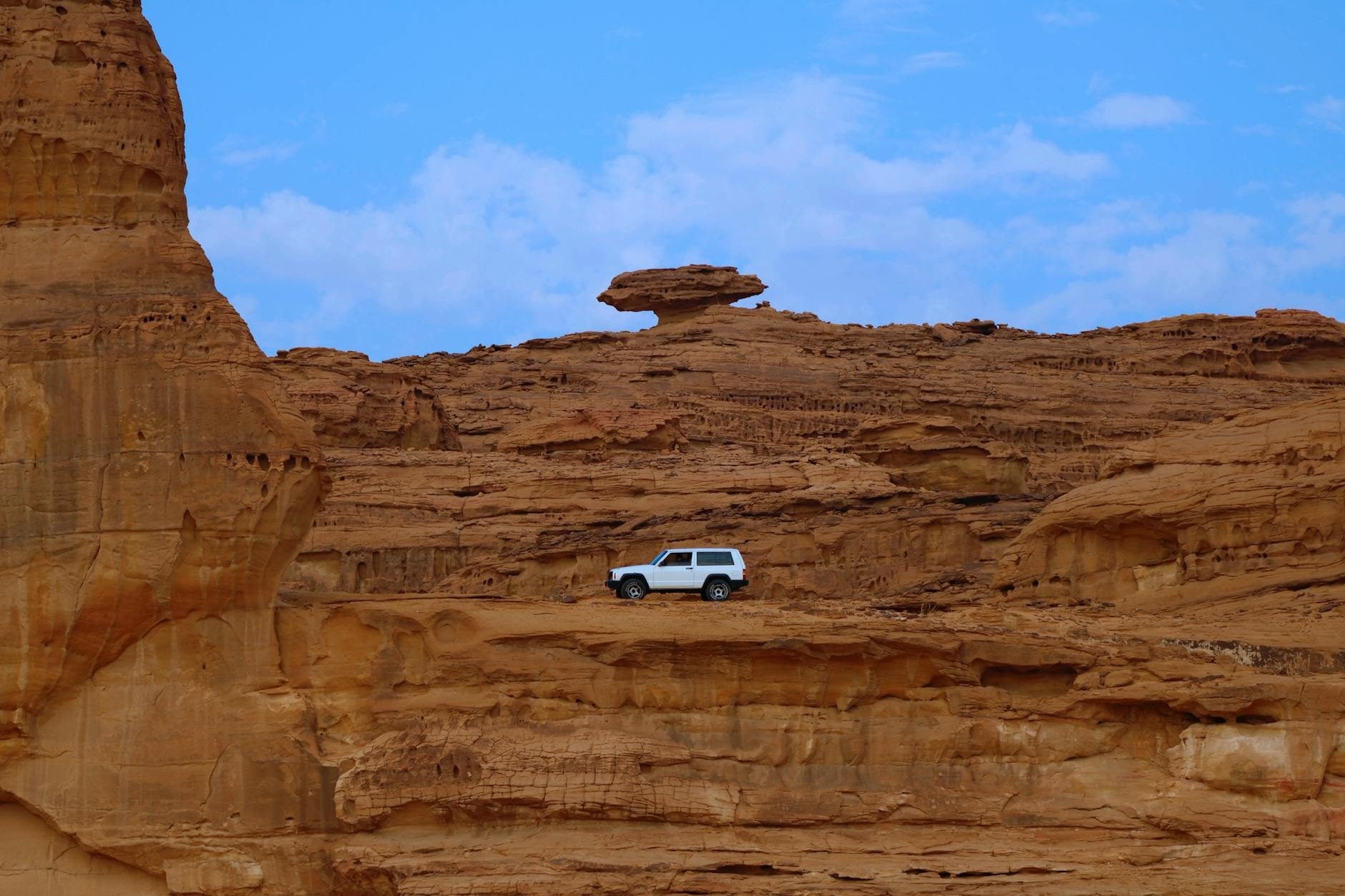
AlUla is a sandstone valley in the north-west that holds Saudi Arabia's first UNESCO World Heritage Site. Four separate sites sit within a short drive of each other: the Nabataean tombs at Hegra, the cliff-cut capital at Dadan, the inscription canyon at Jabal Ikmah, and the mud-brick Old Town. This trip gives you three nights to work through them properly rather than at a run.
It then moves on to Tabuk for two nights. Tabuk is the far north-west: the castle on the old road from Damascus to Madinah, the Hejaz Railway station that belongs to the same route, and the sandstone and canyon country west and south of the city that the region is really known for.
The pace is active. There is walking on uneven ground at Hegra and Dadan, a climb to the fort above the Old Town, and early or late starts to catch the light on the rock. October to March is the workable window here; summer in the valley is severe.
Day by day
Arrive AlUla
You are met on arrival, driven to your hotel and left to settle. Jeddah is the standard arrival point for the west coast and for AlUla.
In the late afternoon you go into AlUla Old Town, a labyrinth of mud-brick houses built from the 12th century, abandoned within living memory and now partly restored. The restored lane holds shops and restaurants, and this is the one part of AlUla with a real evening: the area comes alive after 3pm, shops run to about 11pm and most restaurants to around 1am. Nothing else is scheduled today.
Hegra
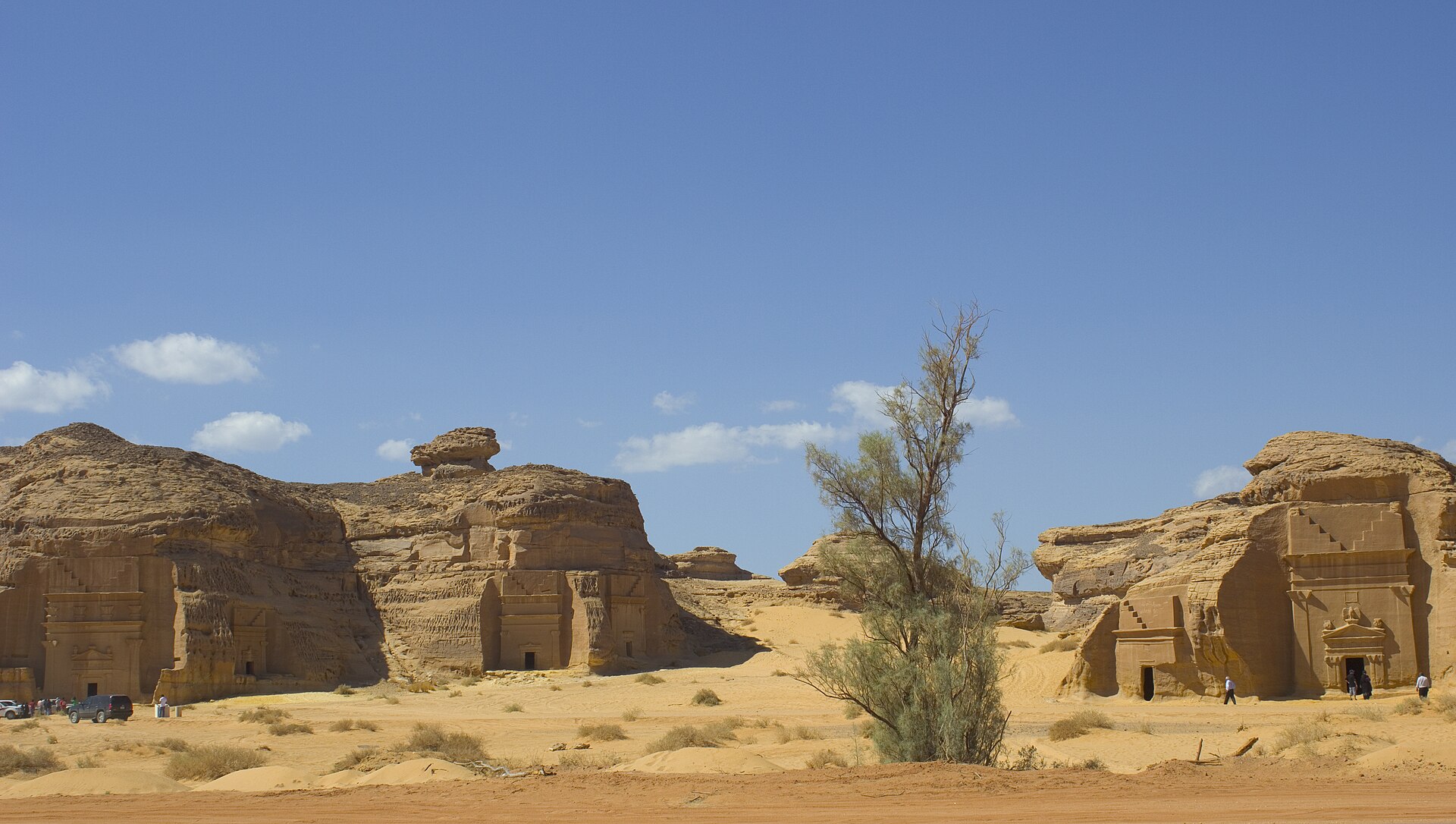
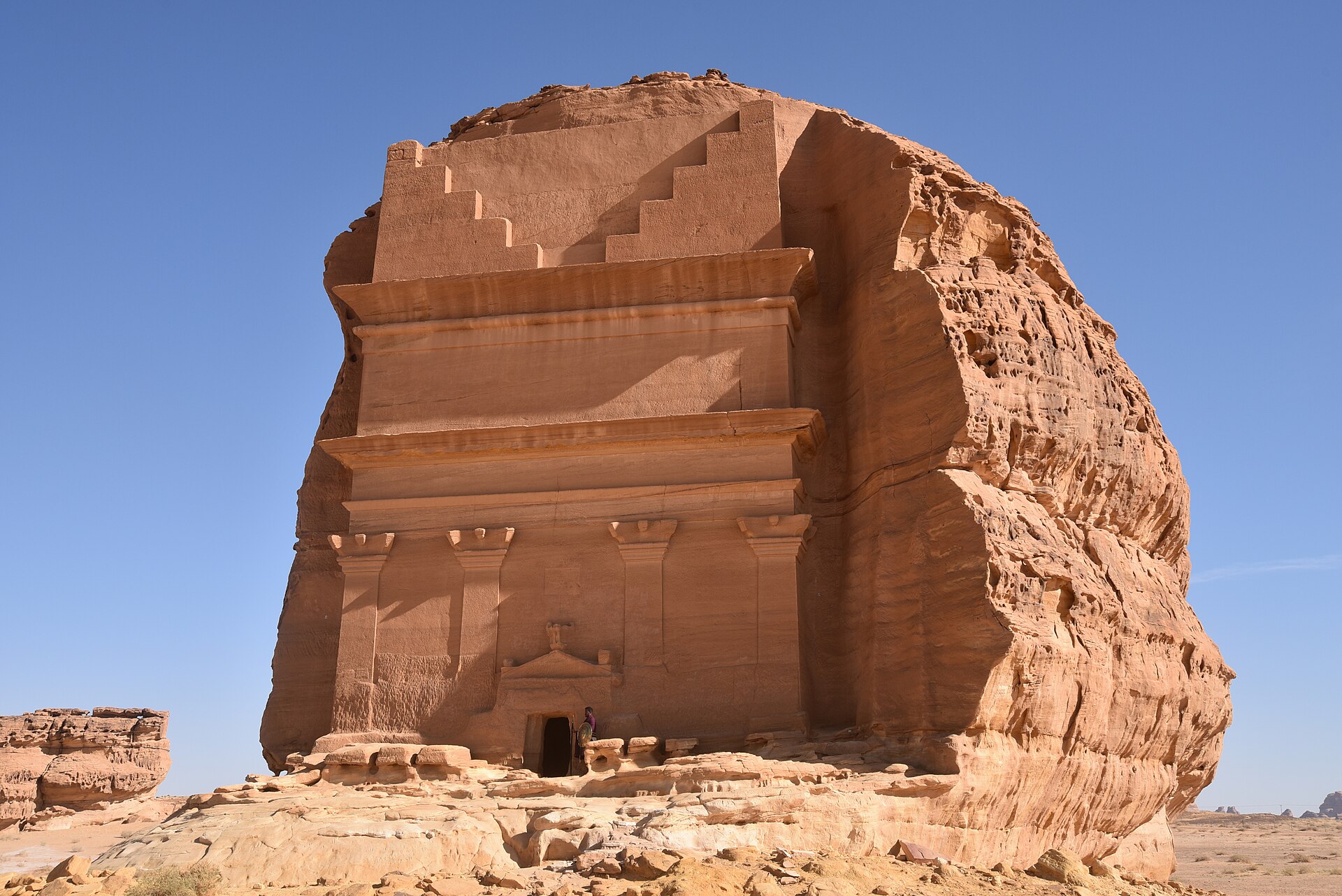
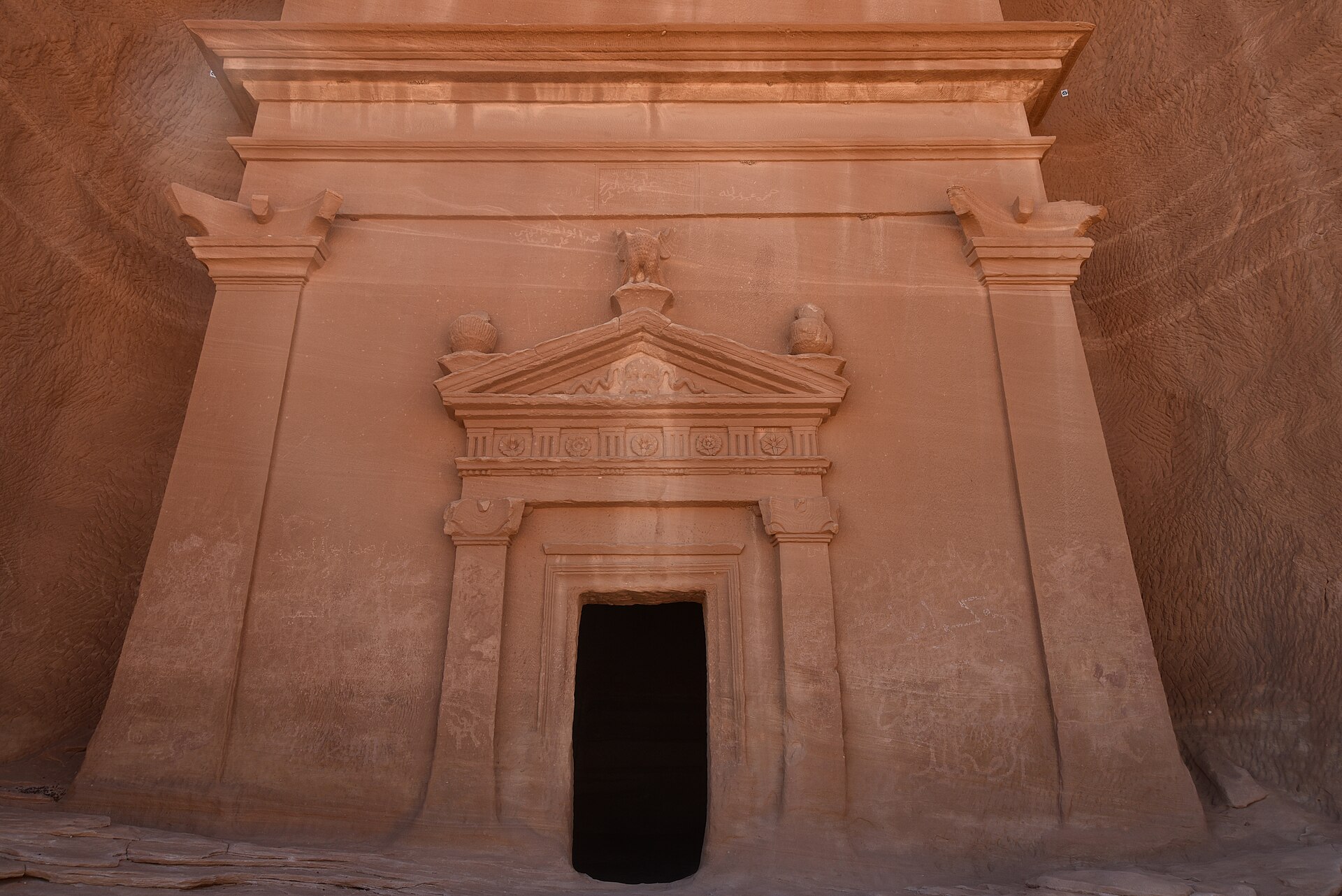
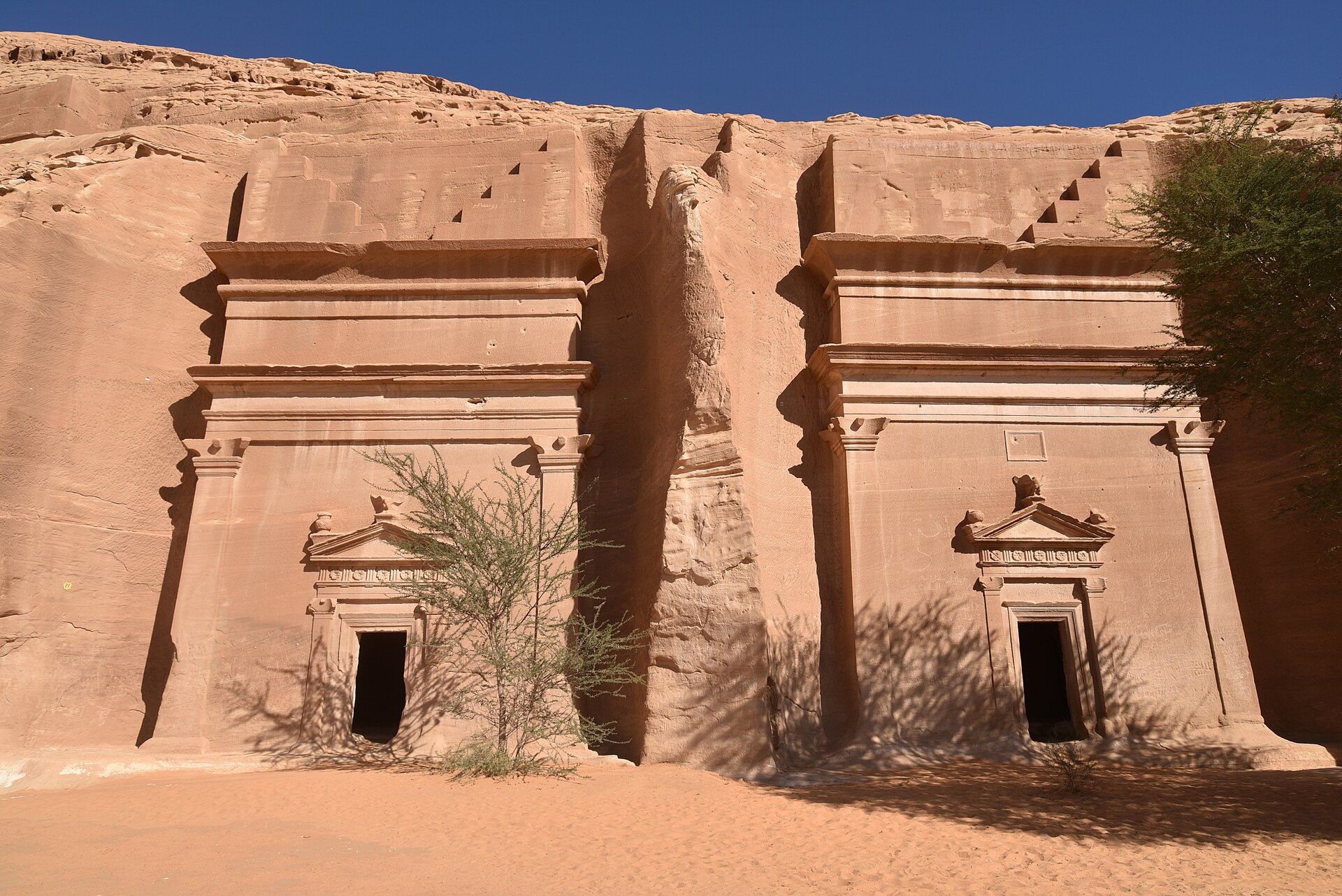
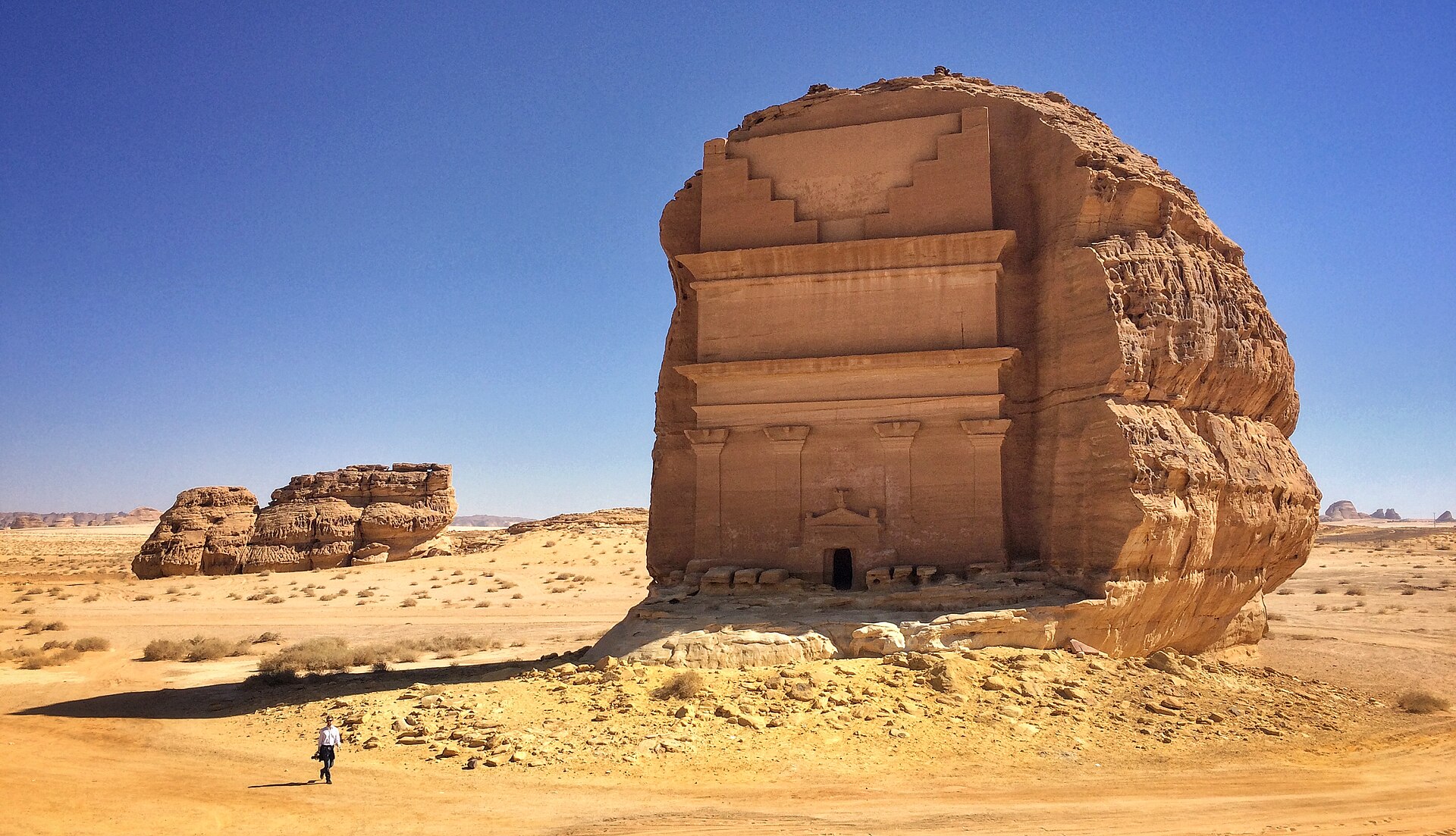
A full day at Hegra, the largest surviving Nabataean city after Petra and the first place in Saudi Arabia inscribed on the UNESCO World Heritage List. More than 110 tombs are cut into sandstone outcrops scattered across the desert floor, their facades carved straight into the rock.
Hegra is not a site you wander into. You visit with an AlUla Rawi, one of the local storyteller-guides, travelling between the tomb clusters by vehicle. Daily numbers are capped, so your place is booked before you travel rather than on arrival.
At the Hegra Visitor Centre you see the reconstruction of Hinat, a Nabataean woman whose burial was excavated here in 2008. Hers is the one tomb in the valley with a name attached to it, and it is the point where the site stops being architecture and becomes a person.
Dadan, Jabal Ikmah and Elephant Rock
The morning is at Dadan, capital of the Dadanite and Lihyanite kingdoms and carved into the cliff face above the oasis. The tombs sit almost 50 metres up the rock wall, cut as square openings in a line across the red stone, two of them guarded by carved lions. Excavation is ongoing and a good deal of the site is still unread.
A short drive on is Jabal Ikmah, a desert canyon whose walls carry hundreds of pre-Arabic inscriptions in Dadanitic, Thamudic, Minaic and Nabataean scripts. They record dedications, names and offerings rather than royal proclamations. Your guide will be precise about the listing, because most travel writing gets it wrong: Jabal Ikmah is on UNESCO's Memory of the World Register, which covers documentary heritage, and that is a different list from the World Heritage List. The canyon is short and mostly level, and there is no ticket.
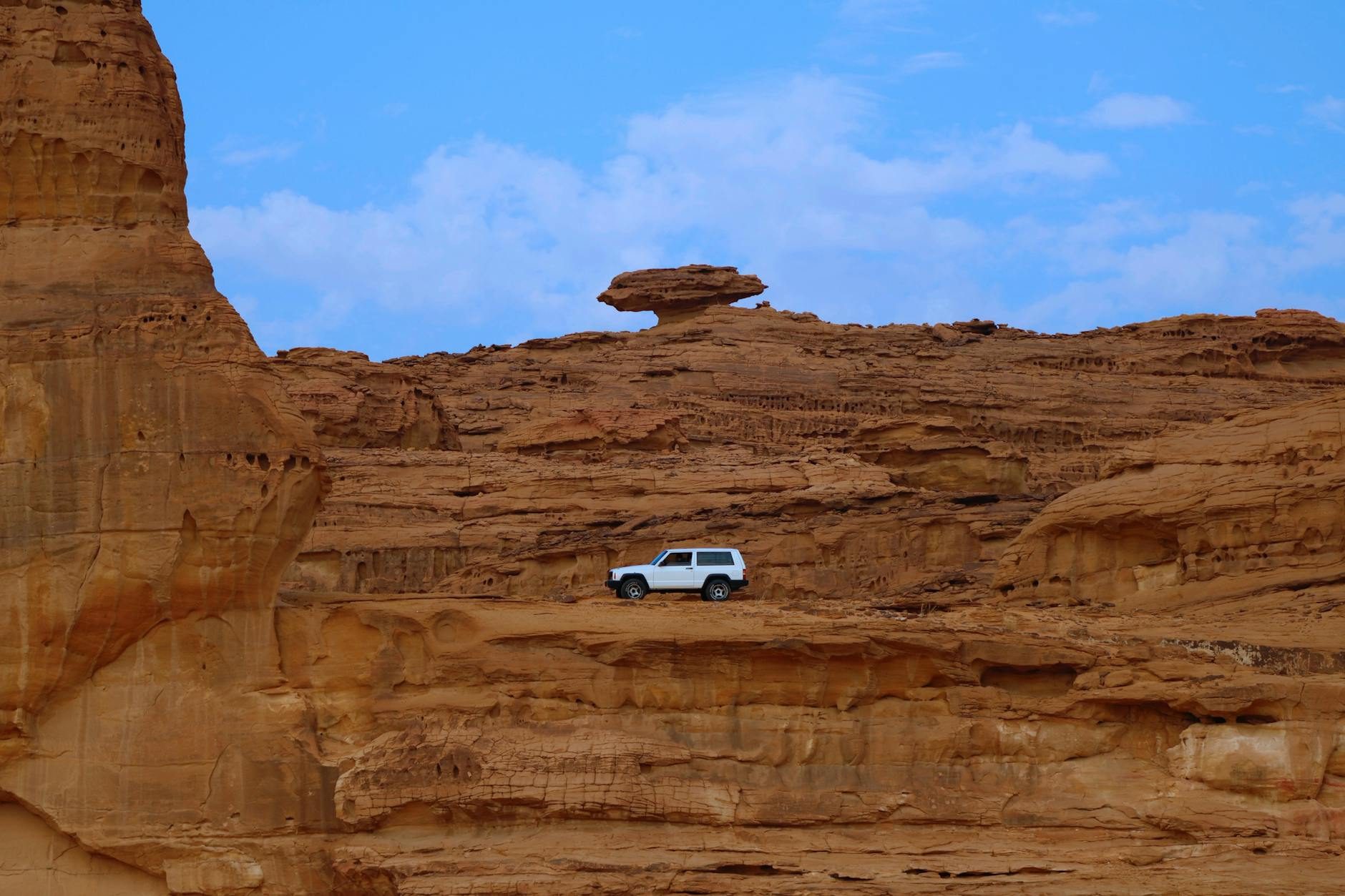
You finish at Elephant Rock, a 52-metre sandstone outcrop weathered into the shape of an elephant with its trunk to the ground. Late afternoon into dusk is the reason to be there: the sandstone turns deep red as the light drops, and sunken seating areas have been cut into the sand around the base so you can wait it out.
The Old Town fort, Maraya, then on to Tabuk
You start with the climb to the fort above the Old Town. It dates to around the 10th century and stands 45 metres up, and the view from it is the quickest way to understand the town's plan: hundreds of clay houses packed shoulder to shoulder along alleys narrow enough to stay shaded through the day. The settlement grew on the incense trading route and on the pilgrim road from Damascus, and it was walled, with fourteen gates controlling the way in.
You also stop at Maraya in the Ashar valley, a concert hall clad entirely in mirrors so that the sandstone cliffs continue across its face and the building very nearly disappears. It holds the record as the largest mirrored building in the world. It works as a venue rather than a monument, so what is on inside depends on the calendar; this stop is for the outside of it.
You then transfer to Tabuk and check in for two nights.
Tabuk Castle, the Hejaz Railway and the sandstone country
Tabuk Castle stands on the old road that ran from Damascus to Madinah, and its towers were used to watch that road. Its construction dates to 1559. It has been restored more than once and now holds inscriptions, old photographs and heritage exhibits, along with a room showing documentary films. There is no entry ticket.
The Hejaz Railway station in the city belongs to the same route. The line was begun in 1900 and took eight years to build, cutting the journey between Damascus and Madinah to no more than five days where it had previously taken 45. Inside Saudi Arabia the line runs from Halat Ammar in the north down to Madinah through 23 stations set about 20 kilometres apart. The first train reached Madinah on 22 August 1908, and by 1914 the railway was carrying 300,000 pilgrims a year, until the First World War broke large parts of it. There is no entry ticket here either.
The afternoon is spent out in the sandstone and canyon country west and south of the city, with your driver and guide, back in Tabuk for the evening.
Depart Tabuk
The morning is open depending on your flight time, then you are driven to Tabuk airport for your onward or homeward journey.
What is included
- Private air-conditioned vehicle with driver throughout
- Licensed English-speaking guide at every site
- Guided Hegra tour with an AlUla Rawi, booked before you travel
- Five nights' hotel accommodation, three in AlUla and two in Tabuk
- Daily breakfast
- All entrance fees for the sites named in the itinerary
- Airport transfers and the transfer between AlUla and Tabuk
- Bottled water in the vehicle
- A contact number for the duration of the trip
What is not
- International and domestic flights
- Saudi entry visa, which you apply for yourself through the official portal
- Travel insurance
- Lunches and dinners
- Personal spending and gratuities
The places on this trip
Send us your dates
We come back with the itinerary written out and one clear cost.