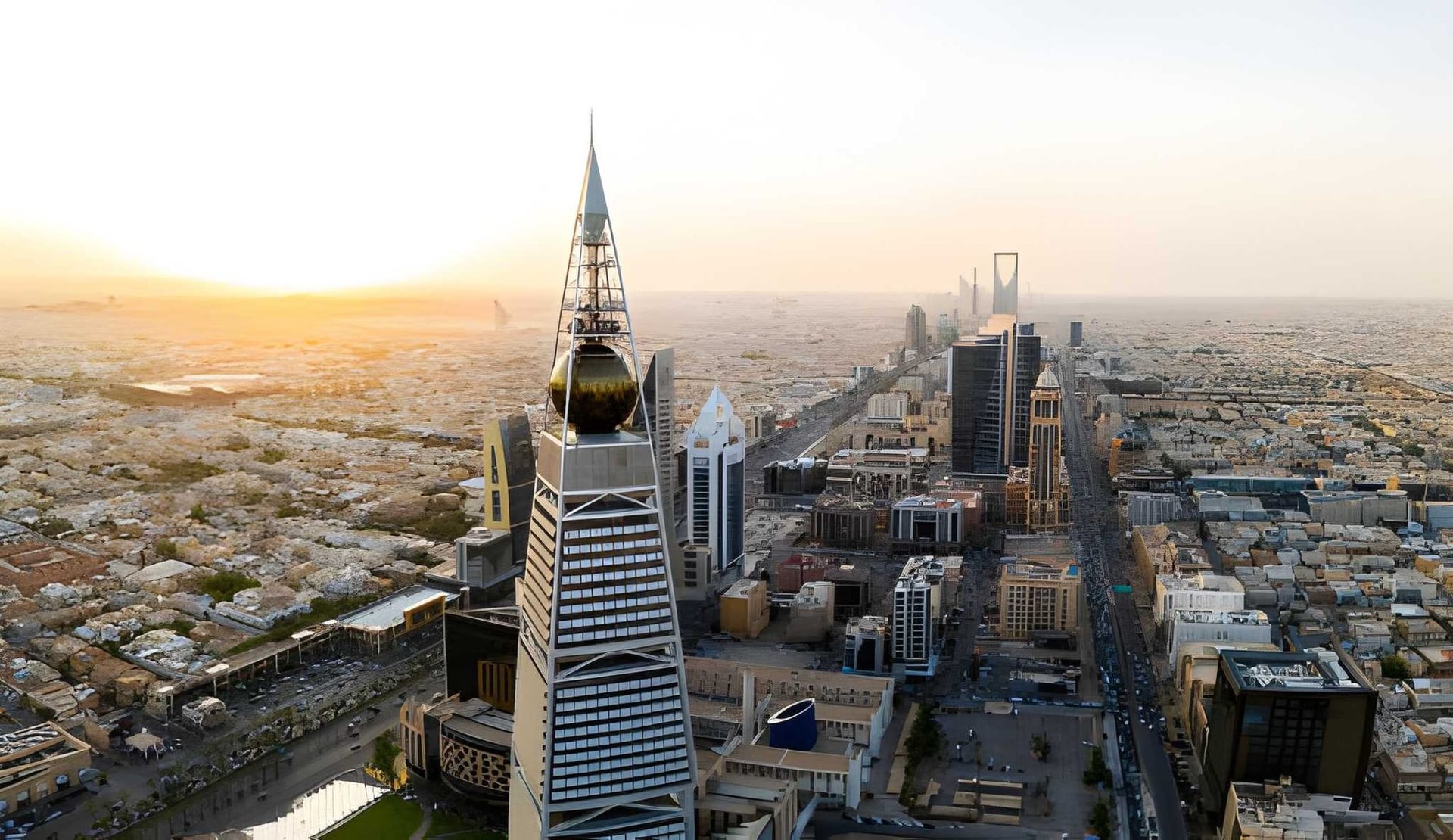
Three landscapes in one run: the Najd plateau, the AlUla valley and the sandstone north-west. Riyadh is the country's main air hub, so it is the natural start whether or not it is the reason for the trip. AlUla holds Saudi Arabia's first World Heritage Site, and Tabuk is the base for the far north-west, where the province turns to sandstone and canyon country.
There is real ground covered here and one properly rough day. The Edge of the World is a half to full day out with rough track at the end, no water, no fuel and mobile coverage that drops out, so it runs with a four-wheel drive, a guide and everything carried in.
It suits travellers who want the desert as well as the sites, and who would rather be out at sunrise than in a queue. October to March is the workable window; summer in the AlUla valley is severe.
Day by day
Arrive Riyadh
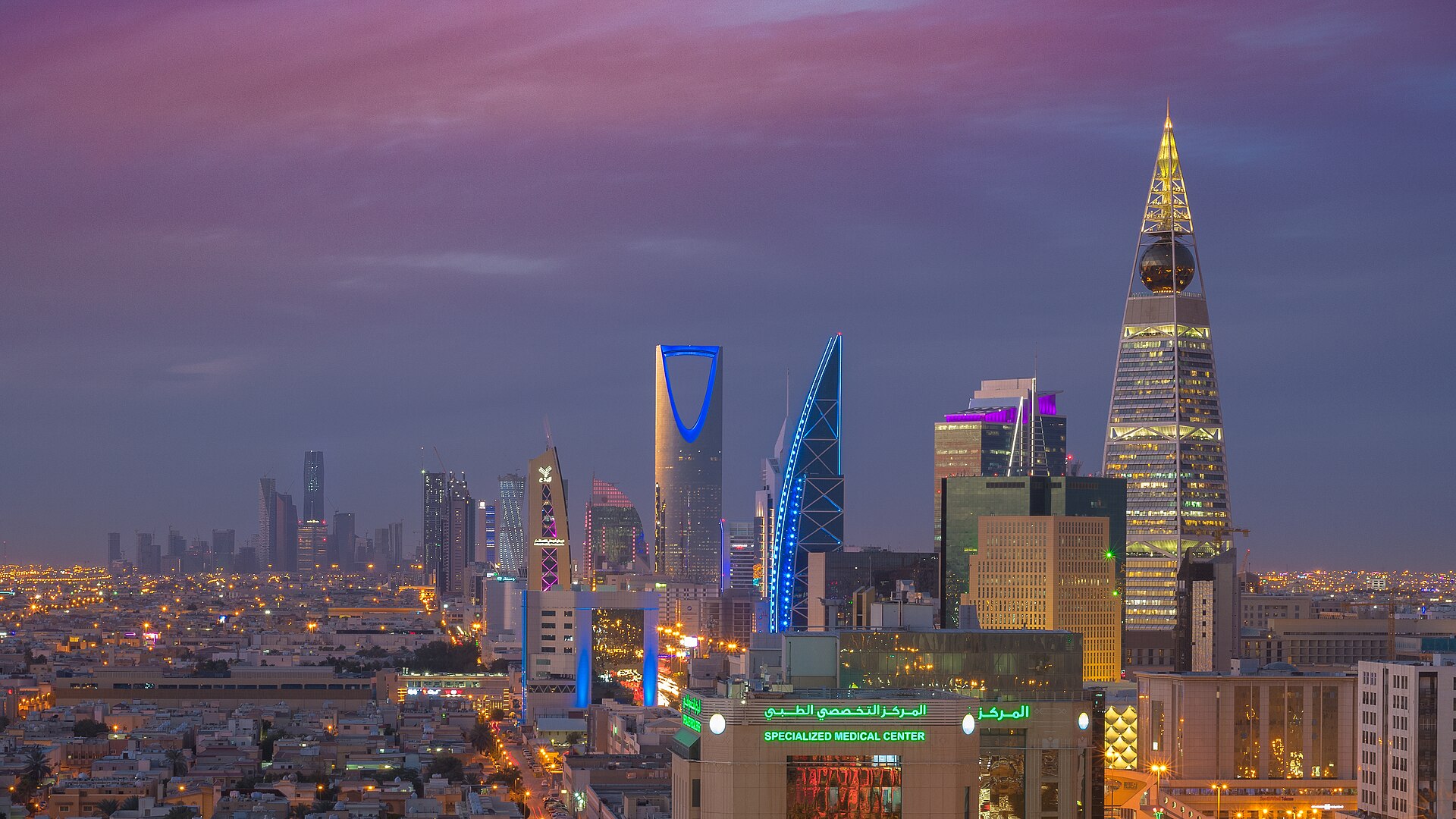
You are met at the airport and driven to your hotel. Distances inside Riyadh are large and the city is built for driving, so your vehicle and driver are with you from the start. The evening is yours.
The founding sites of Riyadh
The morning is at the National Museum of Saudi Arabia, laid out as a sequence of halls that run in order - geology, pre-Islamic Arabia, the life of the Prophet, the successive Saudi states and unification - so you can walk the whole span without doubling back. Doing it first is deliberate: the sites later in this trip are easier to read once you have.
Al Masmak stands a short drive away in the old quarter. It is a mud-and-clay fort with four watchtowers, thick walls and a single studded door, built as a residence and seat of government, and it is where the capture of the city in 1902 began the state that exists today. It is small, and that is the point: this was a garrison building, not an ornamental palace.
Edge of the World
An early start north-west for the Edge of the World, about 100 kilometres out, where the Tuwaiq escarpment breaks off and the plain below simply stops. The escarpment runs some 800 kilometres across central Arabia; at this point the wall falls away to a flat desert floor that carries on to the horizon with nothing on it. The rock holds marine fossils, snails and shells, because this was seabed long before it was desert.
There is no ticket and no infrastructure of any kind out here - no water, no food, no fuel, patchy phone signal - and the last stretch is rough track. You go with a guide in a four-wheel drive, carrying everything for the day, and time it for the light rather than the middle of the day, which is exposed and hot.
On to AlUla
You travel from Riyadh to AlUla and check in at the valley. The afternoon is easy: AlUla is a sandstone valley that was farmed and settled for thousands of years because it has water, and it sat on the incense road running north out of southern Arabia.
Late in the day you drive out to Elephant Rock, a 52-metre sandstone outcrop weathered into the shape of an elephant with its trunk to the ground. The stone turns deep red as the light goes, and there is seating cut into the sand around the base.
Hegra
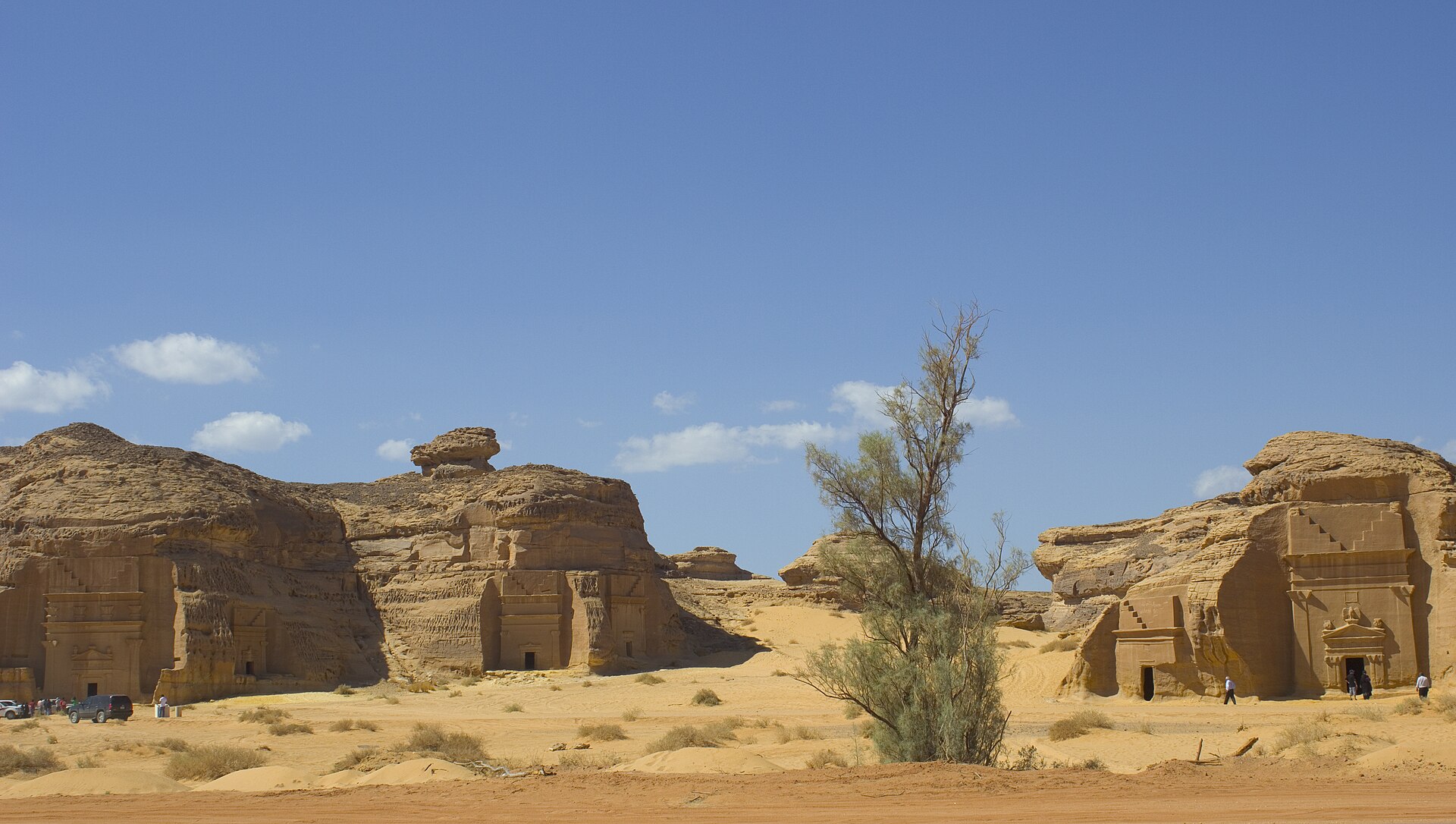
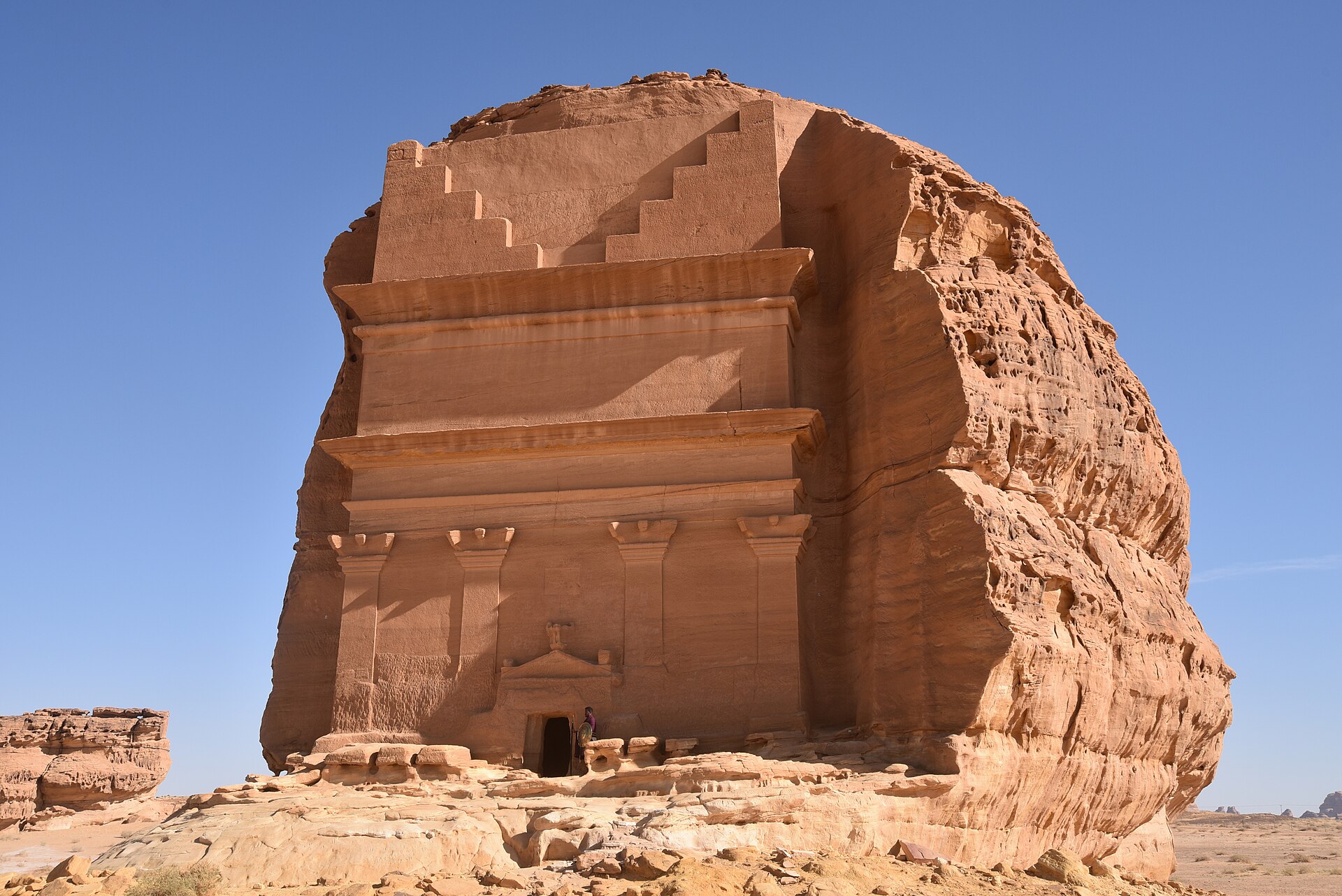
Hegra is the largest surviving Nabataean city after Petra and the first Saudi site inscribed on the UNESCO World Heritage List. More than 110 tombs are cut into sandstone outcrops across the desert floor, facades carved straight into the rock, some chambers carrying inscriptions that describe the person laid inside.
Access is only by guided tour with an AlUla Rawi, travelling between the tomb clusters by vehicle, and daily numbers are capped, so your place is booked before you travel. At the visitor centre is the reconstructed face of Hinat, excavated from one of the tombs in 2008. The rest of the day is yours, and AlUla Old Town is the one place in the valley with a genuine evening - shops run to about 11pm.
Dadan and Jabal Ikmah
Dadan in the morning: the capital of the Dadanite and Lihyanite kingdoms, whose tombs are cut almost 50 metres up the cliff wall as square openings in a line, two of them guarded by carved lions. These kingdoms held the oasis and its trade for centuries before the Nabataeans arrived at Hegra, and excavation is still going on.
In the afternoon, Jabal Ikmah, a short desert canyon carrying hundreds of pre-Arabic inscriptions in Dadanitic, Thamudic, Minaic and Nabataean script - names, dedications and offerings rather than proclamations. The path is level and the inscriptions are close enough to read without climbing. The canyon is on UNESCO's Memory of the World Register, which covers documentary heritage and is a separate list from the World Heritage List.
On to Tabuk
You travel on to Tabuk. Tabuk Castle stands on the old road that ran from Damascus to Madinah; its construction dates to 1559, its towers were used to watch that road, and it was a station for pilgrims and for trade caravans. Inside are inscriptions, old photographs and heritage exhibits, and there is no entry ticket.
The Hejaz Railway station in the city belongs to the same route. The line was begun in 1900 and took eight years to build, running pilgrims and freight south from Damascus, with 23 stations about 20 kilometres apart on the Saudi stretch; the first train reached Madinah on 22 August 1908, and the line was broken during the First World War. There is no ticket for the station either.
Depart Tabuk
An unhurried morning in Tabuk, then the transfer to the airport. The province holds a large number of archaeological sites, and the sandstone and canyon country west and south of the city is what the region is really known for - worth an extra few days if you can add them before you fly.
What is included
- Seven nights' hotel accommodation with breakfast
- Private air-conditioned vehicle with driver throughout
- Four-wheel drive vehicle and guide for the Edge of the World day
- Hegra tour with an AlUla Rawi, booked in advance against the daily cap
- English-speaking guide in Riyadh, AlUla and Tabuk
- Entry to the sites named in the itinerary
- Internal transfers between Riyadh, AlUla and Tabuk
- Packed provisions and drinking water for the desert day
- Airport transfers on arrival and departure, and a 24-hour contact number
What is not
- International and domestic flights
- Saudi tourist eVisa, which you apply for yourself on the official government portal
- Travel insurance
- Lunches and dinners other than the desert day
- Tips and personal items
The places on this trip
Send us your dates
We come back with the itinerary written out and one clear cost.