Twenty minutes, not an expedition
Diriyah sits about twenty minutes from central Riyadh, north-west of the city on the edge of the Wadi Hanifa valley. Distances inside Riyadh are large and the city is built for driving, so a twenty-minute run is an ordinary piece of a Riyadh day rather than a departure from it. That single fact should decide how you plan it: this is a half day, not a destination, and it does not need its own night.
The practical consequence is that Diriyah competes with an afternoon in the capital rather than with a trip out of it, so it slots neatly into the Riyadh short break or the Riyadh in one day programme without anything else having to give.
What is actually at the other end
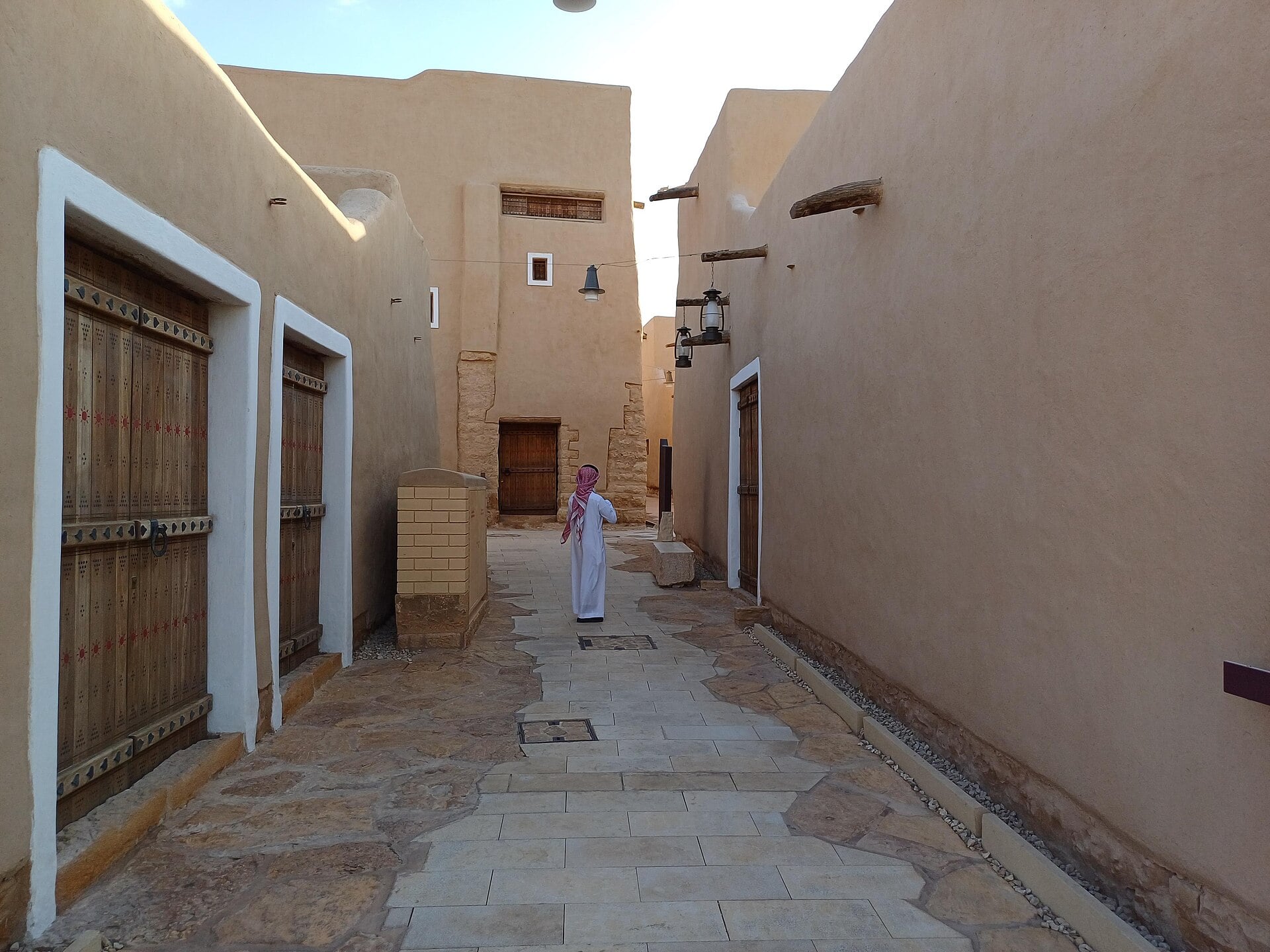
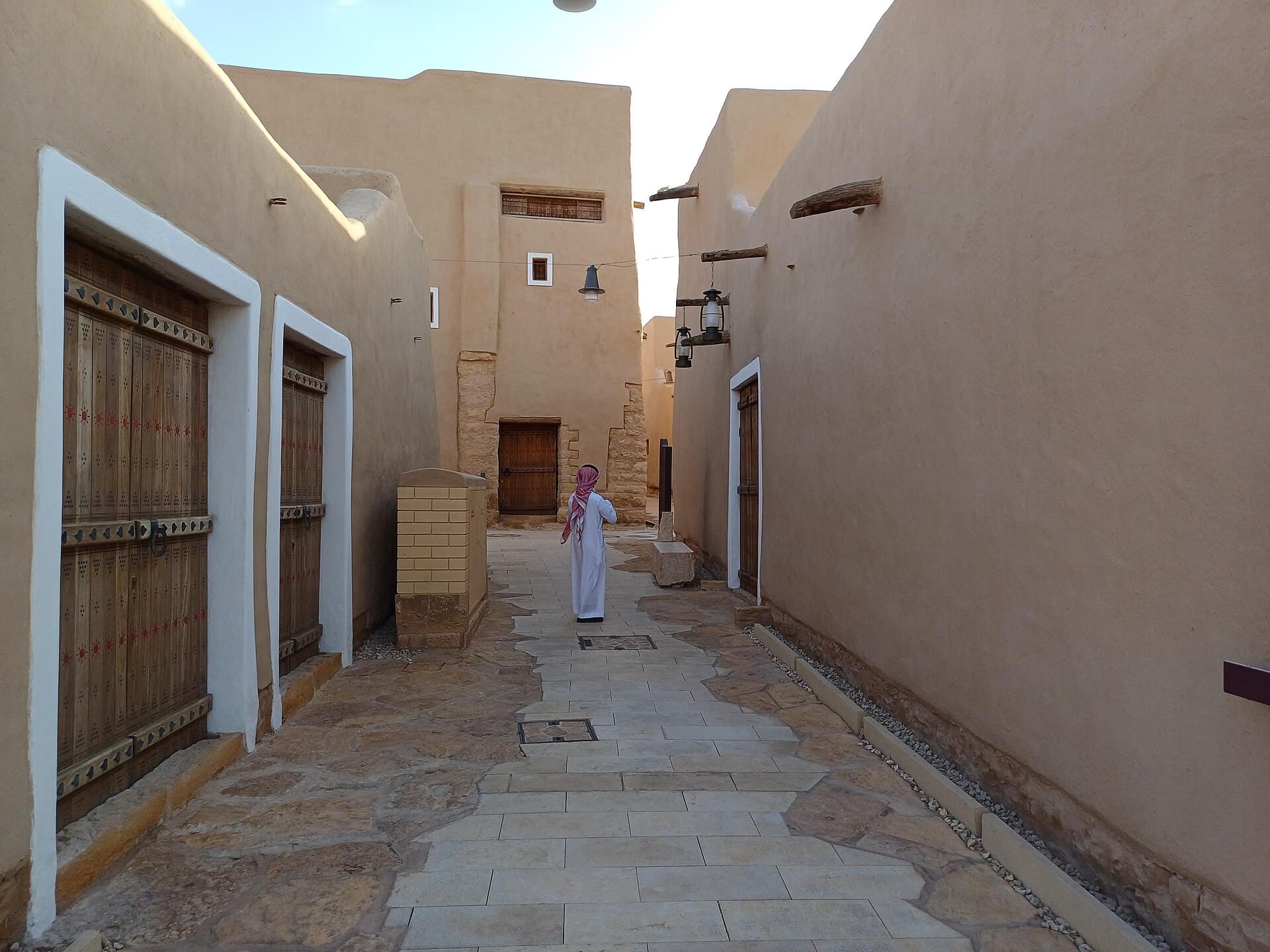
At-Turaif is the mud-brick district that was the capital of the first Saudi state, and it has been a UNESCO World Heritage Site since 2010. The Emirate of Diriyah ran from 1727 to 1818 and At-Turaif was its seat: palaces, a mosque and defensive walls in the Najdi style, the architectural language specific to the centre of the Arabian Peninsula. UNESCO's citation places the founding of the property in the fifteenth century and records its political and religious role growing through the eighteenth and early nineteenth centuries.
What survives is the most complete Najdi architecture at this scale anywhere - thick mud-brick walls, triangular openings cut high for light and air, stepped parapets. The district has been restored and opened as a walkable museum quarter, so unlike most sites of its age you move through the streets rather than around a perimeter fence. The Diriyah Museum occupies an eighteenth-century palace and runs through the region's history, including the tribe that lived here before Diriyah was settled in 1446. What to expect at At-Turaif goes into the layout in more detail, and the Diriyah and At-Turaif half day covers the visit with a guide.
When to make the drive
| Arrival time | What it gives you | Watch out for |
|---|---|---|
| Morning | The mud-brick streets before the day heats up, and the museum galleries in sequence | The dining side of the district is built for the evening, not the morning |
| Late afternoon | Low light on the walls, then the museum quarter and dining area running on into the evening | You will want more time than you allowed |
| Evening | Al-Bujairi's palm-shaded park and open-air dining alongside the historic district | The archaeology itself is better read in daylight |
Late afternoon is the version most trips should take. The restored district reads as a place people use rather than a monument, and the restaurant and cafe area alongside means it works as an evening as much as a history stop - which is exactly what a twenty-minute drive from the city makes possible.
Pair it with the valley below
Wadi Hanifa runs directly below Diriyah, which makes the two a single outing. The wadi flows 120 kilometres through the capital and is Riyadh's largest natural park: it was the reason the city grew where it did, became a dumping ground through the twentieth century, and was rebuilt as a working wetland with a bio-remediation system treating the water. Today it carries shaded trails, landscaped gardens, the Stone Dam, Al Ulayb Park and barbecue areas, with restaurants along the valley edges. No reservations are required and there is no ticket, so it absorbs whatever time is left over. The Wadi Hanifah and Bujairi half day takes both in one run.
Fitting it into a Riyadh day
The cleanest structure is old centre in the morning, Diriyah in the afternoon. Al Masmak - the clay fort with four watchtowers and a single studded door where the capture of Riyadh in 1902 began - stands in the old centre, close to the National Museum in Al Murabba, so those two together are a half day. Diriyah is the other half, and between them they cover the founding of the state in the order it happened. Things to do in Riyadh places the rest around them, where to base yourself in Riyadh matters because it decides how long that twenty minutes really is, and the first-timer's guide to Riyadh is the place to start if the city is new to you.