The short answer
October to March is the workable window in AlUla. Summer in the valley is severe, and the clearest confirmation of that comes from the sites themselves: experiences at the Sharaan Nature Reserve are paused for the summer and return in the cooler months.
Inside that window there is no bad month. What changes is what you can book and how you organise the day.
Why the season decides so much here
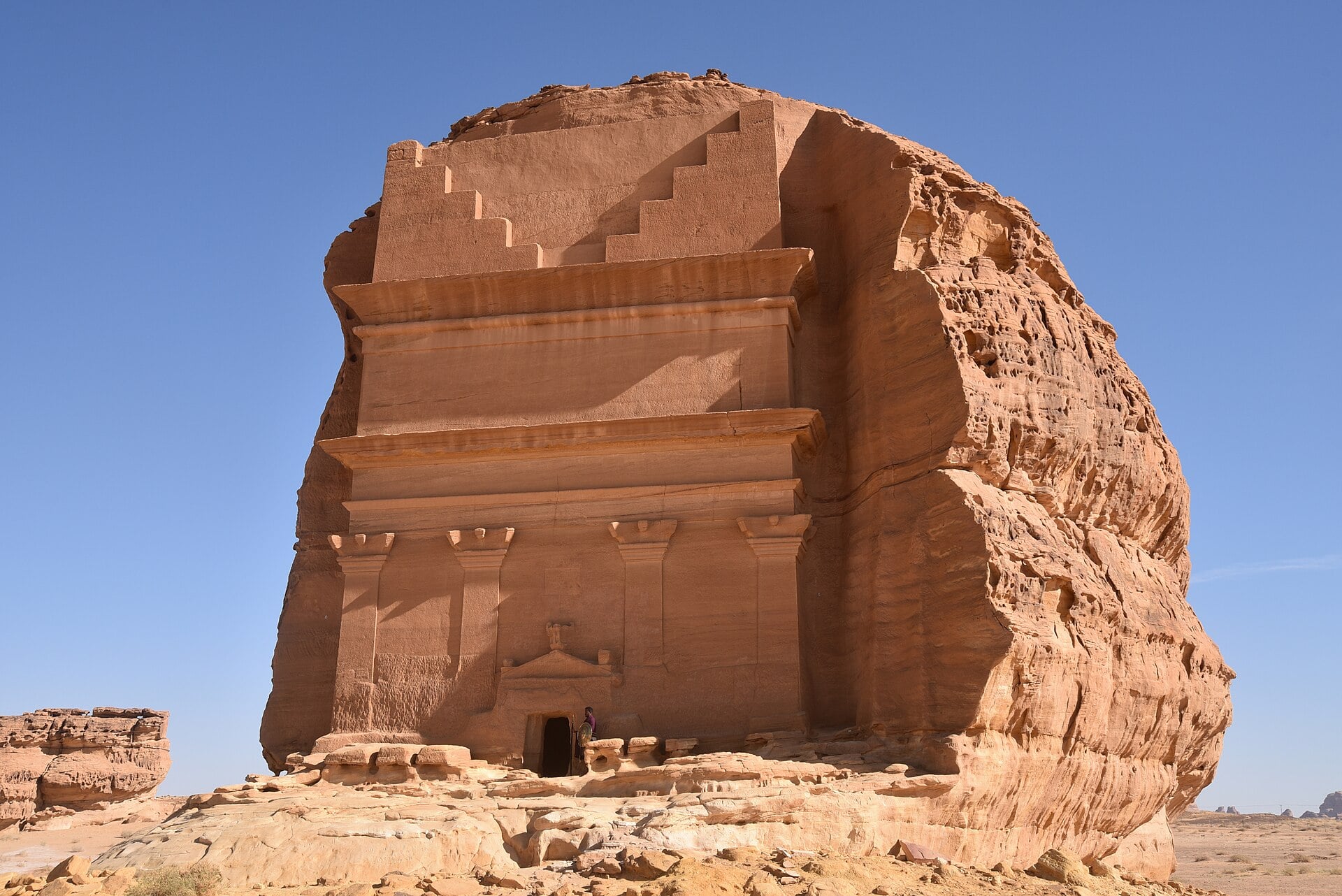
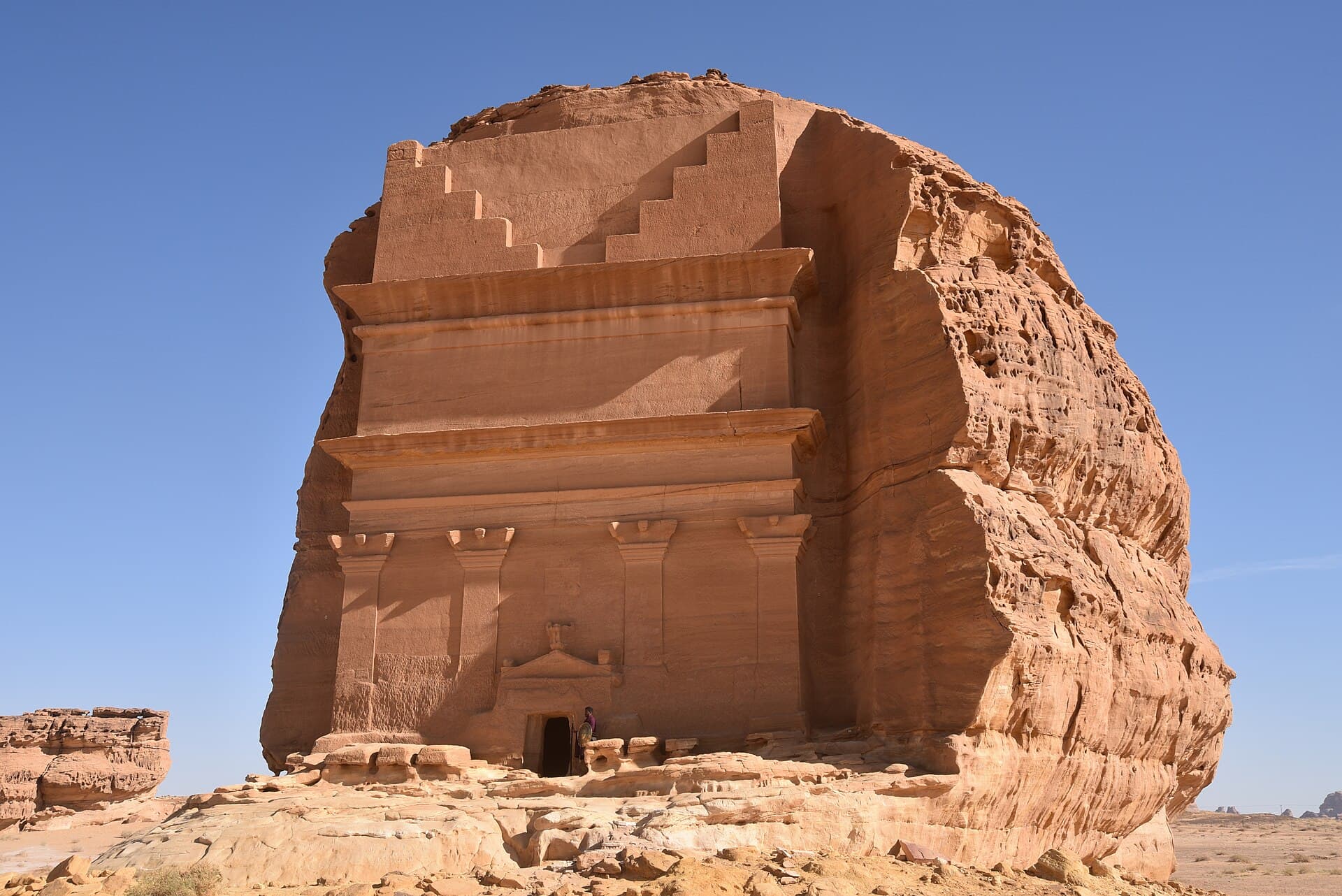
Because almost everything in AlUla is outdoors. This is a sandstone valley, and the four sites that bring people here are all open to the sky: the Nabataean tombs at Hegra are cut into outcrops standing on open desert floor, Jabal Ikmah is a canyon walked between rock faces, Dadan is read from the valley bottom looking up at a cliff, and Elephant Rock sits alone on open sand.
None of that is weatherproof. In the cool months the valley is comfortable for a full day outside, which is what the sites need. Outside the window the same day is not realistic.
The individual sites make the point better than a general statement does. Jabal Ikmah is a short, mostly level canyon walk, with hundreds of pre-Arabic inscriptions cut into the rock faces close enough to the path to read without climbing - easy, but entirely in the open. Dadan is read from the valley floor looking up at tombs cut almost 50 metres up the cliff face, two of them guarded by carved lions, so it is time spent standing still outdoors. At the Old Town, the fort above the settlement stands 45 metres up and the climb to it is the quickest way to understand the town's plan, which is a climb you want to be making in the cool.
What to book before you travel
Hegra is the one that catches people out. It can only be entered on a guided tour with an AlUla Rawi, the local storyteller-guides, moving between the tomb clusters by vehicle, and numbers each day are capped. In the cool months, when everyone is there, that cap binds. Book before you travel rather than on arrival: Hegra with a licensed guide is a full day built around it.
The same goes for anything at the mirrored venue in the Ashar valley, which works as a venue rather than a monument, so what is on depends on the calendar. Check before making the drive out.
Timing the day, not just the month
Within the season, the hours matter more than the date.
| Part of the day | What it suits |
|---|---|
| From 8 to 9 in the morning | Most of AlUla Old Town opens in this window, and it is at its quietest |
| Mid-morning to mid-afternoon | The archaeological sites, on guided tours with transport between them |
| Late afternoon into dusk | Elephant Rock, when the sandstone turns deep red; sunken seating has been cut into the sand around the base so you can wait for it |
| After 3pm and into the night | The Old Town comes alive; shops run to about 11pm and most restaurants to around 1am |
That last line is worth planning around. The Old Town is the one place in AlUla with a genuine evening, so it is where the day should end rather than where it starts. Elephant Rock at sunset and AlUla in one day are both built on this shape.
How long the window needs to be
AlUla is the part of the country most deliberately built out for visitors, with guides, transport between the sites and a season of events, so it is the easiest place in Saudi Arabia to spend three or four days without solving logistics yourself. That is also roughly what the valley is worth. Two days covers the four main sites at pace; four lets the evenings do some of the work. How many days do you need in AlUla? goes through it properly, and 48 hours in AlUla is the compressed version.
Building the window into a wider trip
Because the AlUla season is fixed, it tends to set the dates for everything else. Pairing it northwards with the desert and mountains of Tabuk works in the same months, as on AlUla and Tabuk; adding the capital at the start, as on Riyadh, AlUla and Tabuk, uses the same cool half of the year. If the trip is deliberately a cold-season one, Winter in AlUla is designed around it.
Before fixing anything, read AlUla: a first-timer's guide for how the valley is organised, Things to do in AlUla for what fills the days, and Getting to and around AlUla for how you actually move between the sites.