What Al-Balad is
Al-Balad is the old merchant quarter of Jeddah, listed by UNESCO as Historic Jeddah in 2014. It stands on the eastern shore of the Red Sea, and it exists because of two jobs the city held at once: from the 7th century AD this was a major port on the Indian Ocean trade routes, channelling goods towards Makkah, and it was where Muslim pilgrims arriving by sea came ashore.
Those twin roles paid for what survives. Trade and pilgrimage made the city wealthy and multicultural, and the merchant families put the money into houses.
The buildings
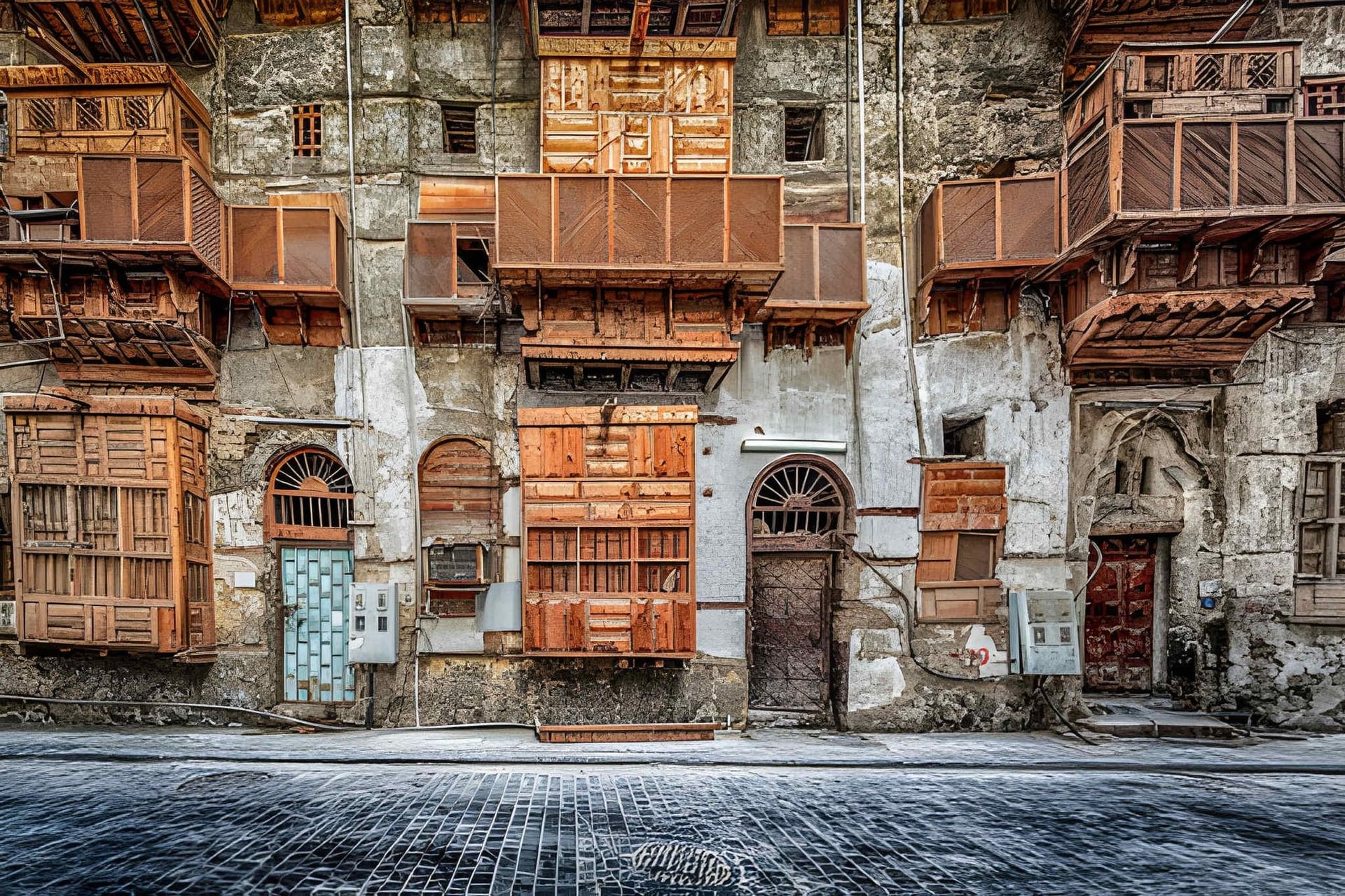
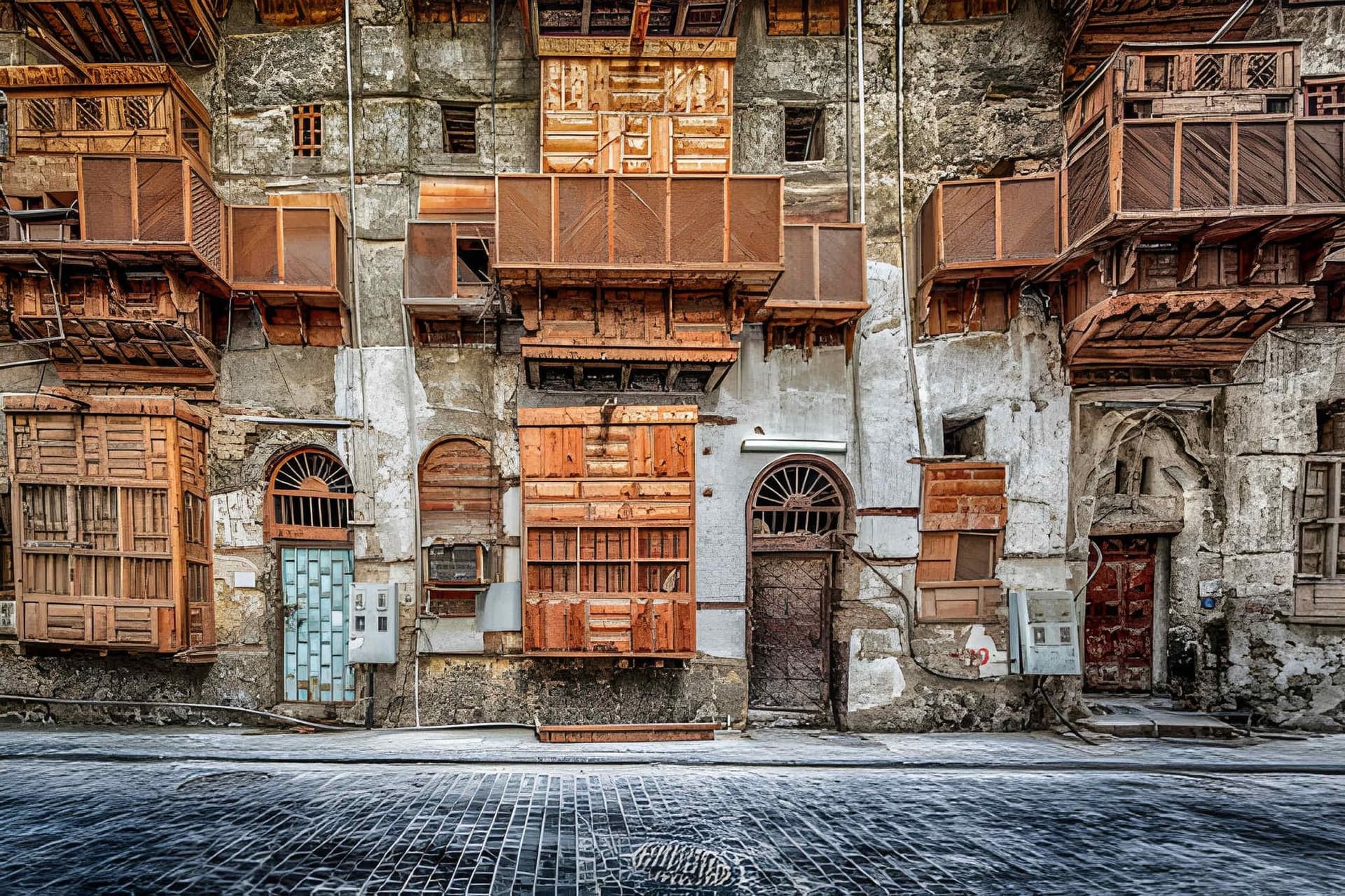
The architecture is the reason to come. Historic Jeddah is built of coral stone quarried from the Red Sea, stacked into tower houses several storeys high, and the facades are covered in roshan: the carved wooden bay windows that let air move through the rooms while keeping the street from seeing in. The tradition combines Red Sea coastal coral building with crafts and influences carried in along the trade routes, and the tower houses of the late 19th century, put up by the city's mercantile elites, are the clearest examples.
Walk with your eyes up. The street level has changed repeatedly; the upper storeys have not, and the rawashin are where the craft is.
Four things are worth looking for specifically, because they are what the listing is actually about:
- the coral stone itself, laid in courses, taken from the sea the city traded on
- the height - houses of several storeys, which is unusual for the period and the region and tells you how much money passed through
- the roshan screens, and how much of the facade they cover
- the props and scaffolding, which show which buildings are next in the restoration programme
What to expect on the ground
This is the part most write-ups leave out. Many of the buildings are in poor condition and propped, and restoration is running through the quarter building by building rather than street by street. The result is genuinely half ruin and half work site: scaffolding, closed lanes, a restored facade next to one held up by timber.
That is not a reason to skip it. It is a reason to arrive expecting a living quarter under repair rather than a finished heritage attraction, and to accept that what is open changes.
How to visit
Al-Balad is walked, not driven. The lanes are narrow, the distances are short, and the detail is at eye level and above, so a guided walk gets far more out of it than a drive-past. Our Al-Balad walking tour does the quarter on foot, and Jeddah food walk covers the same ground through what the city eats. For a wider day, Jeddah in one day puts the old town alongside the waterfront, and a Jeddah short break gives the city the two or three days it can carry.
The tourism authority points to the quarter's markets, to the rawashin of Bait Ba'eshen, to Diab Coffee, which it describes as the oldest cafe in Al-Balad, and to the teamLab Borderless museum as an evening stop. Ramadan evenings are the moment it singles out.
How much time it takes
| Time given | What fits |
|---|---|
| A half day on foot | The main lanes, the tower-house facades and the markets |
| A full day | Al-Balad in the cooler hours, plus the waterfront and the Red Sea side of the city |
| Two or three days | The old town, the coast, and Jeddah as a base rather than a stop |
Most people underestimate the first line and overestimate the third. The quarter is small enough to walk in a morning and dense enough to hold you all evening.
Where it sits in a Saudi trip
Jeddah has the country's second international airport and is the standard arrival point for the west coast and for AlUla, so Al-Balad is often the first Saudi heritage site a visitor sees. That order works well: the quarter is the easiest introduction to the country, and Jeddah is the most relaxed of the big Saudi cities. It also combines cleanly with the capital, as on Riyadh and Jeddah together.
For everything around the visit, Jeddah: a first-timer's guide covers arrival and orientation, Things to do in Jeddah sets out what else the city holds, How many days do you need in Jeddah? answers the length question properly, and Where to base yourself in Jeddah deals with which district to sleep in. If the same day is going to include the waterfront, the Jeddah waterfront explains how that half fits together.