The question to settle before anyone gets in the car
Taif is in western Saudi Arabia, in the Sarawat Mountains, east of Makkah. Access to Makkah is restricted to Muslims only. For a non-Muslim traveller that is not something to work out en route; it is the first thing to fix when the day is planned, and it is the clearest single argument for a private car with a driver who knows the region rather than a hire car and a phone map.
Everything else about this drive is pleasure. That one point is the piece of planning that has to be right.
The climb is the drive
Taif sits high, and the road up is the reason to travel by land rather than treat the town as a destination reached some other way. Al Hada Mountain belongs to the Sarawat range, which extends in a curved line of about 87 kilometres between Taif and Makkah, and the temperature drops noticeably as the road climbs.
The road itself is old. It has been known traditionally as Darb Al-Jammalah, the way of the camel drivers, along which caravans carried commercial goods, and its history runs back a thousand years. At around 2,177 metres above sea level there are acacia and juniper trees and herbal plants along the verges, and vendor booths selling Taif rose water, fruit, warm drinks and snacks. Al-Kar Tourist Village sits on the same road and can be reached by cable car or by land transport. Al Hada and the mountain road is the half day that treats the ascent as the point rather than the transfer.
What Taif is for
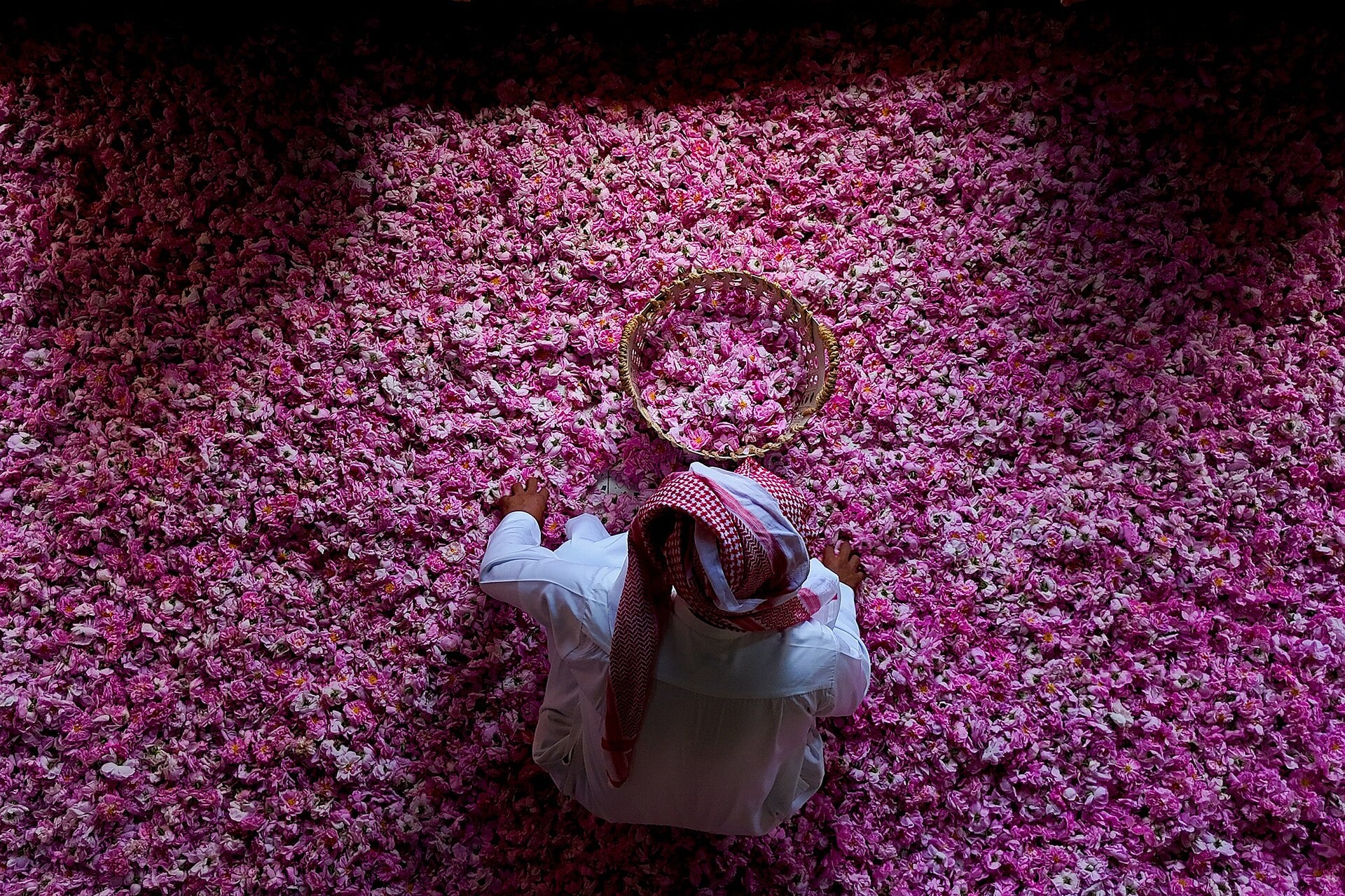
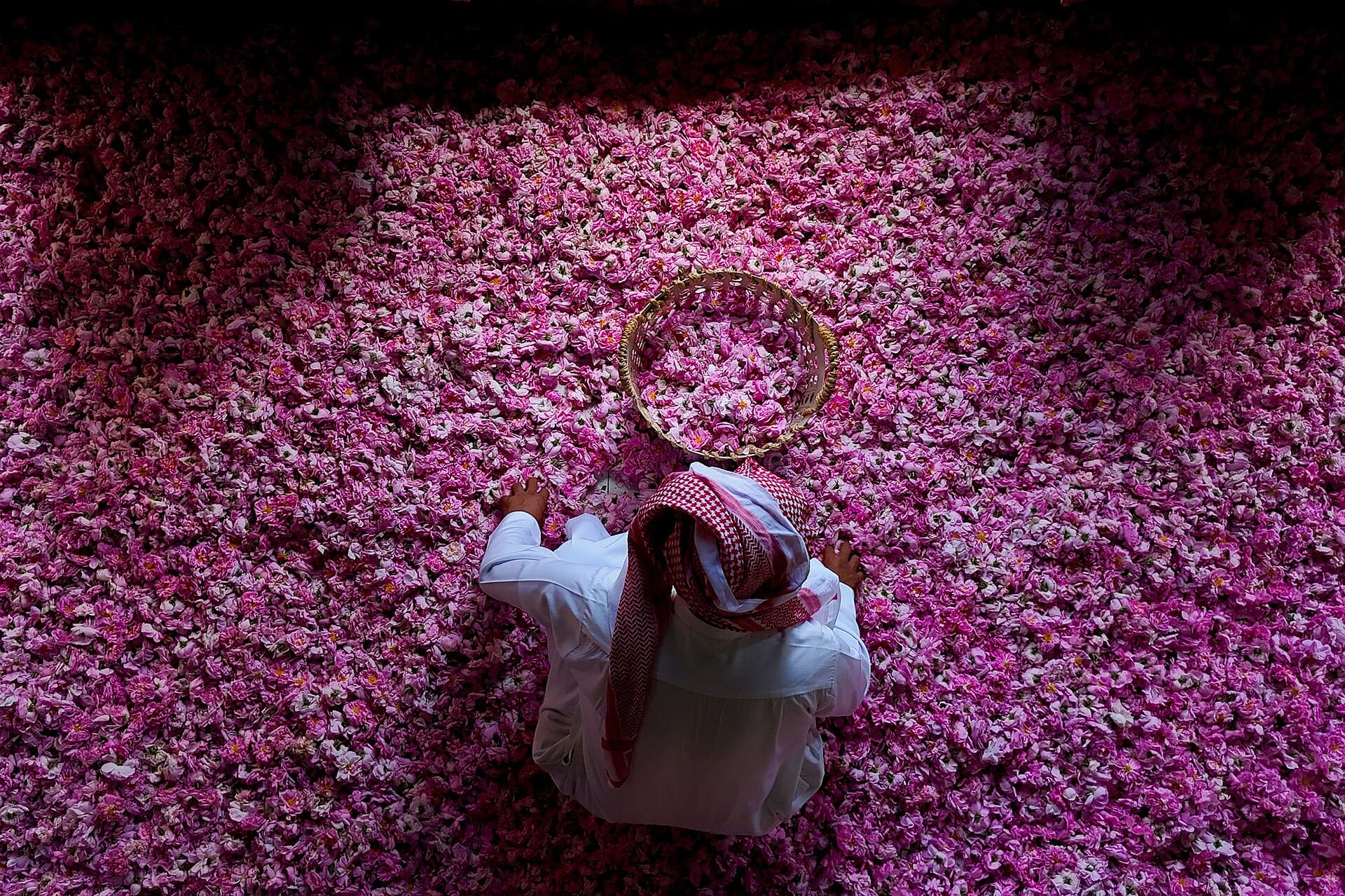
Roses, and not as a tourist story. Taif is known for high-quality rose cultivation used to produce perfume and rose water, and the cycle is a working agricultural calendar: growers return to their fields and bushes each December, and about 55 days later the petals are picked and carried in bushels to the town's rose oil extraction factories. Rose water and perfumes are sold from local factories in the town. The annual Taif Rose Festival is organised by the Ministry of Culture at Al Rudaf Park, with live performances, music and perfume-making workshops. The rose farms is the half day built around the growing side of it.
The town also has traditional markets, farms and natural parks, and a mild mountain climate that is the other half of its reputation. Al Shareef Museum, housed in a preserved traditional building, holds artefacts, antiques, old weaponry and coins, traditional clothing and domestic items from across the Hejaz, with guided tours available.
Beyond the town
Two things sit further out, and they decide whether this is a day trip or a stay.
Al Shafa Mountain rises to over 2,500 metres above sea level, about 30 kilometres from Taif by car. White fog sits across the Sarawat peaks, juniper scents the air, and the views run down over the plains and the fields of pomegranate, grape and fig. Heritage villages and historic forts on Al Shafa still carry their traditional stone doors and windows. There is no ticket.
Al Wahbah Crater is the largest and deepest volcanic crater in Saudi Arabia, 3,000 metres across, surrounded by the Al Luhayan, Umm Rilan and Zabna mountains. A salt dome gleams at the bottom, where a water lake evaporates through the summer and turns to sabkha while wild plants grow at its edges in the rainy season. It lies about 250 kilometres from Taif, which makes it a long day trip from the town rather than a short outing.
Day trip, or a night up the mountain
| Shape of the trip | Reaches comfortably | Leaves out |
|---|---|---|
| Day trip from Jeddah | The Al Hada climb, the rose farms, the town and its markets | Al Shafa at the top, and Al Wahbah entirely |
| A night or two based in Taif | Al Shafa, the museums, an evening in the markets, and Al Wahbah as its own long day | Little, but it takes two days out of a short itinerary |
How many days do you need in Jeddah? is the other side of that decision, since the days come out of the same trip.
Fitting it into a longer route
Jeddah and Taif is the pairing at its simplest. Jeddah, Madinah and Taif adds the Hejaz to it, and Jeddah, Taif and Abha keeps going south into the Asir highlands, where the mountain climate that makes Taif mild becomes the whole character of the region.
Before you go up
Jeddah is worth a morning before the climb. Historic Jeddah, the old merchant quarter known as Al-Balad, has been on the UNESCO World Heritage List since 2014, and its coral-stone tower houses faced in carved wooden roshan are unlike anything in the mountains you are about to drive into. Taif: a first-timer’s guide and things to do in Taif cover the other end, and the best time of year to visit Taif matters here more than most, because the rose calendar has fixed dates in it.