The short answer: late winter into early spring
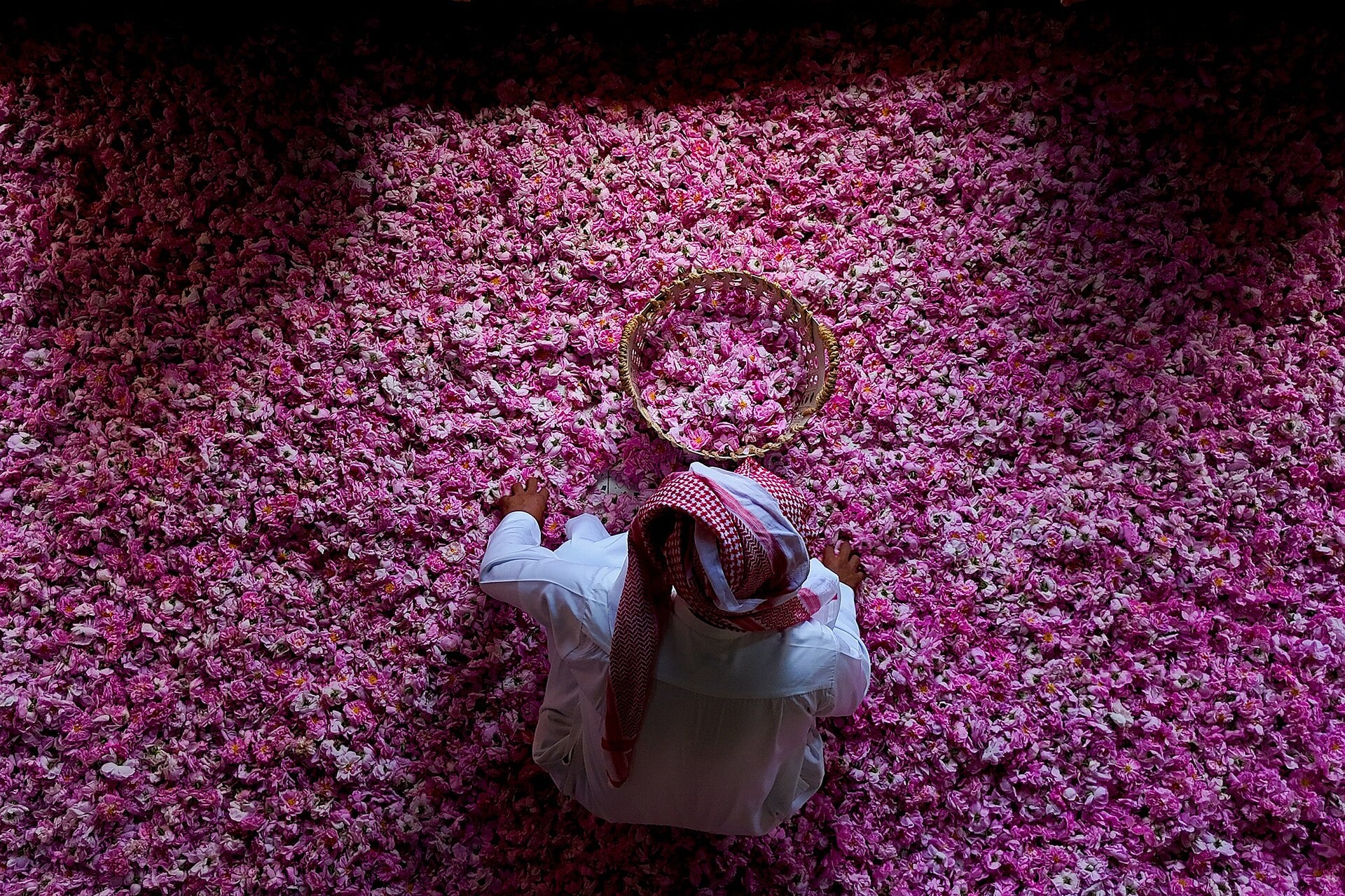
Taif has a real season, and it is set by the rose crop rather than by the thermometer. The cycle starts each December, when growers return to the fields, and the petals are picked in early spring — so the months either side of that turn are when the town is doing the thing it is known for.
The second answer is summer, for a different reason: Taif is a mountain town, and its air stays mild while the lowland is at its hardest.
The rose year, in order
Roses here are an industry rather than a tourist story. Growers return to the fields and bushes each December. About 55 days later the scent is through the gardens, mixed with the juniper on the paths, and the picking season follows in early spring, when the petals go by the bushel to the town's rose oil extraction factories and come out as rose water and perfume oil. The Taif Rose Festival is held annually at Al Rudaf Park, organised by the Ministry of Culture, with live performances and perfume-making workshops. The rose farms is the half-day built around the farms and the distilleries.
| Part of the year | What is happening |
|---|---|
| From December | Growers return to the rose fields and bushes; the cycle restarts |
| About 55 days later | The scent is through the gardens, mixed with juniper |
| Early spring | Petal picking; the crop goes to the rose oil factories |
| Announced annually | The Taif Rose Festival, at Al Rudaf Park |
| Summer | Mountain air while the lowland is hardest; the Al Wahbah lake has evaporated to sabkha |
| The rainy season | Wild plants growing on the edges of the Al Wahbah crater |
Altitude does more than the month
Taif sits in the Sarawat range east of Makkah, and the mountains around it are where the temperature actually lives. Al Hada Mountain is part of that range, running in a curved line of about 87 kilometres between Taif and Makkah, and the drop in temperature is noticeable on the journey along Al-Hada Road — a route in use for a thousand years, known traditionally as Darb Al-Jammalah after the camel caravans that carried goods along it. At about 2,177 metres above sea level there are acacia, juniper and herb plants along the road, with vendor booths selling Taif rose water, fruit and warm drinks. There is a cable car, and no ticket is needed. Al Hada and the mountain road covers that road and the viewpoints on it.
Al Shafa rises over 2,500 metres about 30 kilometres from town, cool and green at the top, with white fog on the Sarawat peaks, juniper on the paths, and pomegranate, grape and fig on the slopes below. No ticket is needed there either.
Al Wahbah has a season of its own
The Al Wahbah crater is the largest and deepest volcanic crater in the country, 3,000 metres across and about 250 kilometres from Taif. That distance makes it a long day out rather than a short outing, whatever the month. What the season changes is the floor: the lake at the bottom evaporates in summer and becomes sabkha around a salt dome, while wild plants grow on the crater's edges in the rainy season.
Summer, and why Taif pairs with the coast
Summer is when Taif's altitude earns the most, because it is mild while the lowland is hardest. That makes it the natural companion to Jeddah in the hot months, when the coastal city is a morning-and-evening proposition and the mountains are an afternoon one. Pairing them also gives the trip an old quarter to walk in Historic Jeddah, which is on the UNESCO World Heritage List and is best taken early in the day. Jeddah & Taif runs the two together, and Driving from Jeddah to Taif covers the road between them.
Two constraints worth knowing before you pick dates
Taif is roughly 90 minutes from Makkah, and Makkah is not open to non-Muslims — access is restricted to Muslims only — so it does not go on a general itinerary in any season. And Al Wahbah's distance means it needs a day of its own; it cannot be bolted onto a rose-farm morning.
Putting a trip together
A Taif short break through the rose months is the tightest version of the town: the farms, the mountain road, and the markets and parks in between. For orientation before you go, Taif: a first-timer's guide; for what to fill the days with, Things to do in Taif.