What Hegra is
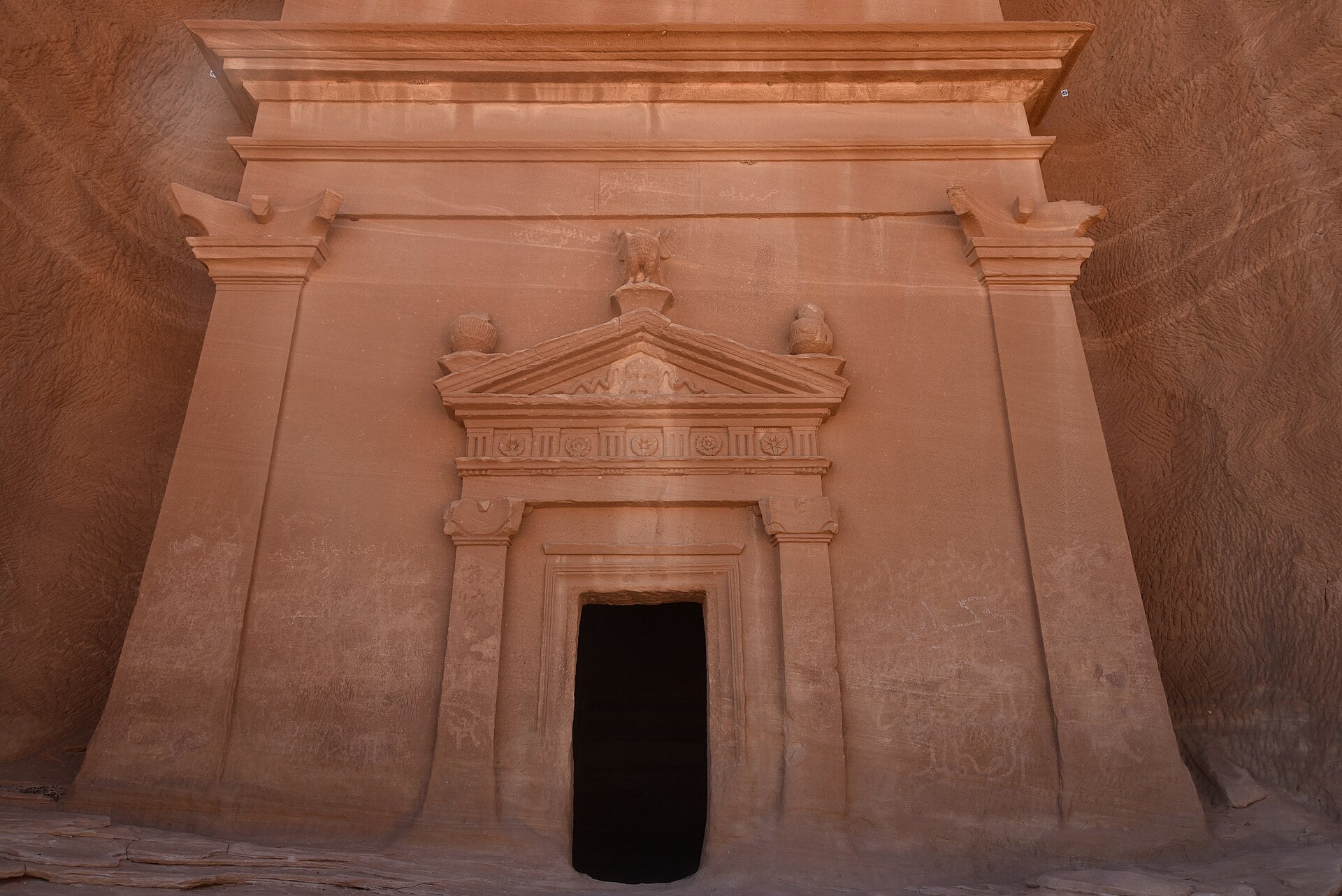
Hegra sits in the AlUla valley, in Madinah Province, and it was the southernmost city of the Nabataean kingdom. The site was occupied from before the 1st millennium BCE and grew on the incense road that ran north out of southern Arabia towards Petra and the Mediterranean.
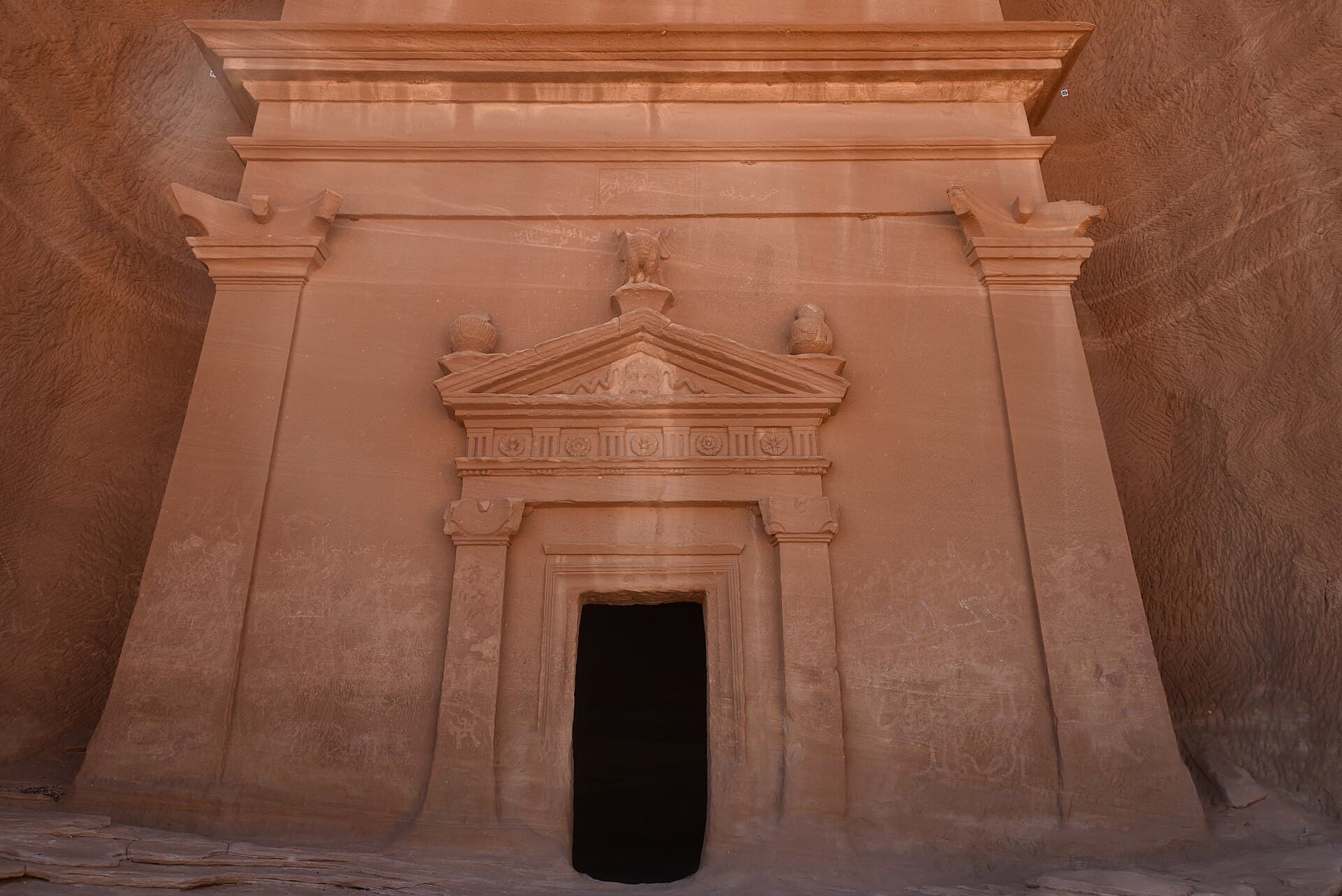
The UNESCO inscription records 111 monumental tombs, 94 of them decorated, along with water wells, some 50 inscriptions from the pre-Nabataean period and cave drawings. The decorated facades date from the 1st century BC to the 1st century AD.
What you see on the ground
More than 110 tombs are cut into sandstone outcrops scattered across the desert floor. The facades are carved directly into the rock rather than built against it, which is why the site reads as a series of separate clusters spread over open ground rather than one ruined town. Some burial chambers carry inscriptions describing the person laid inside, perhaps a healer, a military figure or a local leader.
One tomb has a name attached to it. Hinat's burial was excavated in 2008, and the reconstruction of her face is shown at the Hegra Visitor Centre. It is one of the few points in the whole valley where the site stops being architecture and becomes a person. Our Hegra page sets out the tomb groups in more detail.
How a visit actually works
Hegra is not a place you wander into. Access is by guided tour with an AlUla Rawi, the local storyteller-guides, travelling between the tomb clusters by vehicle. Numbers each day are capped, so book before you travel rather than on arrival.
Hegra with a licensed guide covers the site on its own and gives the tombs the time they need. If you have a single day in the valley and want the other sites as well, AlUla in one day takes in the wider valley with a driver, a guide and hotel pick-up. Because the tour moves between clusters by vehicle, a visit fills a large part of the day rather than an hour or two.
How Hegra fits with the rest of AlUla
Four sites sit within a short drive of each other, and they are not interchangeable. Hegra is the Nabataean layer. Dadan and Jabal Ikmah are older, and the Old Town is far later. The table below is the quickest way to see which is which before you build a day around them.
| Site | What it is | Entry and access |
|---|---|---|
| Hegra | Nabataean rock-cut tombs, more than 110 of them | Guided tour only, daily numbers capped |
| Dadan | Capital of the Dadanite and Lihyanite kingdoms, tombs cut high into a cliff | Usually visited by guided tour with transport |
| Jabal Ikmah | Canyon walls carrying hundreds of pre-Arabic inscriptions | There is no ticket; short, mostly level path |
| AlUla Old Town | Mud-brick town from the 12th century, once walled with fourteen gates | Most of it opens between 8 and 9 in the morning |
Read the two companion guides before you fix the order of your days: Dadan: what to expect and how to visit and Jabal Ikmah: what to expect and how to visit. If you have an evening spare, AlUla Old Town is the one part of the valley that stays awake late, with shops running to about 11pm and most restaurants to around 1am.
When to go
October to March is the workable window in AlUla; summer in the valley is severe. That window is also when the valley's events season runs, which is worth knowing if you are choosing between months rather than simply avoiding the heat.
Three or four days in AlUla is the usual shape for a first visit, because the sites are close together but each is guided and each takes its own slot. How many days do you need in AlUla? works through the arithmetic, and Getting to and around AlUla covers flights, transfers and moving between the sites once you are there.
Planning a trip around it
Hegra anchors several of our itineraries. Riyadh & AlUla pairs it with the founding sites of the modern state in the capital, which is a useful order because the museums in Riyadh make the older sites easier to read. AlUla & Tabuk carries on north-west into canyon and desert country instead. If you are still working out what the country holds, start with AlUla: a first-timer's guide.