What is written on the walls
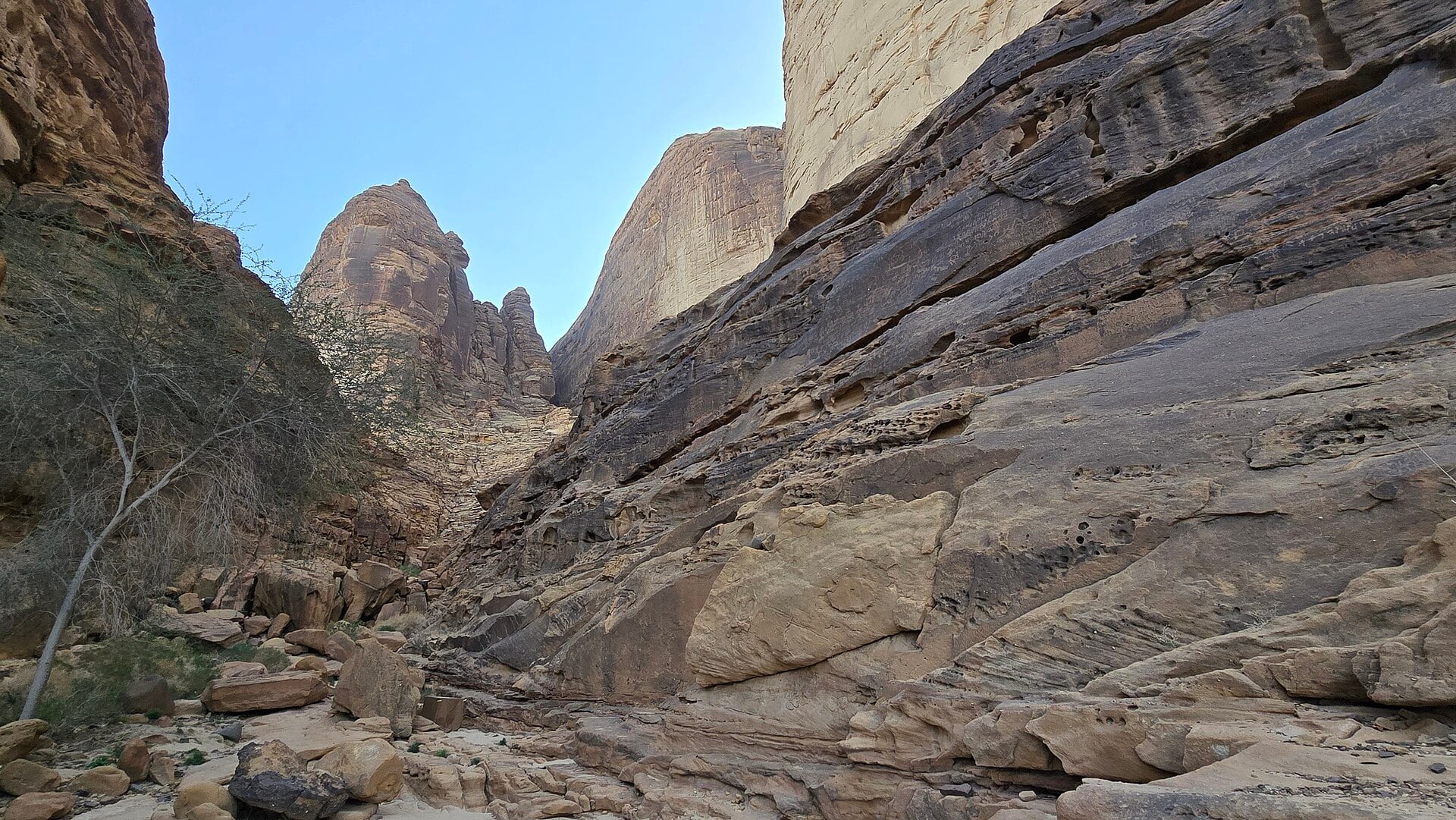
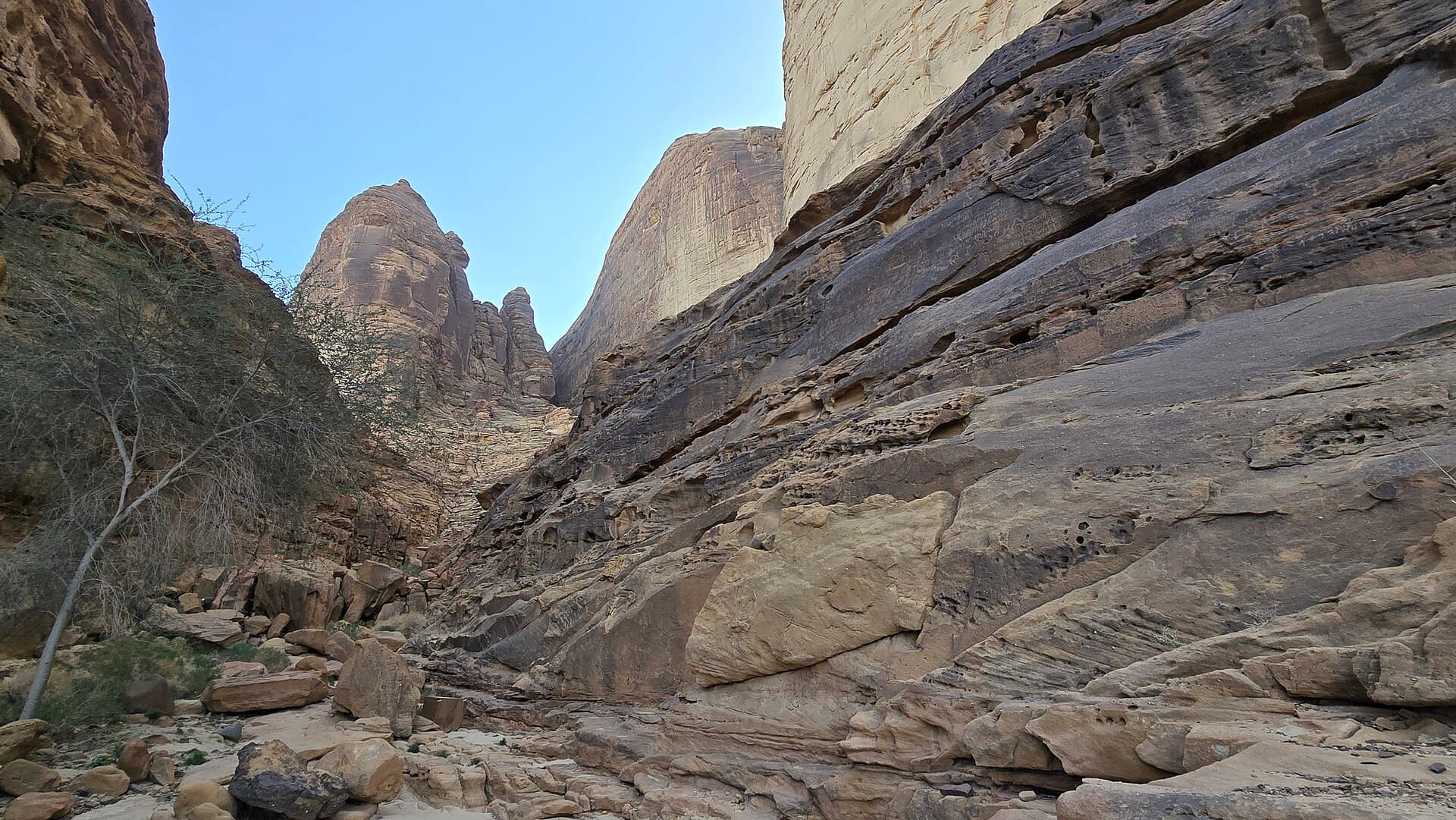
The inscriptions are cut into the rock faces on both sides of a narrow valley in AlUla, in Dadanitic, Thamudic, Minaic and Nabataean scripts. There are more than 300 of them, and together they form the largest concentration of Dadanitic and Lihyanite writing in the world.
What they say is the unusual part. They record dedications, names and offerings rather than royal proclamations, so the canyon is closer to a public noticeboard left open for two and a half thousand years than to a monument built to impress. Our Jabal Ikmah page has more on the scripts and where the densest panels sit.
That distinction changes what you are looking at. A royal monument tells you what a ruler wanted recorded; a wall of private dedications tells you who was passing through, what they farmed, what they traded and who they addressed when they wanted something. Archaeologists are still decoding the inscriptions, and the reading of the site is not finished.
The UNESCO listing, precisely
It is worth being exact here, because most travel writing gets it wrong. Jabal Ikmah was added to UNESCO's Memory of the World Register, which recognises documentary heritage. That is a different list from the World Heritage List, which in AlUla covers Hegra.
| Listing | What it recognises | The AlUla entry |
|---|---|---|
| Memory of the World Register | Documentary heritage | Jabal Ikmah |
| World Heritage List | Places and sites | Hegra |
The distinction matters when you are choosing what to see. A canyon of writing and a valley of carved tombs are recognised for different reasons, and they do different things to a visit. Hegra: what to expect and how to visit covers the second of those.
It also explains why the two sites are run so differently. Hegra is entered on a capped guided tour and nothing else; the inscription canyon has no ticket at all. Same valley, same tourism authority, two entirely different sets of rules, which catches people out when they plan a day around one and assume the other works the same way.
What a visit is like
The canyon is short and mostly level, and the inscriptions are close enough to the path to read without climbing. There is no ticket for entry, and the tourism authority lists the site as suitable for all ages, which puts it among the easier stops in the valley for families.
A guide who can point out what a panel actually says is the difference between a wall of marks and a wall of dedications - the case for going with one rather than driving up alone.
Set expectations accordingly. This is not a site with a big reveal at the end of the path; it is a quiet valley where the interest is in reading detail off rock at close range. Go to Hegra or Dadan for scale; come here to find out what people in the valley actually wrote down.
How it pairs with Dadan
Jabal Ikmah and Dadan sit close together and are presented as a pair by the tourism authority, which reflects how they are actually visited. Dadan and Jabal Ikmah takes both in one outing with a driver, a guide and hotel pick-up. Dadan: what to expect and how to visit explains what you are looking at on the cliff face, and reading it first makes the inscriptions land better, since the two sites belong to the same kingdoms.
If you would rather compress the valley into a single day, AlUla in one day strings the main sites together, though it trades depth for coverage. Either way the canyon is a short stop rather than a half-day in itself.
Fitting it into AlUla
Most first visits give the valley three or four days, which is enough for Hegra, Dadan, the inscriptions and AlUla Old Town without a day that feels like a race. How many days do you need in AlUla? works through what each site takes, and Where to base yourself in AlUla covers where to sleep in a valley where the sites are spread out.
October to March is the workable window; summer here is severe. On a longer route, Riyadh, AlUla & Tabuk takes the valley as its middle leg, between the capital and the desert country of the north-west.