Getting there
Fly into Abha's own airport. That is the practical route in, and the alternatives are the road routes from Jeddah on the Red Sea coast or from Riyadh, the capital. Najran also has an airport, so the far south-west can be entered at either end.
The Saudi Tourism Authority treats Abha and Khamis Mushait together as the starting point for the Asir region, so an itinerary that lands at one and sleeps at the other is normal rather than awkward.
| Route in | What it involves | Works for |
|---|---|---|
| Air to Abha | Abha has its own airport | The usual route in |
| By road from Jeddah | In from the Red Sea coast | Trips that start on the coast |
| By road from Riyadh | In from the capital | Trips that begin in Riyadh |
| From Najran | Najran has its own airport, in the far south-west | Doing the south as one region |
Jeddah & Abha builds the coast-to-highlands version, and Riyadh & Abha the one from the capital. If you intend to drive rather than fly one of those legs, Driving from Abha to Jeddah covers what that road day is actually like.
Once you are there, you need a vehicle
Abha is the main town of the Asir highlands, and what makes the region worth the trip is spread out along mountain and escarpment roads: cable car stations down the cliff, the trails of Asir National Park, terraced farmland, Al Habala Park, and the villages below the rim. None of it sits within walking distance of a hotel in town: Rijal Almaa alone is 45 km away, down the escarpment.
Every trip we run here includes a driver and a private guide, which in this terrain does more than save you the wheel. If you are self-driving, plan in fewer stops per day than a map of the region suggests: the ground between them is mountain and escarpment road.
The escarpment road is the main event
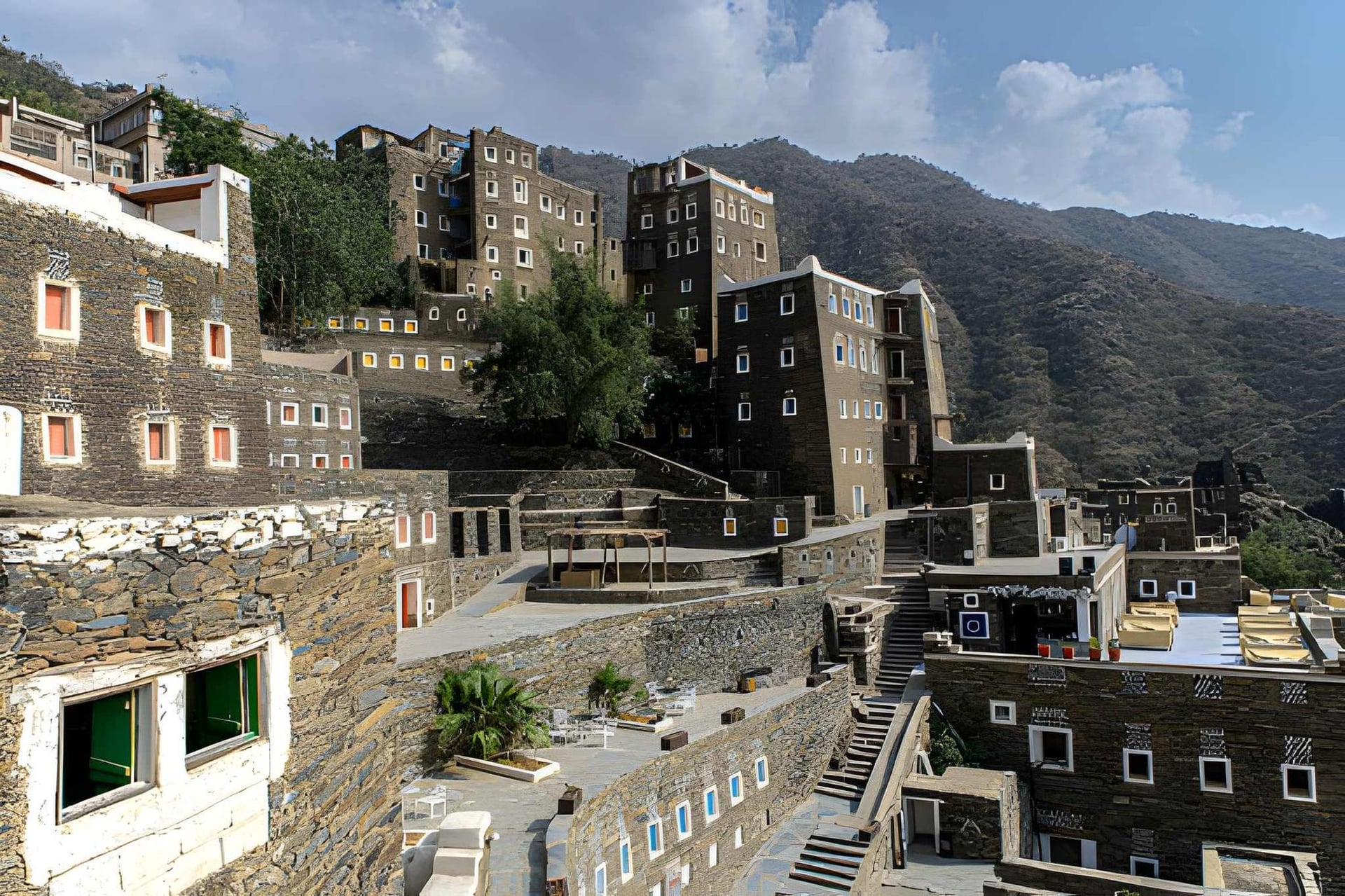
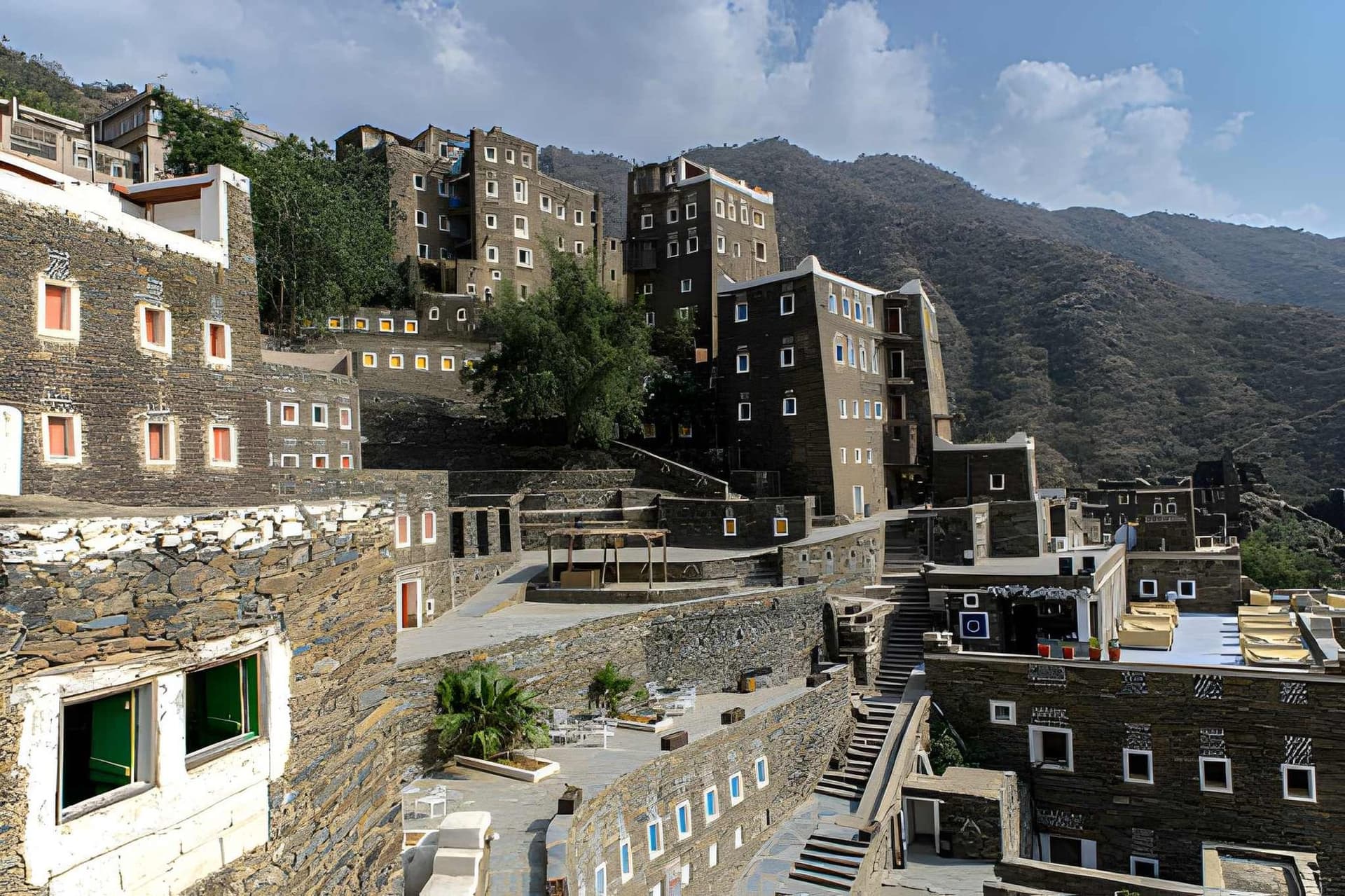
The single road you will remember is the descent below the rim. Rijal Almaa sits 45 km from Abha, down that escarpment: stone tower houses laid in dark courses with lines of white quartz set into the walls to shed rain, stacked up the mountainside so tightly the village reads as one structure from the valley. The interiors are painted in Al-Qatt Al-Asiri, on UNESCO's intangible heritage list since 2017, several houses are open as a museum, and there is no ticket to enter.
Treat the drive as part of the outing rather than the overhead attached to it. The Rijal Almaa village half day runs it as a half day with the descent built in.
Cable cars are sightseeing, not transport
Cable cars run down the escarpment at several points around Abha, and Al Habala Park has one of them, the park named after the rope ladders once used to reach the village on the cliff below. They are worth doing, and they are not a way of getting anywhere: you come back up the way you went down, and a car still has to meet you. Build them into a day as an activity, not as a leg of a route.
Around the town itself
Abha and neighbouring Khamis Mushait hold the markets, the historic landmarks and the traditional buildings that give the region its character on the ground rather than from a viewpoint. That part of a visit is walkable once a driver has dropped you: Abha markets and the old quarter works exactly that way.
Onward into the south
Najran is the natural continuation, in the far south-west on the Yemeni border, with tall mud-brick houses under white-painted crenellations, the walled pre-Islamic city of Al-Okhdood, and the wells at Hima that were added to the World Heritage List in 2021. It has its own airport, so the leg can be flown or driven. Abha & Najran does it as one trip, and Driving from Abha to Najran covers the road version.
When you travel changes the driving
Asir runs on the opposite season to the rest of the country. The escarpment catches monsoon cloud, which is why the region is green and why summer is the high season here while the rest of Saudi Arabia is at its hottest. Cloud on the escarpment is the reason the landscape looks the way it does, and it is also the reason a viewpoint can put you inside the cloud rather than above it. Allow for it in the schedule rather than against it.
Before you go: the visa
Saudi Arabia's tourist eVisa is available online to nationals of 66 eligible countries. It is a one-year, multiple-entry visa allowing a total stay of up to 90 days within that year (not 90 days per visit) for tourism-related activities including events, family visits and leisure. Apply through the official government portal; we are not a visa service and do not obtain visas on your behalf.
For how many of those days to spend in the highlands, see How many days do you need in Abha?, and for which part of the region to sleep in, Where to base yourself in Abha.