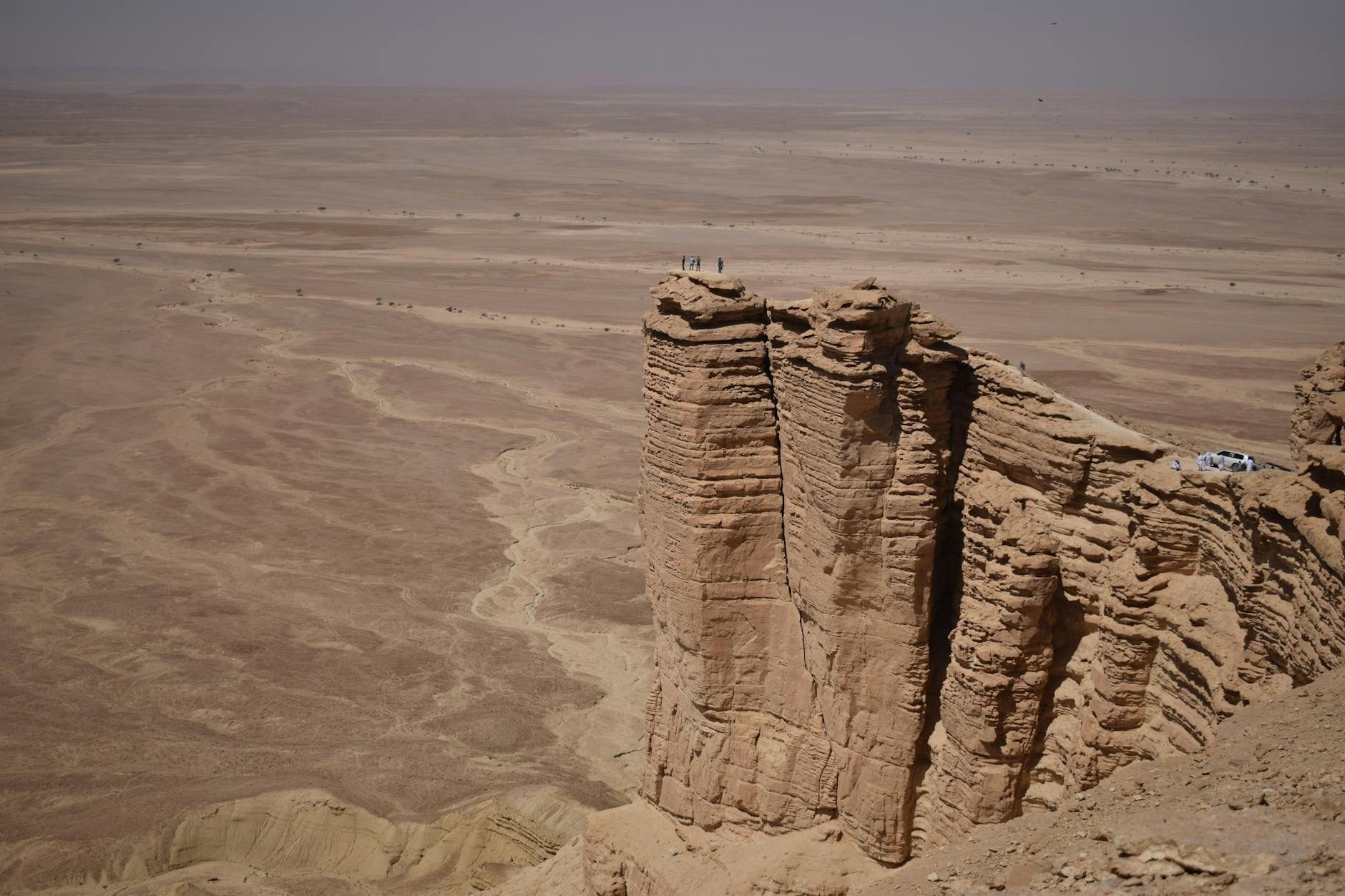
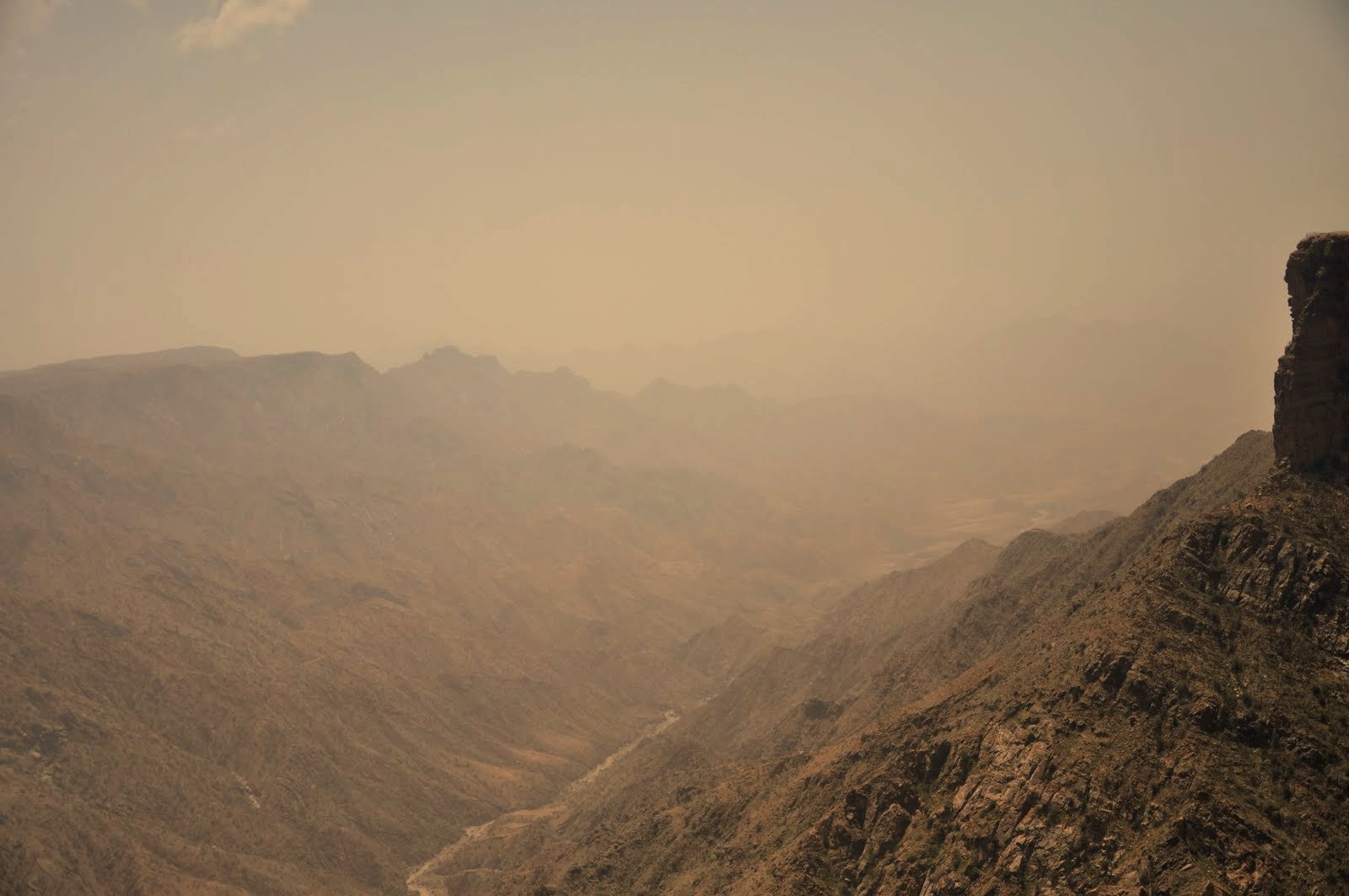
Two landscapes that could not look less alike. Out of Riyadh, the Tuwaiq escarpment breaks off at the point known as the Edge of the World, where a cliff 1,131 metres high drops to a flat desert floor that carries on to the horizon with nothing on it. Around Abha in the south-west, the Asir escarpment catches monsoon cloud and the ground is green, terraced and forested with juniper.
The trip is built around light. Sunrise and sunset are the two times worth planning around at the Edge of the World, so it is kept for the end of the day, and Diriyah is left for the evening, since the restored quarter works as an evening as much as a history stop. Days start early and finish late, with the middle of the day left open.
Both halves involve rough ground. The final approach to the escarpment is track and needs a four-wheel drive, there is no water, food or fuel out there and mobile coverage drops, so you go with a guide and carry what you need.
Day by day
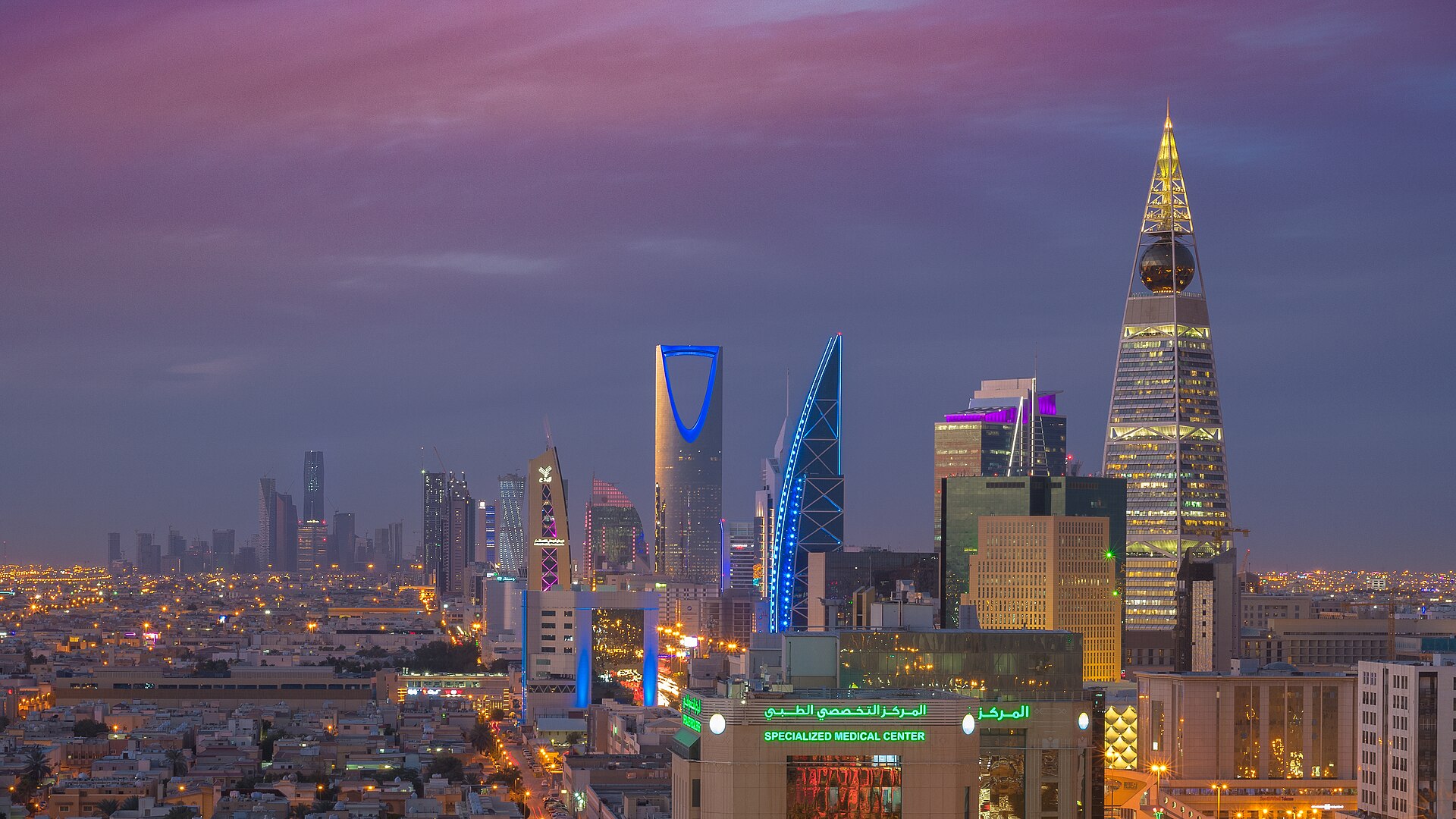
Arrive Riyadh
You are met at the airport and driven to your hotel. Riyadh is the country's main air hub, so it is usually the arrival point whether or not it is the reason for the trip.
The rest of the day is unscheduled. Distances inside the city are large and it is built for driving, so your vehicle and driver stay with you.
Edge of the World
A long day out to the Tuwaiq escarpment, about 100 kilometres north-west of the city. The escarpment runs some 800 kilometres across central Arabia; at this point the wall falls away to a flat plain that continues to the horizon with nothing on it, which is where the English name comes from. The rock holds marine fossils, snails and shells, because this was seabed long before it was desert.
You go by four-wheel drive, because the last part of the approach is rough track, and with a guide, because there is no water, food or fuel out there and mobile coverage drops out. Below the cliff, samar trees and acacias spread across the valley floor while ghodi trees hold the fixed dunes.
The day is timed around sunset rather than the middle of the day, which is exposed and hot. There is no entry ticket. Late back into Riyadh.
Wadi Hanifa and Diriyah
A slower day, starting in Wadi Hanifa, the valley that runs 120 kilometres through the capital. It carried the water that made Riyadh grow where it did, spent the 20th century as the city's dumping ground, and was then cleared and rebuilt as a working wetland with a treatment system in the streambed. It now runs as a green corridor of shaded trails, gardens and picnic areas, with the Stone Dam and Al Ulayb Park along it, and no reservations needed.
The valley passes directly below Diriyah, so you go up there for the end of the day. Diriyah is the mud-brick town that was the capital of the first Saudi state, a UNESCO World Heritage Site, and the most complete Najdi architecture at this scale anywhere: thick mud walls, stepped parapets, and triangular openings cut high for light and air. The Emirate ran from 1727 to 1818 from the At-Turaif district here. The quarter has been restored and opened as a walkable museum area with cafes and restaurants alongside, so it works as an evening as much as a history stop.
Fly to Abha, and the escarpment
A morning flight south to Abha, which has its own airport. You are met and taken to your hotel, then straight out onto the escarpment while the light is good.
The Asir highlands sit high enough to stay cool when the rest of the country is not, and the escarpment catches monsoon cloud, so the ground here is green and terraced with juniper forest rather than desert. The Sarawat range runs through the region and Al Soudah is the highest peak in the country. You take a cable car down the escarpment face and walk a section of the trails in Asir National Park.
Rijal Almaa
Down the escarpment road to Rijal Almaa, about 45 kilometres from Abha. The drive down is a large part of why people make the trip.
The village is dark stone laid in courses, several storeys high, with lines of white quartz set into the outer walls to shed the rain — the detail that gives the buildings their pattern. They are stacked up the mountainside so tightly that from the valley the village reads as one structure.
Inside, the walls carry Al-Qatt Al-Asiri: geometric bands of bright colour painted by the women of the house directly onto the plaster. UNESCO added the practice to its intangible heritage list in 2017. Several houses are open as a museum, and Qasabat Al-Owus Tower gives the highest view over the valley. Back up the escarpment for the evening.
Depart Abha
The early morning is left open for anything you want to go back to in better light, then you are driven to Abha airport for your flight.
What is included
- Private four-wheel drive with driver for the escarpment day
- Private air-conditioned vehicle with driver for all other days
- Licensed English-speaking guide in Riyadh and Asir
- Five nights' hotel accommodation, three in Riyadh and two in Abha
- Daily breakfast
- Cable car tickets and all entrance fees for the sites named in the itinerary
- Water and supplies carried for the day at the Edge of the World
- Airport transfers at both ends
What is not
- International flights
- The domestic flight from Riyadh to Abha
- Saudi entry visa, which you apply for yourself through the official portal
- Travel insurance
- Lunches, dinners and personal spending
The places on this trip
Send us your dates
We come back with the itinerary written out and one clear cost.