Who can visit Madinah
This is worth stating plainly, because it is widely assumed to work the other way round. Madinah is open to visitors of any faith. The Saudi Tourism Authority's own guidance is that the city welcomes visitors from around the world, and that access to certain sacred areas, including Al Masjid an Nabawi, is restricted to Muslims. Makkah is a different case entirely: access to Makkah is restricted to Muslims only.
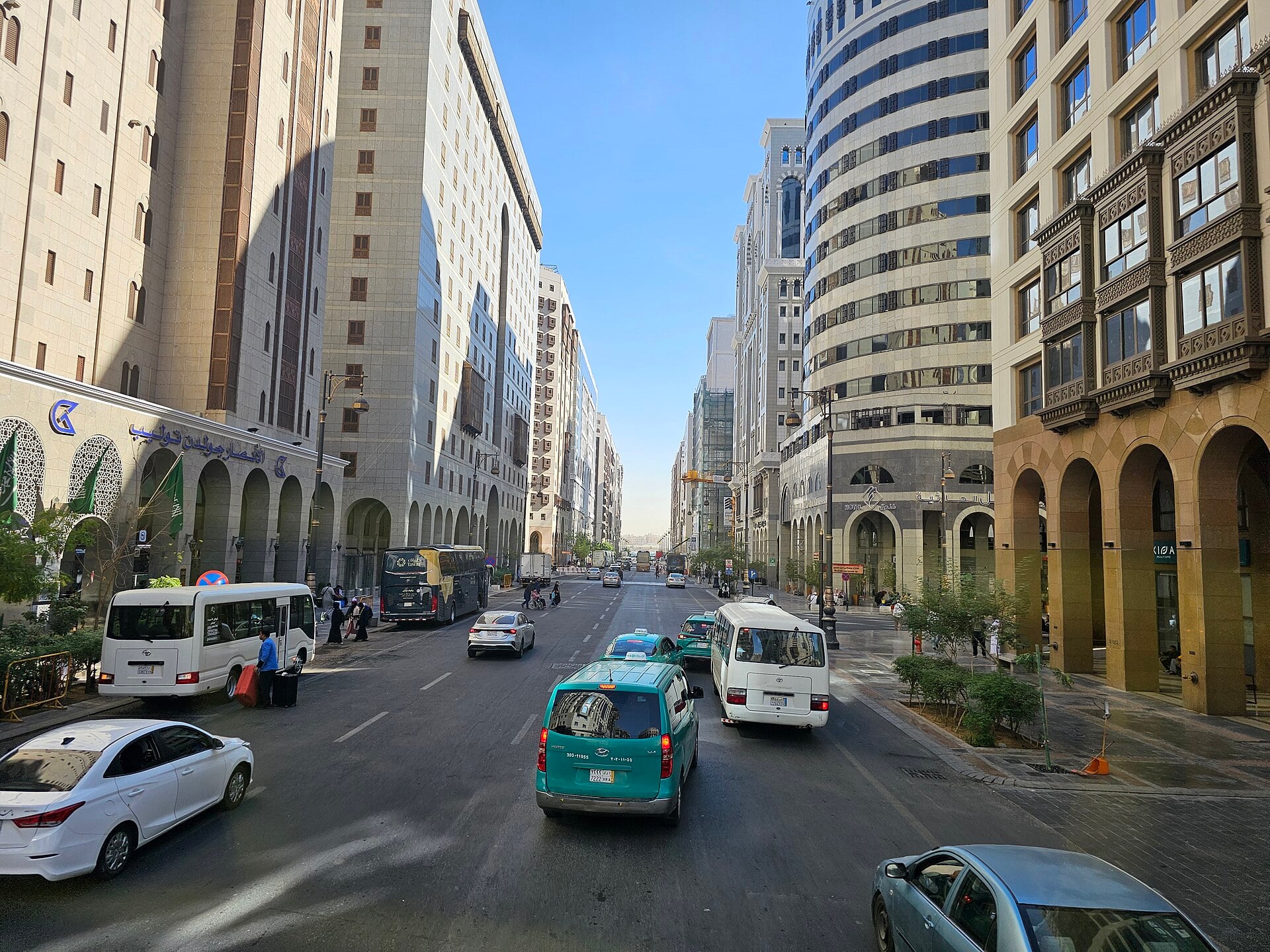
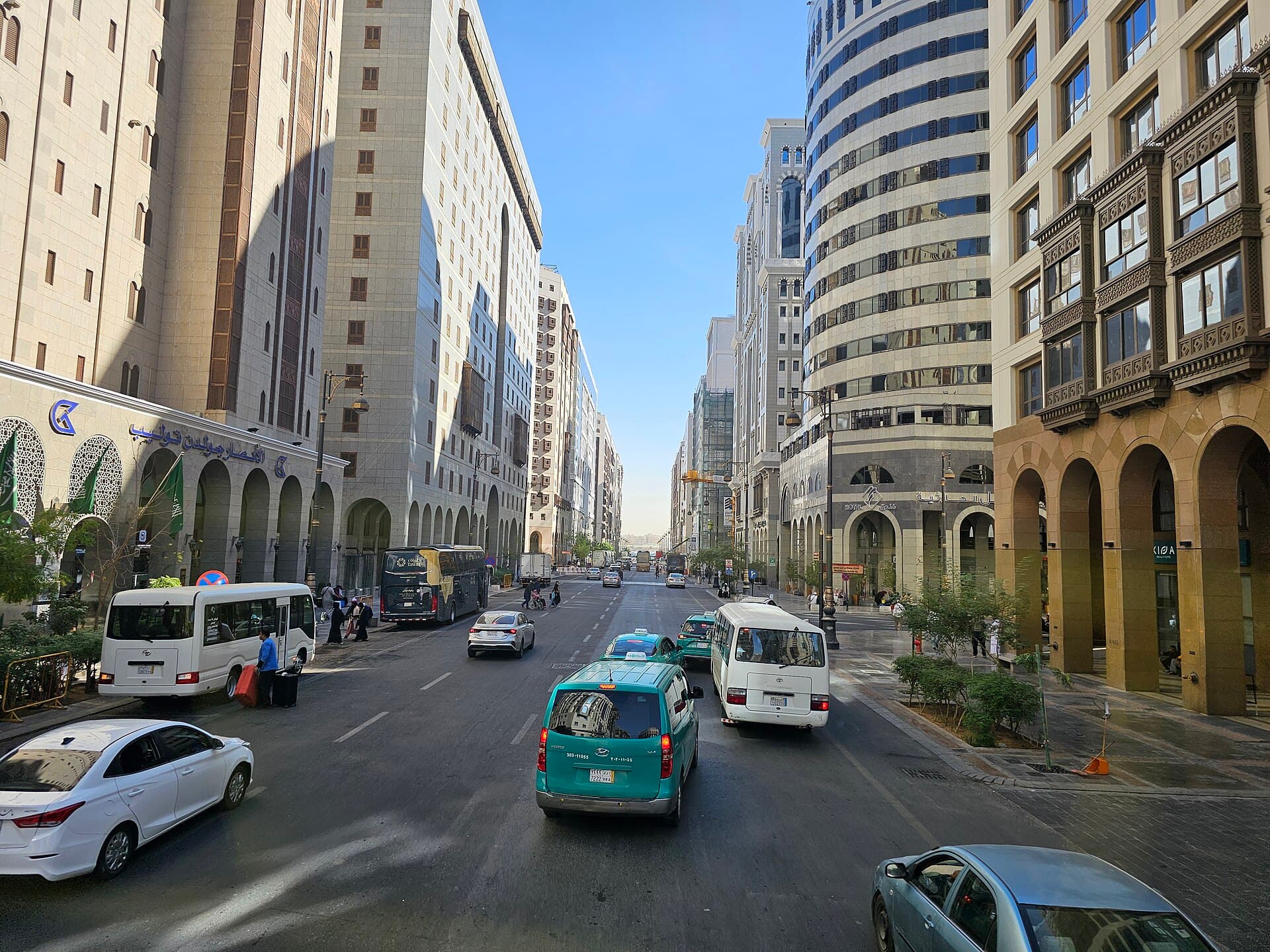
Madinah holds a central place in Islamic history as the city that welcomed the Prophet Muhammad (peace be upon him) after the Hijrah, and it is home to Al Masjid an Nabawi and several sites that mark key moments in the early foundations of Islam. The city is known for its calm and spiritual atmosphere, and alongside that significance it preserves historic neighbourhoods.
So a non-Muslim traveller can drive to Madinah and see the city, its historic neighbourhoods, its date farms, its museums, Uhud mountain and the old lava fields that make the ground here unlike anywhere else in the Hejaz, but not the sacred sites at its centre. Muslim visitors who want Al Rawdah Al Sharifah need a permit, and it should be booked in advance through Nusuk.
Road or rail
Madinah sits on the Haramain high-speed line to Jeddah and Makkah, so this pair has a genuine alternative to the road. The choice is not about speed alone.
| Option | What it gives you | What you give up |
|---|---|---|
| Private car and driver | Door to door from hotel to hotel, luggage in the boot, and stops made where you want them | A longer day sitting in a vehicle |
| Haramain high-speed line | Jeddah to Madinah without a day on the road | The country between the two stations, and a transfer at each end |
Where the train wins is on a short trip with a fixed schedule. Where the car wins is when the point is the ground in between, or when the party wants to arrive and leave on its own timing. Getting to and around Jeddah covers the coastal end of the same question.
Timing the arrival matters more than the departure
Madinah follows a rhythm shaped by prayer times, religious seasons and steady flows of visitors, and time in the city is closely connected to worship and reflection, with the Prophet's Mosque at the heart of it. For a calmer experience, visitors are encouraged to come outside peak prayer times and major seasons. That single fact shapes the day far more than what hour you leave the coast.
Where to stay once you arrive
Choosing where to stay in Madinah is largely guided by proximity to the Prophet's Mosque and by the length of the visit. Hotels surrounding the mosque are the preferred option for many visitors, particularly those whose stay is focused on daily prayers and short visits, because staying nearby allows easier access throughout the day and reduces the need for transport between prayers. If the visit is longer and less prayer-led, that logic loosens.
Madinah city sights is the half day that works around the schedule rather than against it.
Carrying on north
AlUla lies in Madinah Province, which makes Madinah a natural staging point rather than a dead end. AlUla and Madinah pairs the two directly, and because Madinah has an international airport, a one-way road trip that flies out from the other end is possible.
The fuller version, Jeddah and Madinah, treats the two cities as the trip rather than as a transfer, and Jeddah, Madinah and Taif adds the mountains east of the coast.
Before you leave the coast
Jeddah has been the sea entry point for pilgrims heading to Makkah since the 7th century, and that trade paid for its old quarter. Historic Jeddah, or Al-Balad, has been on the World Heritage List since 2014: tower houses of coral stone, faced in the carved wooden bay windows called roshan. A good part of the quarter is propped and under restoration, so it is a working site rather than a finished one. Al-Balad: what to expect and how to visit sets out how to walk it, and where to base yourself in Jeddah matters if you are coming back the same way.
What the drive gives that the window does not
Madinah is a city of orchards and volcanic plains in the Hejaz, and the lava fields are landscape rather than a site. You meet them by moving through them, which is an argument for the road that no timetable can answer.