Ten days across the middle of the country, from Riyadh down into the Empty Quarter and then east to the oasis at Al Ahsa and the Gulf coast. It is a landscape trip: escarpment, sand sea, springs and shoreline, in that order.
The Rub' al Khali section is an expedition rather than an excursion. Access to the protected area is regulated and it is not somewhere to drive into unaccompanied, so those days run with a guide, a convoy and everything carried in. The reward is the emptiest ground in the country and the reserve where the Arabian oryx was returned to the wild.
After that the trip softens: two days in a working oasis of springs, palms and cave passages that hold their temperature through the summer, then the Gulf. It suits travellers who want desert on a real scale and are comfortable with camp nights.
Day by day
Arrive Riyadh
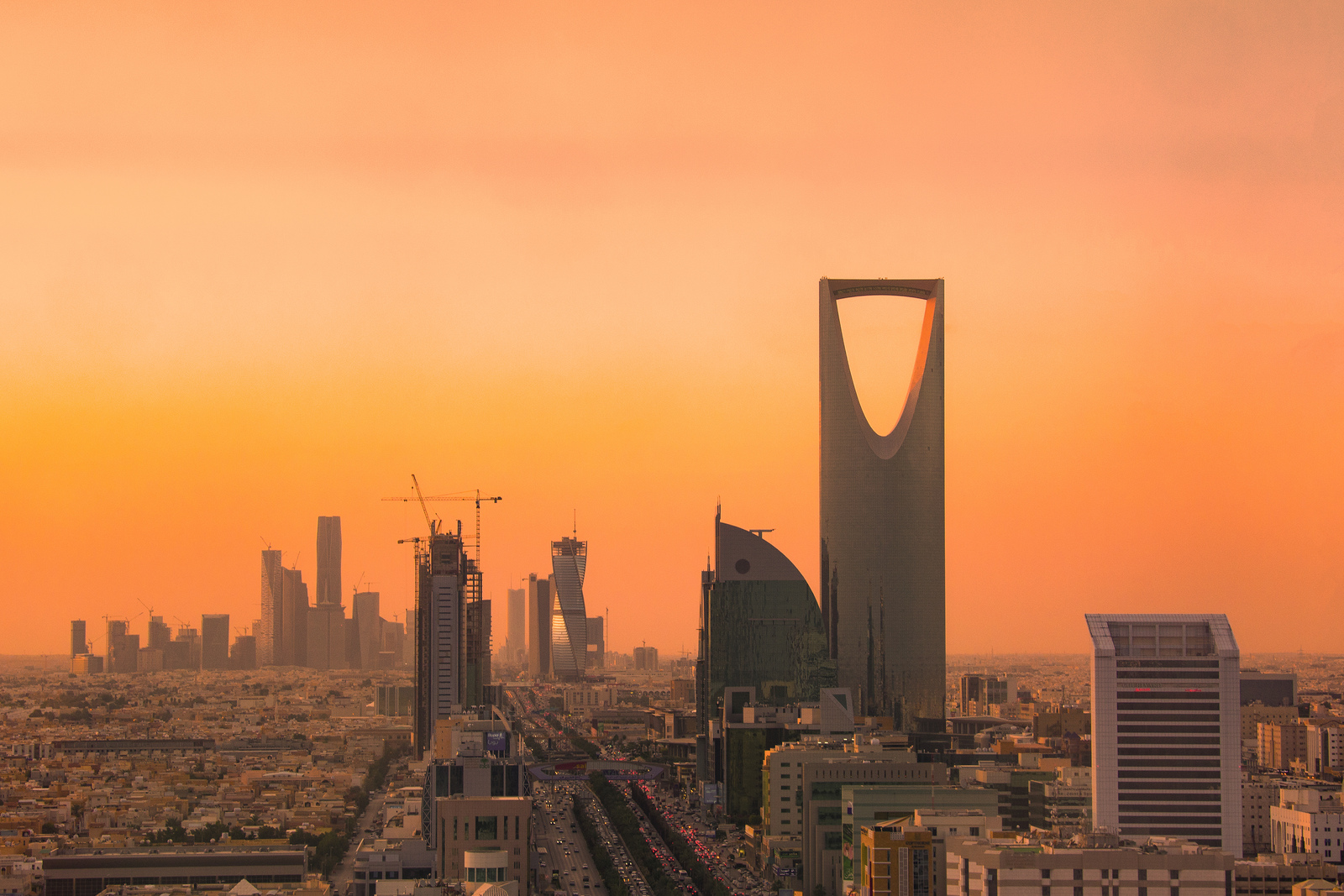
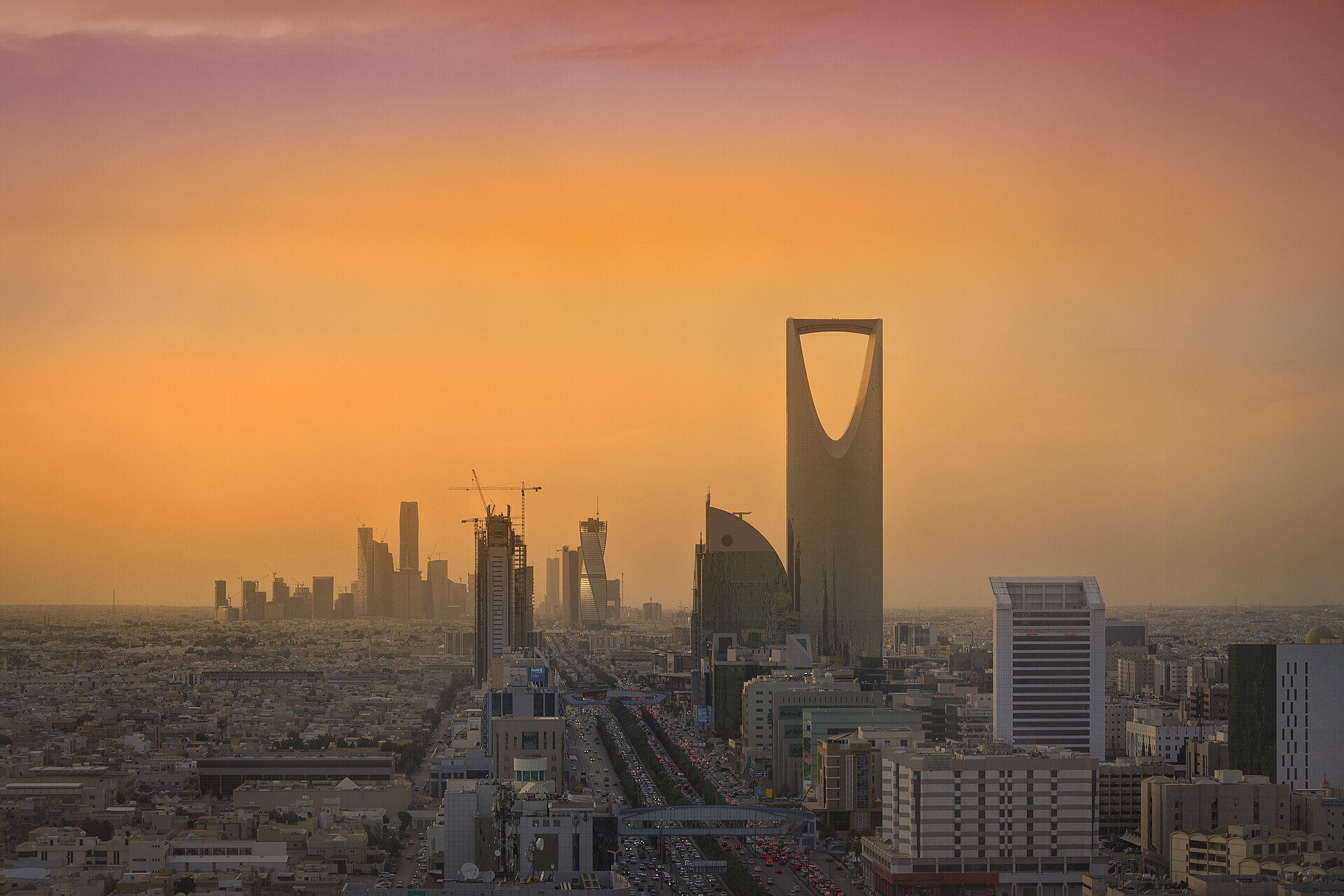
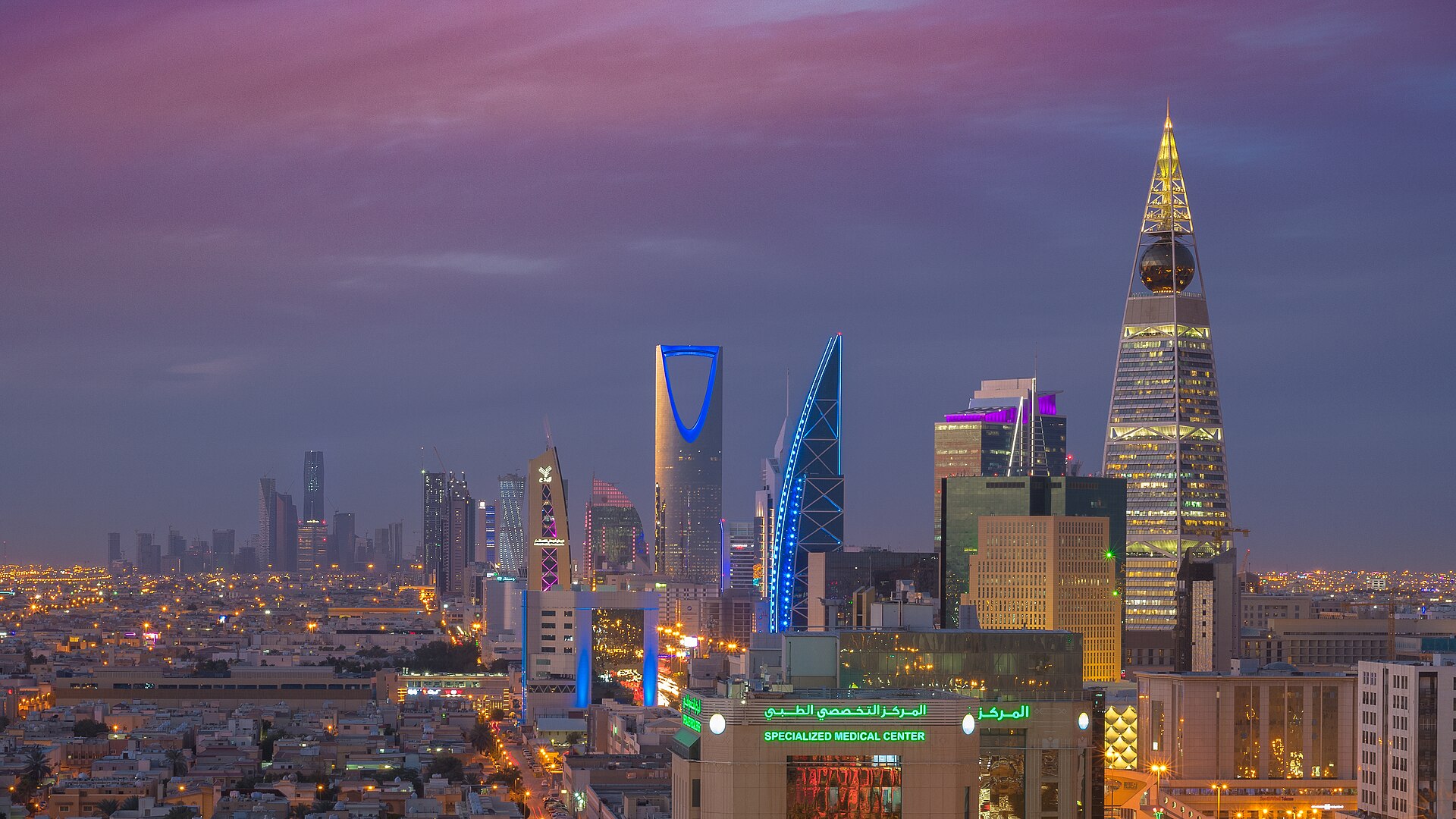
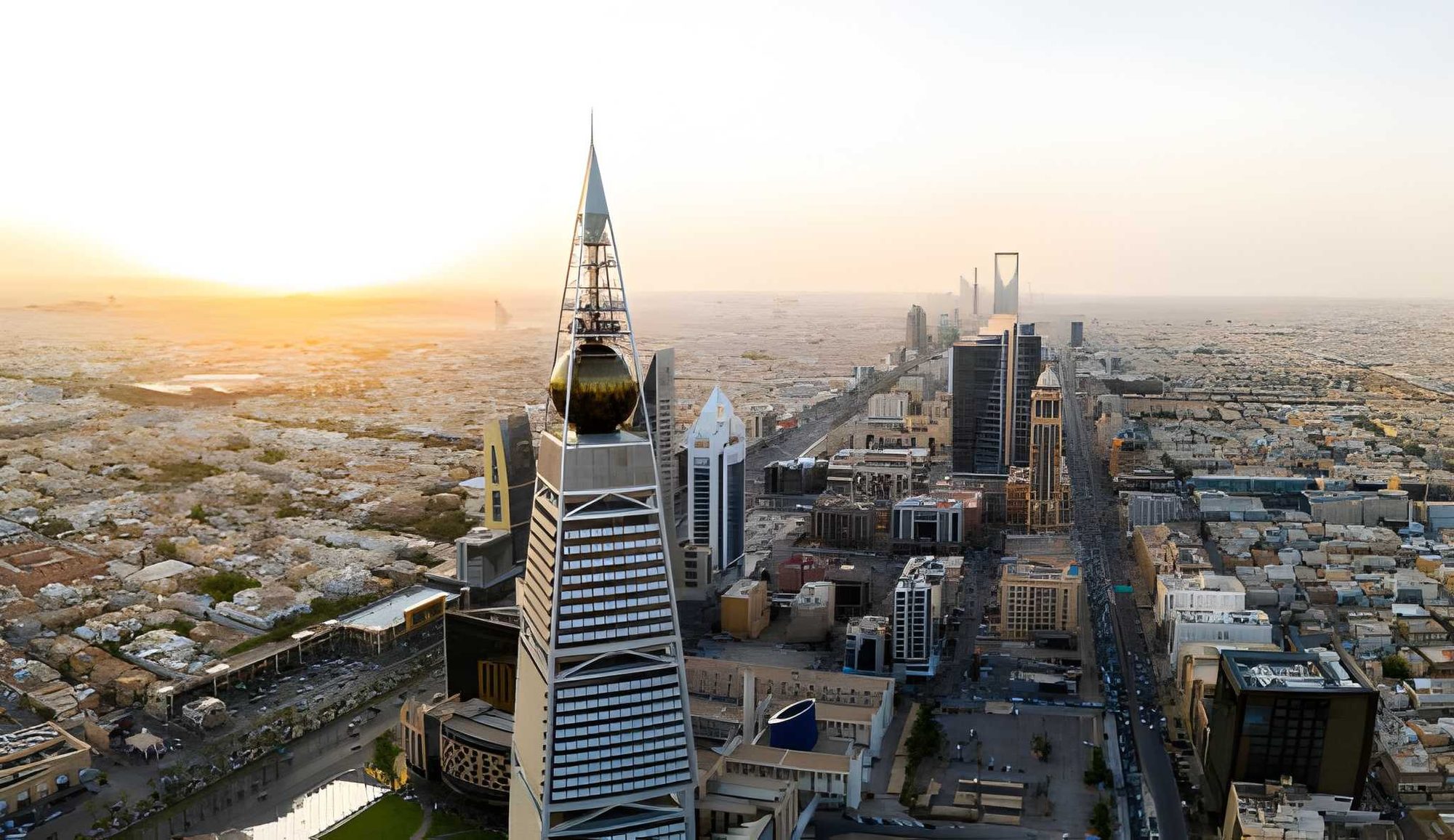
Riyadh is the country's main air hub, so it is the usual arrival point. You are met and driven in. Distances inside the city are large and it is built for driving, so the first evening is left clear.
Riyadh: the founding sites and Wadi Hanifa
The National Museum of Saudi Arabia runs as a sequence of halls covering the peninsula from prehistory to the modern state, and Al Masmak, the clay fort where the capture of the city in 1902 began the present state, stands nearby in the old centre. Late in the afternoon, Wadi Hanifa: 120 kilometres of valley through the capital, reclaimed from a dumping ground into a chain of parks and water channels, and the reason the city grew where it did.
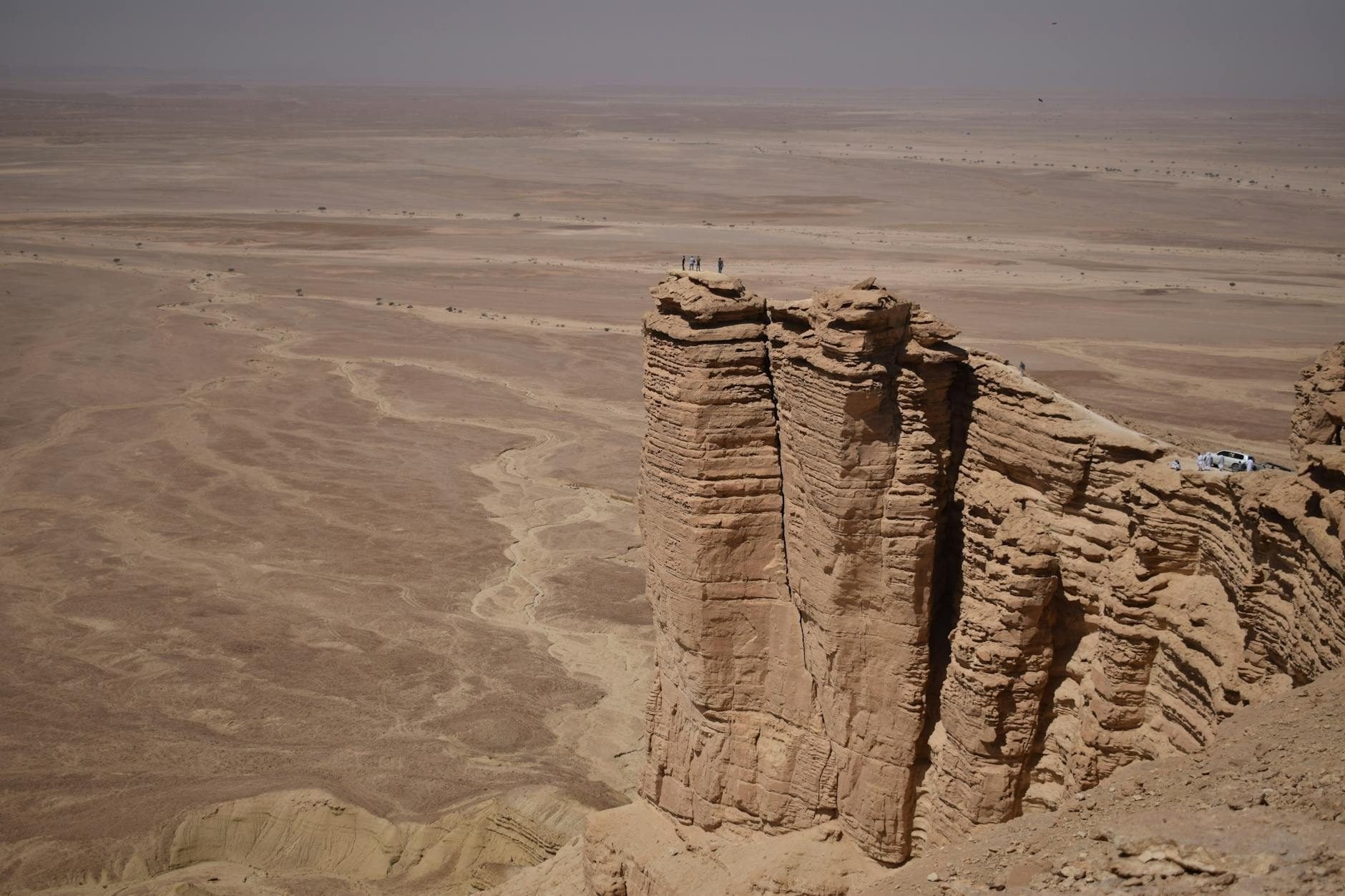
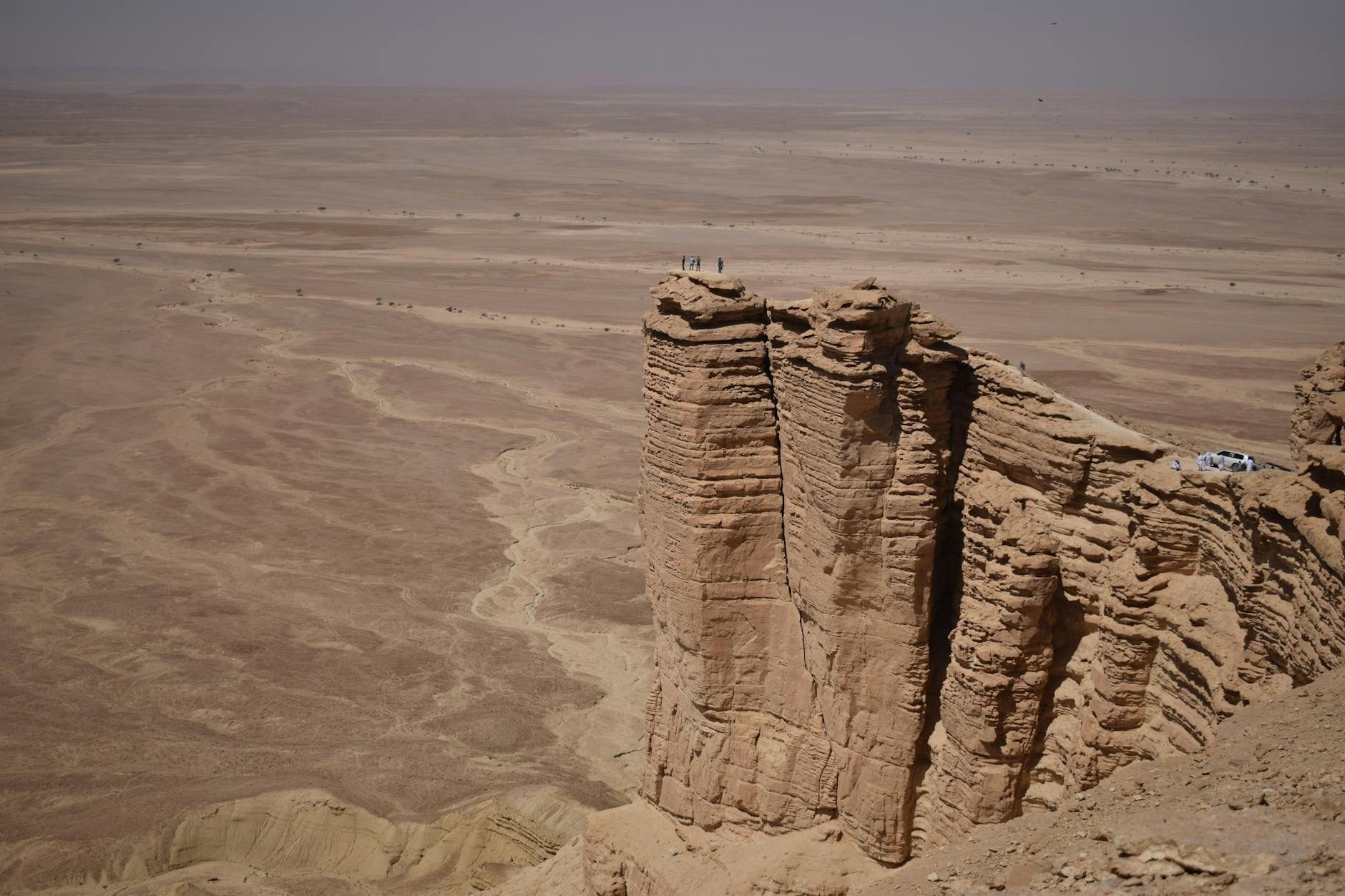
The Edge of the World
About 100 kilometres north-west of the city, at the point known as the Edge of the World, the Tuwaiq escarpment breaks off and the plain simply stops. The escarpment runs some 800 kilometres across central Arabia; at this point the wall falls away to a flat desert floor with nothing on it to the horizon. The rock holds marine fossils, snails and shells, because this was seabed long before it was desert. There is no ticket and no infrastructure at all: no water, food or fuel, and mobile coverage that drops out. The final approach is rough track and needs four-wheel drive. You go for the light at one end of the day and carry everything in.
South into the Empty Quarter
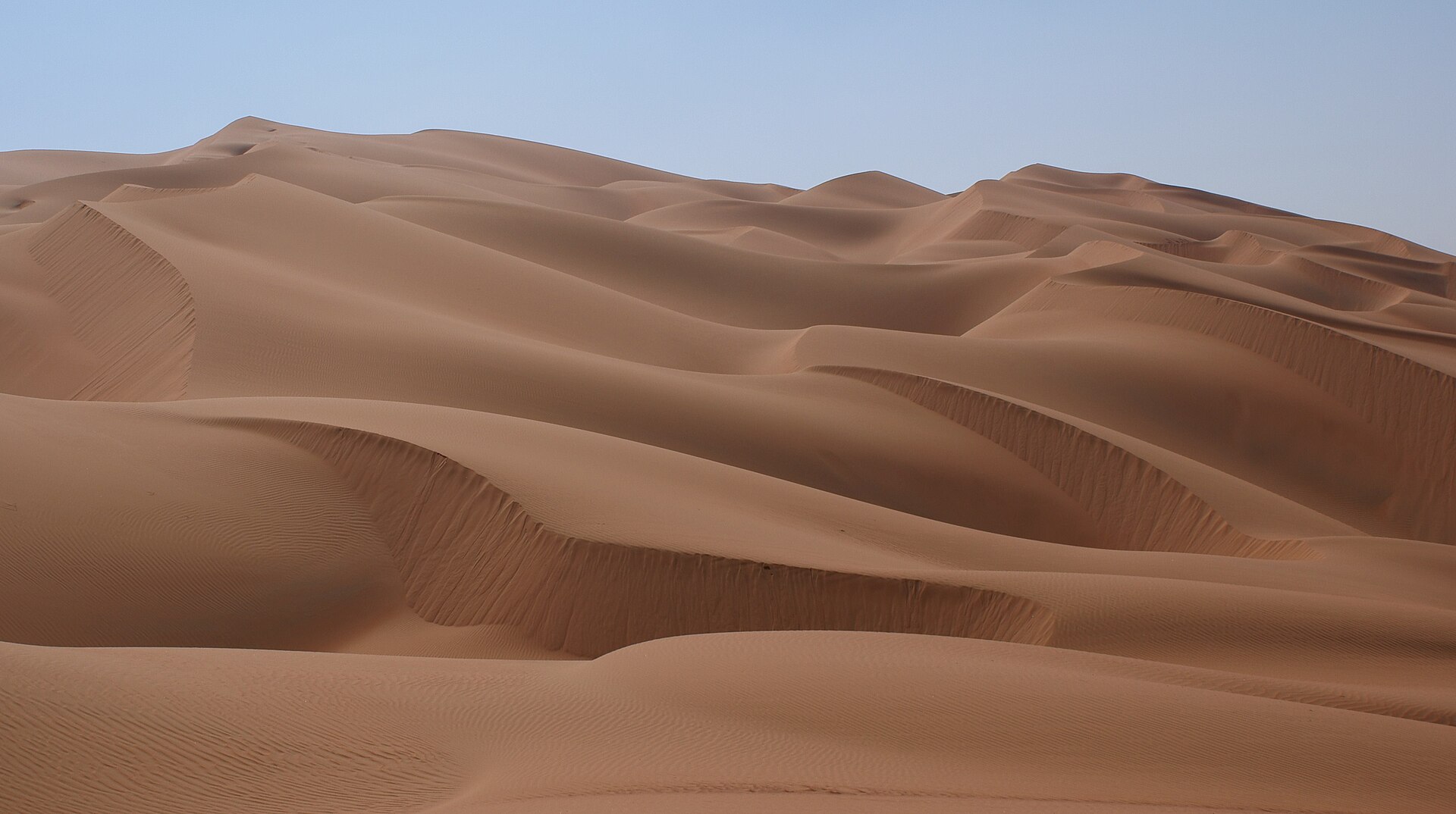
The drive south out of Riyadh towards the Rub' al Khali, the largest continuous sand desert on earth. Trips into it run from Riyadh, and the day is mostly road, with the ground changing as you go. You reach camp in the late afternoon and the first night is under the dunes.
Uruq Bani Ma'arid
Uruq Bani Ma'arid was inscribed in 2023 as Saudi Arabia's first natural World Heritage property. It covers the point where the sand sea meets the Tuwaiq escarpment, more than 12,000 square kilometres of dune field and rock plateau together, and that range of ground is why it qualified as a natural rather than a cultural listing. It is also where the Arabian oryx was returned to the wild after going extinct outside captivity; sand gazelle and mountain gazelle are here too. Access is regulated and accompanied throughout.
The dunes, then out
The morning is in the sand proper, where the dunes run to a scale that photographs badly and has to be walked. There is genuinely nothing in them, which is the point of coming. After lunch the convoy turns back and you are out of the reserve by evening.
East to the Al Ahsa oasis
Across to Al Ahsa, the largest oasis in the world by palm count and a UNESCO World Heritage cultural landscape inscribed in 2018. Around 2.5 million palms are watered from natural springs in the middle of the Eastern Province desert, and the listing covers the whole working system rather than a single monument: gardens, canals, springs, wells and drainage. It has been farmed continuously since the Neolithic and it is still a working oasis rather than a preserved one.
Al Qarah Mountain and Qasr Ibrahim
Al Qarah is a limestone hill inside the oasis, about 1.5 kilometres long and cut through by 28 narrow, high-sided caverns, among them Al Nashab. The rock draws heat out of the air, so the passages hold a steady temperature while the oasis outside is well past 40 degrees, which is why they were used as shelter. Sections are lit and there is a visitor centre at the base. In the afternoon, Qasr Ibrahim in Hofuf, a fortified palace of over 18,000 square metres built under the Al-Jabri dynasty, with watchtowers, barracks, stables and a prayer hall with a mihrab.
The Gulf coast
Out to the coast at Dammam and Al Khobar, reachable from Al Ahsa by road or rail. This is the industrial and administrative heart of the oil region and it reads that way: somewhere people live and work rather than a heritage stop. The Khobar seafront is the main public space, running along the Gulf with fountains, seating and walking paths, and the causeway to Bahrain leaves from here.
Depart Dammam
A free morning if your flight allows, then the transfer to Dammam's international airport.
What is included
- Nine nights of accommodation, including two nights in desert camp
- Four-wheel drive vehicles and drivers throughout
- Guided and permitted access for the protected desert section
- English-speaking guide at every site on the itinerary
- All water, fuel and supplies carried for the desert days
- All site entries listed in the itinerary
- Airport transfers on arrival and departure
- Daily breakfast, and all meals on the desert nights
What is not
- International flights to and from Saudi Arabia
- Saudi entry visa, applied for through the official portal
- Lunches and dinners other than those stated
- Travel insurance
- Personal spending and gratuities
The places on this trip
Send us your dates
We come back with the itinerary written out and one clear cost.