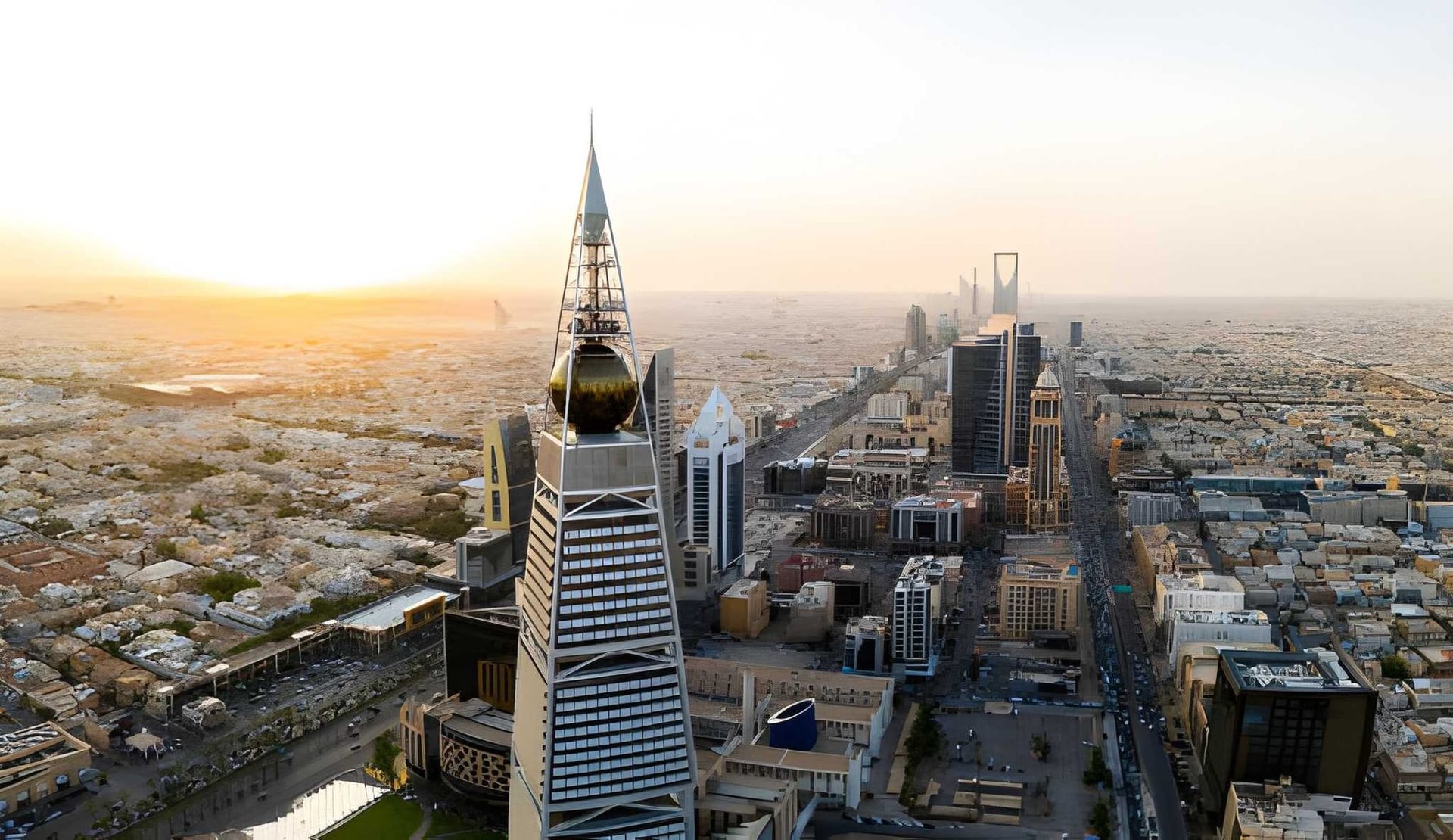
A historical line across the north of the country. Riyadh for the founding of the modern state, Hail for carvings cut when the Nafud still had a lake in it, and AlUla for the cities the Lihyanites and Nabataeans cut into sandstone.
The order is chosen for a reason. The National Museum lays the peninsula out from prehistory to unification in one run of halls, so the rock art at Jubbah and the tombs at Hegra land in sequence rather than as separate stops.
Photographers get the better end of this route: dark red granite standing straight out of pale sand at Aja, sandstone that changes colour through the afternoon at AlUla, and two sites where an early start is worth making. October to March is the workable window.
Day by day
Arrive Riyadh
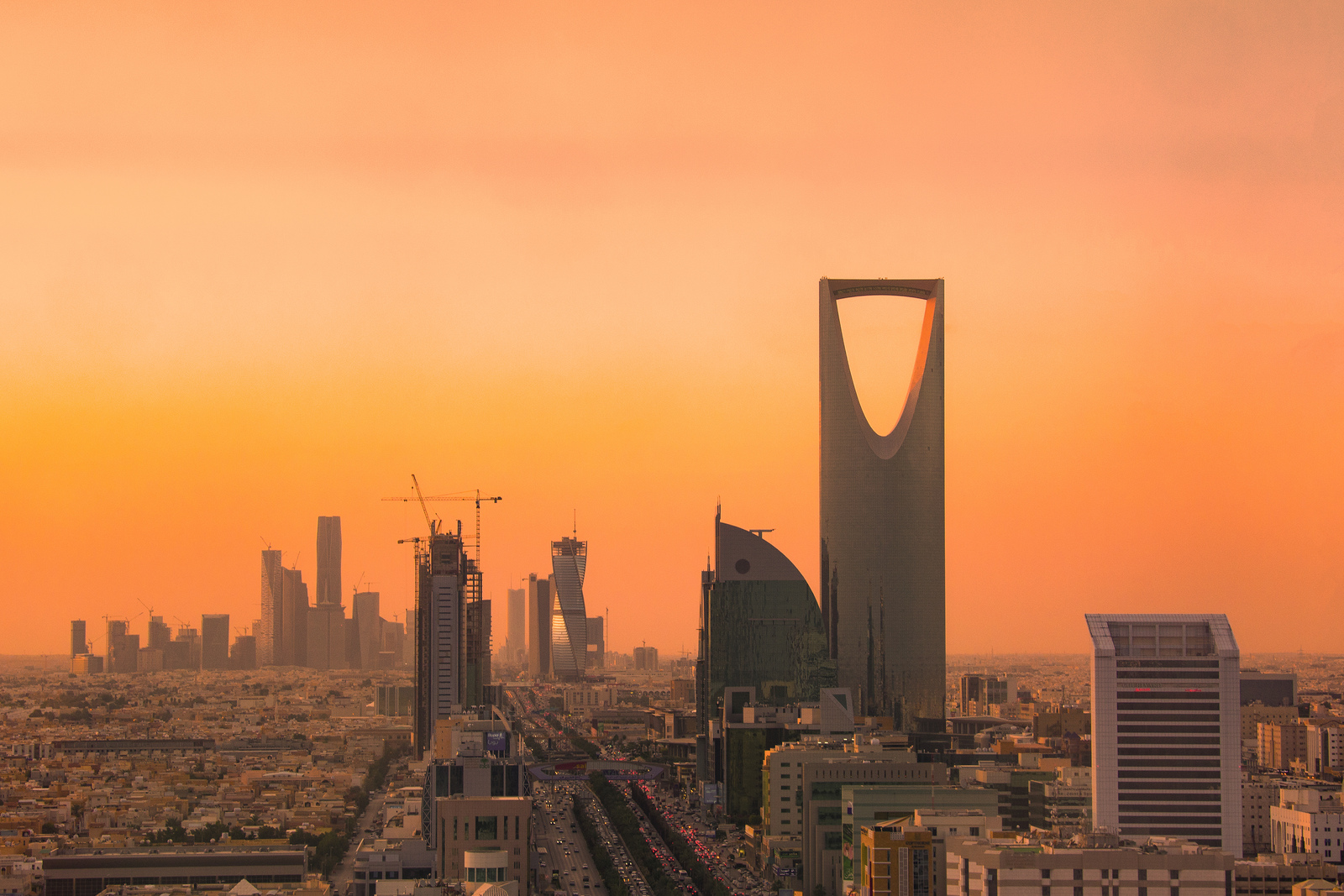
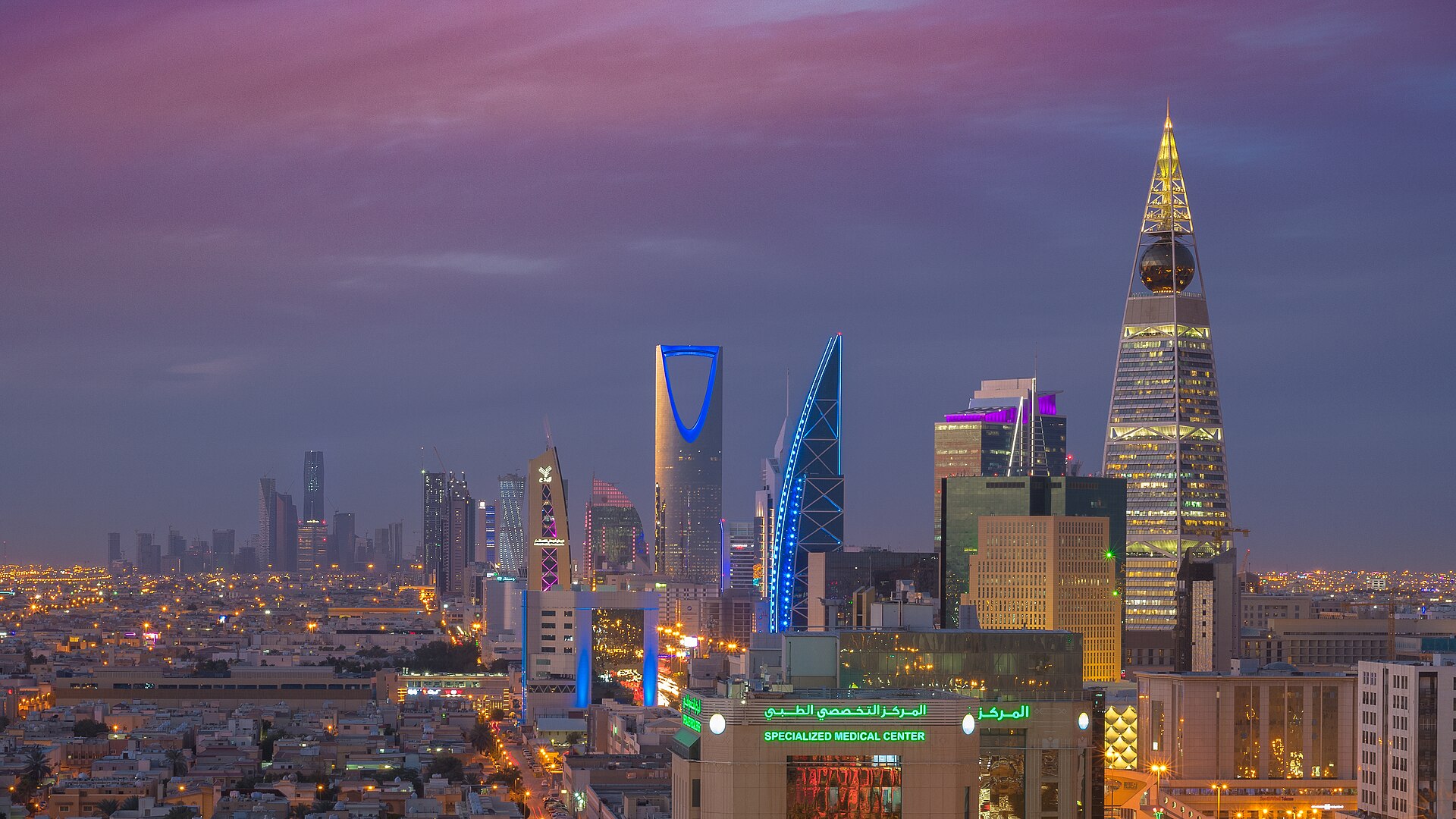
You are met at the airport and driven to your hotel. Riyadh is the country's main air hub and the usual arrival point. Distances inside the city are large and it is built for driving, so your vehicle and driver are with you from the start. The rest of the day is free.
The founding sites and Diriyah
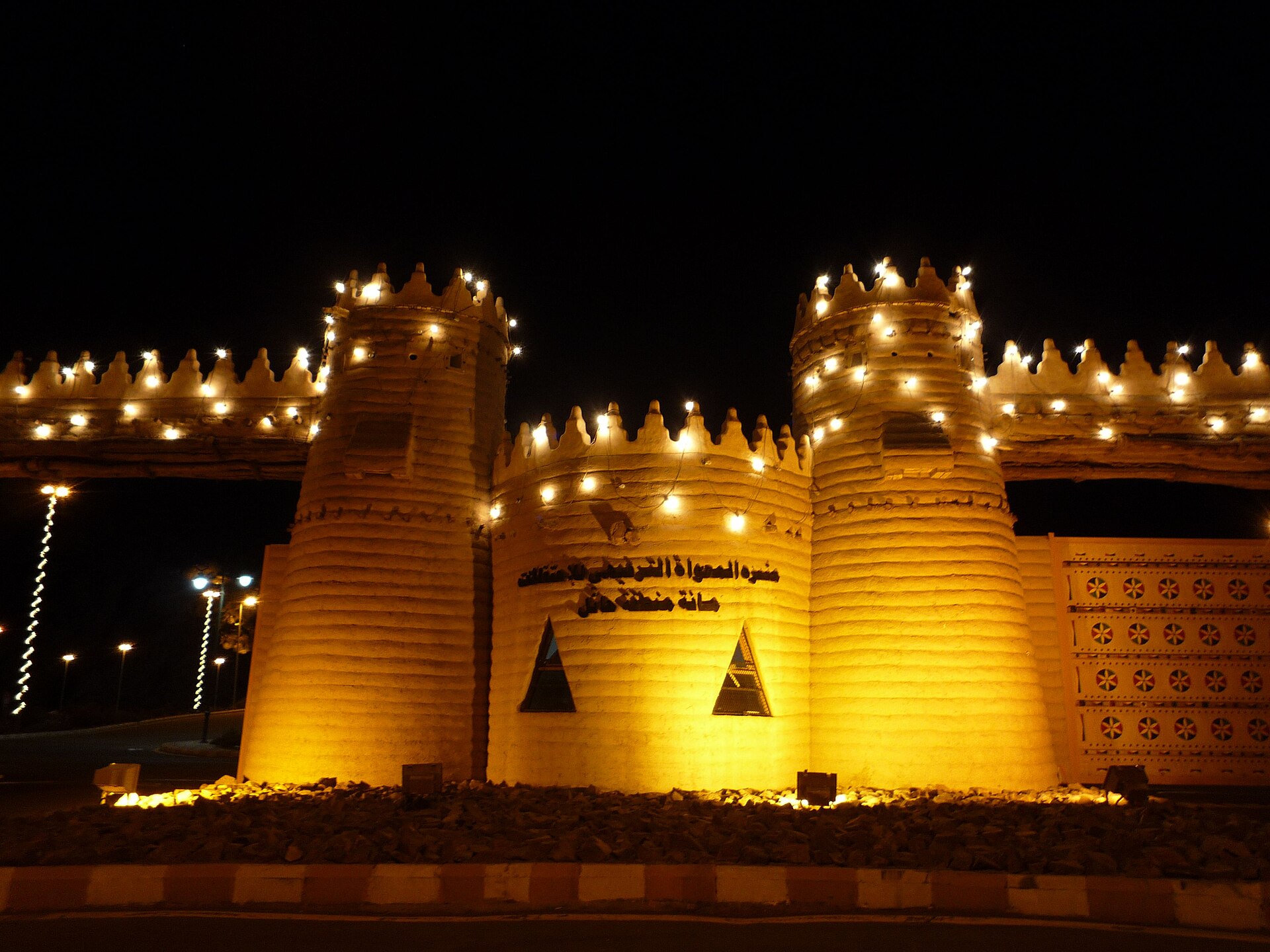
The morning goes to the National Museum of Saudi Arabia in the King Abdulaziz Historical Centre, walked in the order the halls are arranged, and then to Al Masmak nearby, the clay fort where the capture of Riyadh in 1902 began the state that exists today. In the afternoon you drive twenty minutes out to At-Turaif at Diriyah, the mud-brick seat of the Emirate of Diriyah, which ran from 1727 to 1818, and a UNESCO World Heritage Site since 2010. Thick walls, stepped parapets and triangular openings cut high for light and air: it is the most complete Najdi architecture at this scale anywhere, and the low sun on mud brick is the reason to be there at the end of the day rather than the middle of it.
Fly to Hail
Hail has an airport and you fly up in the morning. The city sits between rugged mountains and open plains and was a stop on the northern trade routes. The afternoon is spent on the two landmarks in the city itself: A'arif Fort, on its hilltop since 1256 AH / 1840 CE, built as a military stronghold guarding the southern approach and later a meeting point for pilgrims and caravans, and Barzan Palace, whose two remaining towers, one north and one south, stand about 12 metres high.
Jubbah and Umm Senman
A full day out to Jubbah, about 90 kilometres north-west of the city in the Nafud sand sea, for Umm Senman. The mountain rises 1,264 metres above sea level, framed by dunes and sandstone hills, and the carvings on it were cut into rock that once stood on the shore of a lake. They show human figures, cattle, ibex and hunting scenes, and the animals belong to a wetter Arabia than the one around you, which is what gives the site its weight: it is a dated record of a climate changing. The oldest are dated as far back as the seventh millennium BCE, and the Hail rock art was inscribed on the UNESCO World Heritage List in 2015. There is a visitor centre at the mountain, and in the town the Al-Naif Palace Museum, built in 1171 AH / 1757 CE, has a courtyard well estimated at 1,500 years old.
The Aja mountains, then on to AlUla
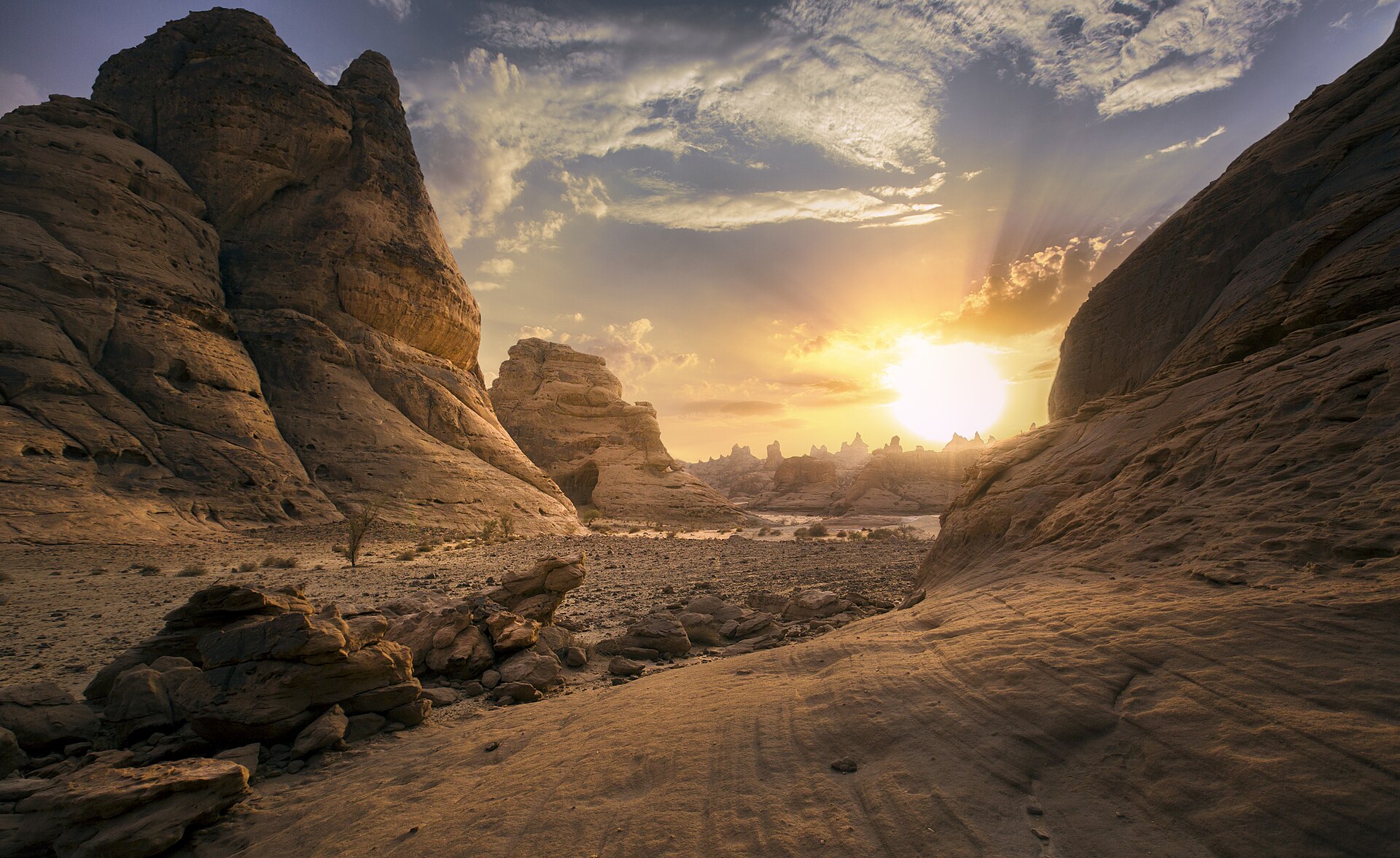
The morning is spent driving in the Aja mountains, the granite range that frames the city to the west. It runs around 100 kilometres from south-west to north-east and 25 to 35 kilometres wide, with some peaks reaching 1,350 metres. The colour contrast is the whole character of it: granite that reads almost purple at either end of the day, against sand that stays pale. Valleys and ravines cut through the range, with small villages, springs and clusters of palms in the gaps. In the afternoon you travel on to AlUla.
Hegra
The day at Hegra, the largest conserved site of the Nabataean civilisation south of Petra and the first property in Saudi Arabia inscribed on the World Heritage List. More than 110 monumental tombs are cut into sandstone outcrops across the valley floor, most of them with decorated facades, alongside some 50 inscriptions of the pre-Nabataean period, cave drawings and water wells. Access is by guided tour with an AlUla Rawi, moving between the tomb clusters by vehicle, and daily numbers are capped, so the booking is made before you travel. The reconstruction of Hinat, excavated from one of these tombs in 2008, is at the visitor centre.
Dadan, Jabal Ikmah and Elephant Rock
Dadan first, the capital of the Dadanite and Lihyanite kingdoms more than 2,000 years ago, with tombs cut almost 50 metres up the cliff wall above the oasis, two of them guarded by carved lions. Excavation is ongoing and much of the site is still unread. Then Jabal Ikmah, a canyon carrying more than 300 carved inscriptions, the largest concentration of Dadanitic and Lihyanite writing in the world, cut into the rock faces on both sides of a narrow valley. It is on UNESCO's Memory of the World Register, which covers documentary heritage rather than monuments. No ticket is needed and the walk is short and mostly level. The day finishes at Elephant Rock, 52 metres of sandstone weathered into the shape of an elephant, which turns deep red at dusk.
Departure
You are driven to the airport for the flight out of AlUla. If you are connecting to an international departure the same day, the transfer is built around the connection and confirmed with you the evening before.
What is included
- Seven nights' accommodation with daily breakfast
- Private air-conditioned vehicle with driver for all transfers and sightseeing
- English-speaking guide on all sightseeing days
- Domestic flights within Saudi Arabia as set out in the itinerary
- The guided Hegra tour with an AlUla Rawi, booked in advance
- Site entry and permits where these are required
- Sunrise and sunset departures arranged on request at no change to the plan
- Meet and assist at the airport on arrival and departure
- A 24-hour contact number for the duration of the trip
What is not
- International flights to and from Saudi Arabia
- The Saudi entry visa, which is applied for through the official government portal
- Travel insurance
- Lunches, dinners and drinks unless stated in the itinerary
- Tips and personal spending
The places on this trip
Send us your dates
We come back with the itinerary written out and one clear cost.