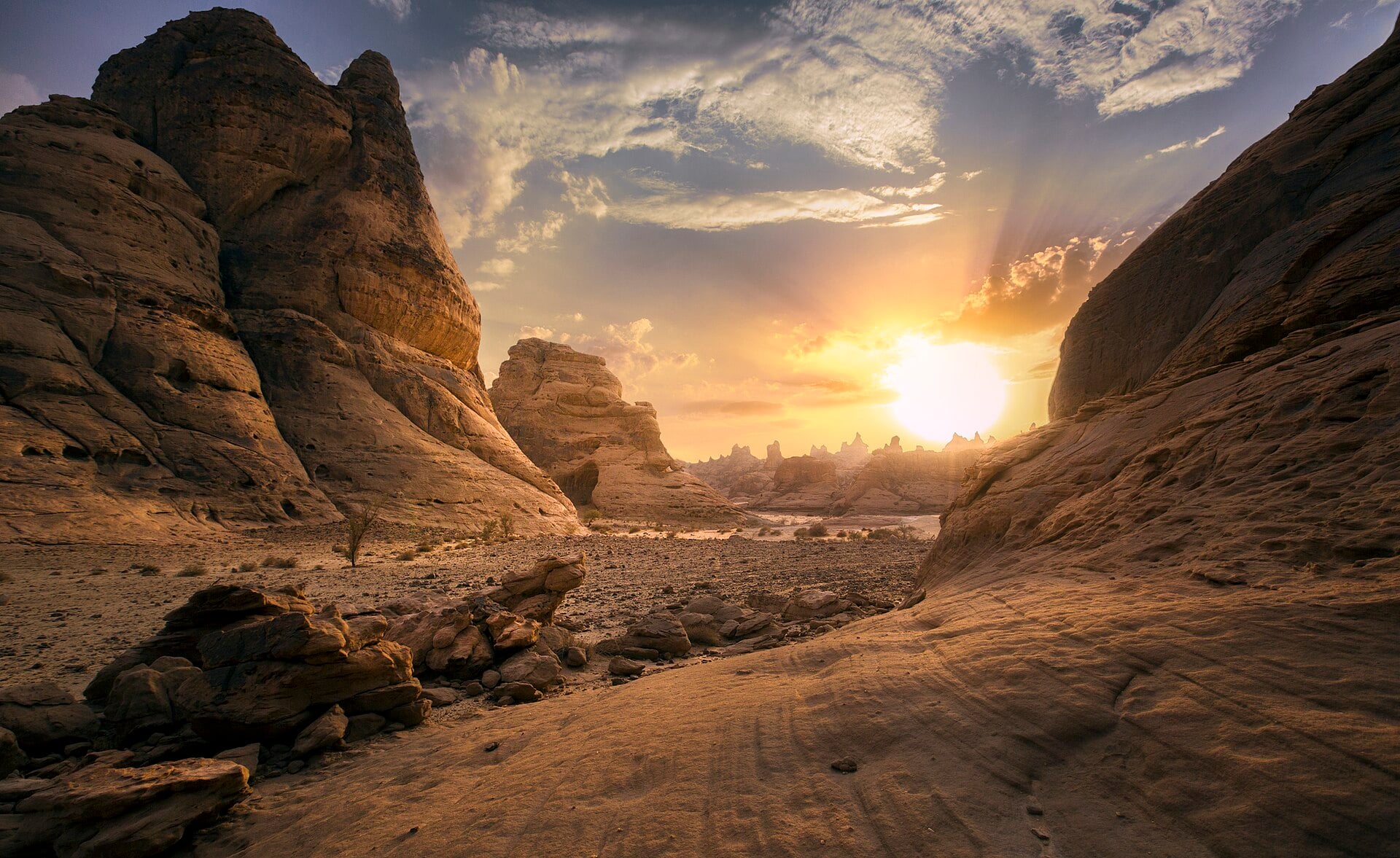
Hail is northern desert country - granite ranges, old forts, and rock art old enough to carry a World Heritage listing.
The carvings at Umm Senman near Jubbah were cut into sandstone that stood on a lakeshore, and they show cattle and hunting scenes belonging to a wetter Arabia than the one there now. UNESCO inscribed the Hail rock art in 2015. Jubbah is about 90 km north-west of the city, out in the Nafud sand sea.
The Aja mountains frame the city to the west: dark red granite standing straight out of pale sand, with palm settlements in the gaps between ridges. A'arif Fort and Barzan Palace are in the city itself.
Getting there and when to go
Hail has an airport. Jubbah is a half-day at minimum from the city.
What is here
What the tourism authority says
Set between rugged mountains and open plains, Hail was once a key stop along ancient trade routes in northern Saudi. Known for its hospitality and heritage, the city is surrounded by historic forts, UNESCO-listed rock art, and dramatic landscapes that reflect a region shaped by desert life and tradition.
Key facts
| Fact | Value |
|---|---|
| Year inscribed on the UNESCO World Heritage List | 2015 |
| Measurement stated by the source | 100 km |
Sources
Photograph: Saudi Press Agency (SPA), CC BY-SA 4.0, via Wikimedia Commons.