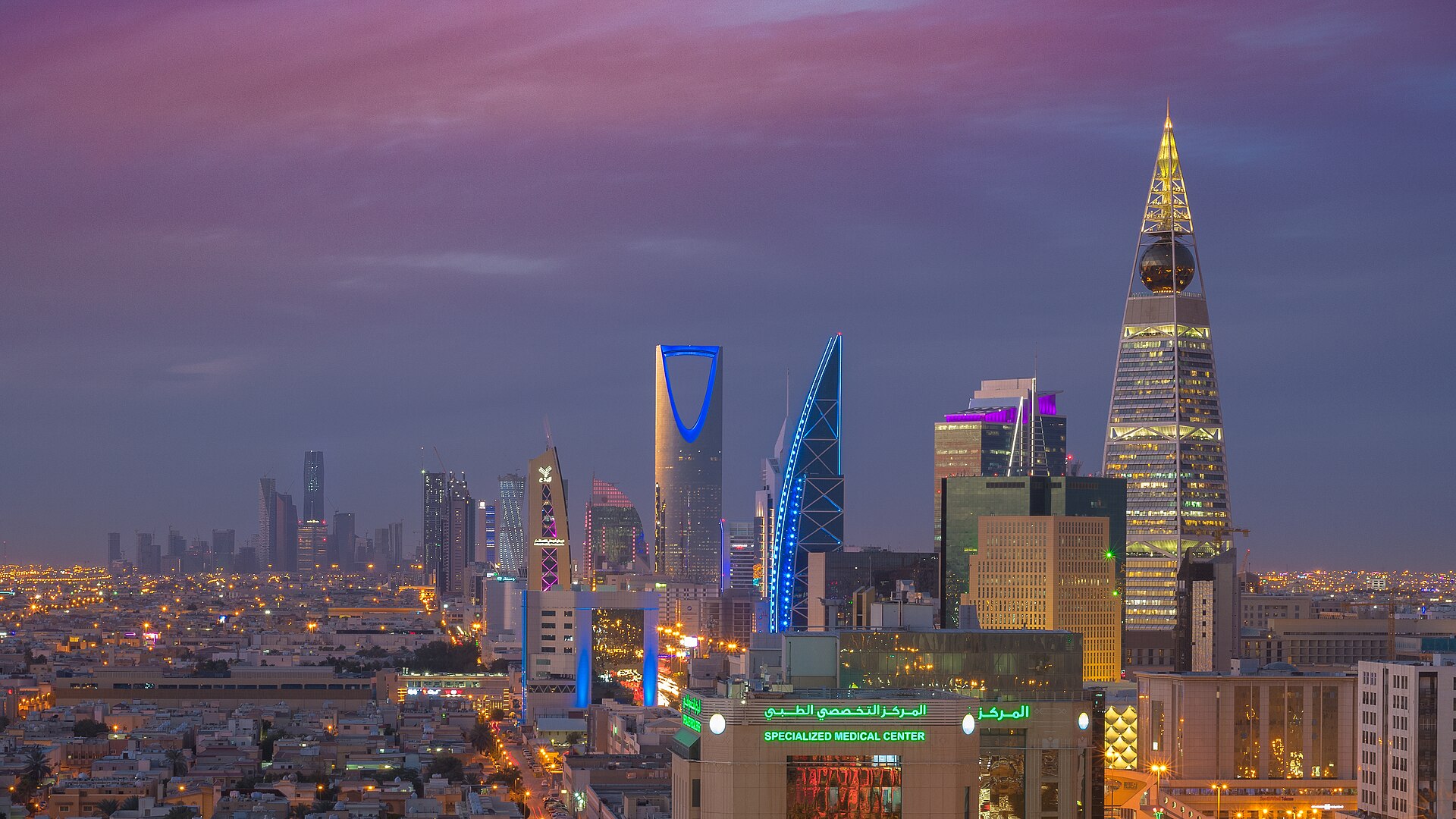
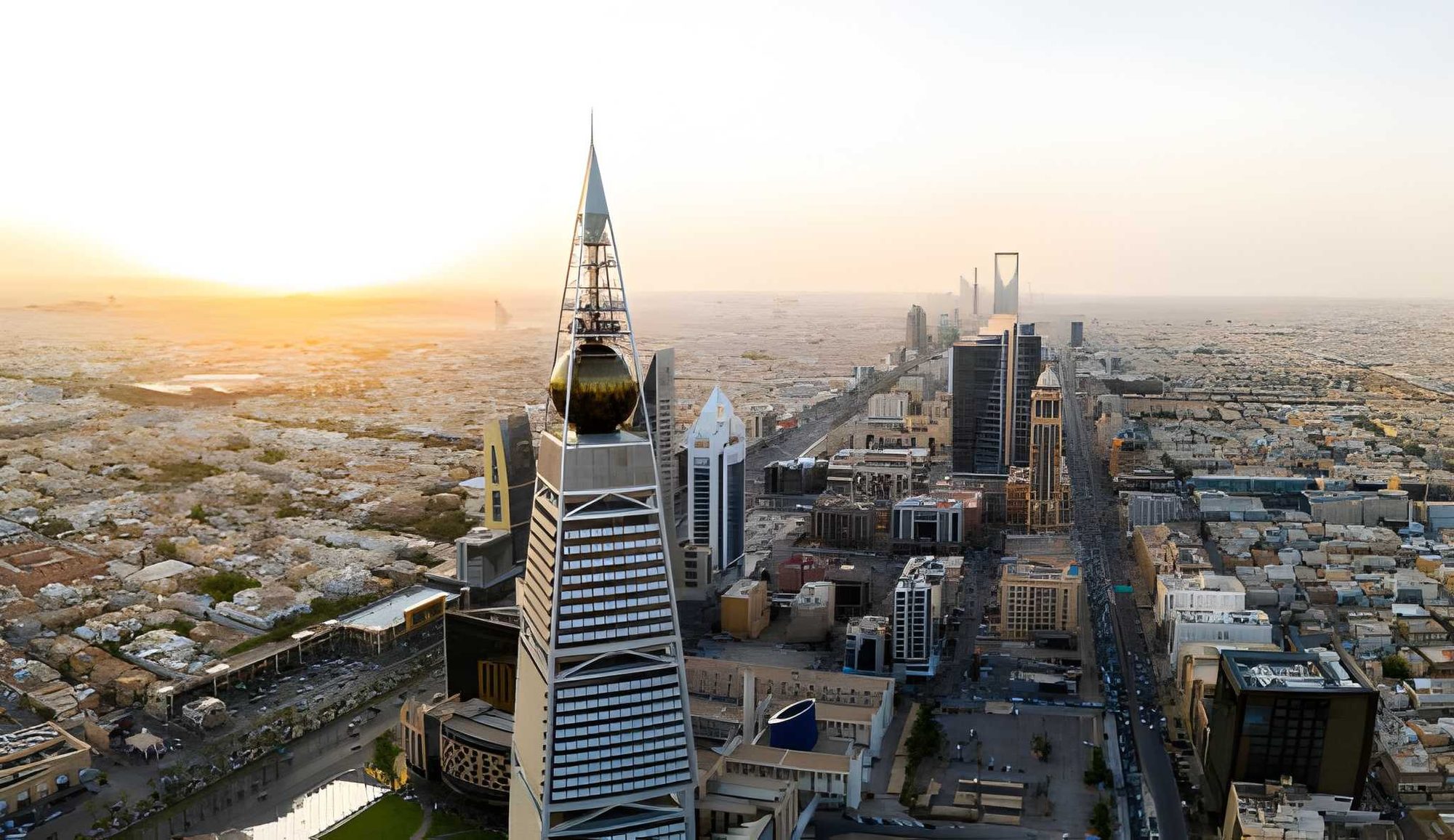
Three regions that photograph nothing like each other: the escarpment country around Riyadh, the red sandstone valley of AlUla, and the green terraced highlands above Abha.
The order of the days is set by light rather than by convenience. The Edge of the World is planned for sunrise, Elephant Rock for the half hour after the sun drops, At-Turaif for late afternoon on mud brick, and AlUla Old Town for the evening, when the restored lane is open and lit. Where a site can only be entered on a guided tour - Hegra is the main one - the tour is booked before you travel.
It suits people who would rather stand in one place for an hour than clear five sites before lunch. The pace is deliberately low, mornings are early, and there is slack in the week for weather.
Day by day
Arrive Riyadh
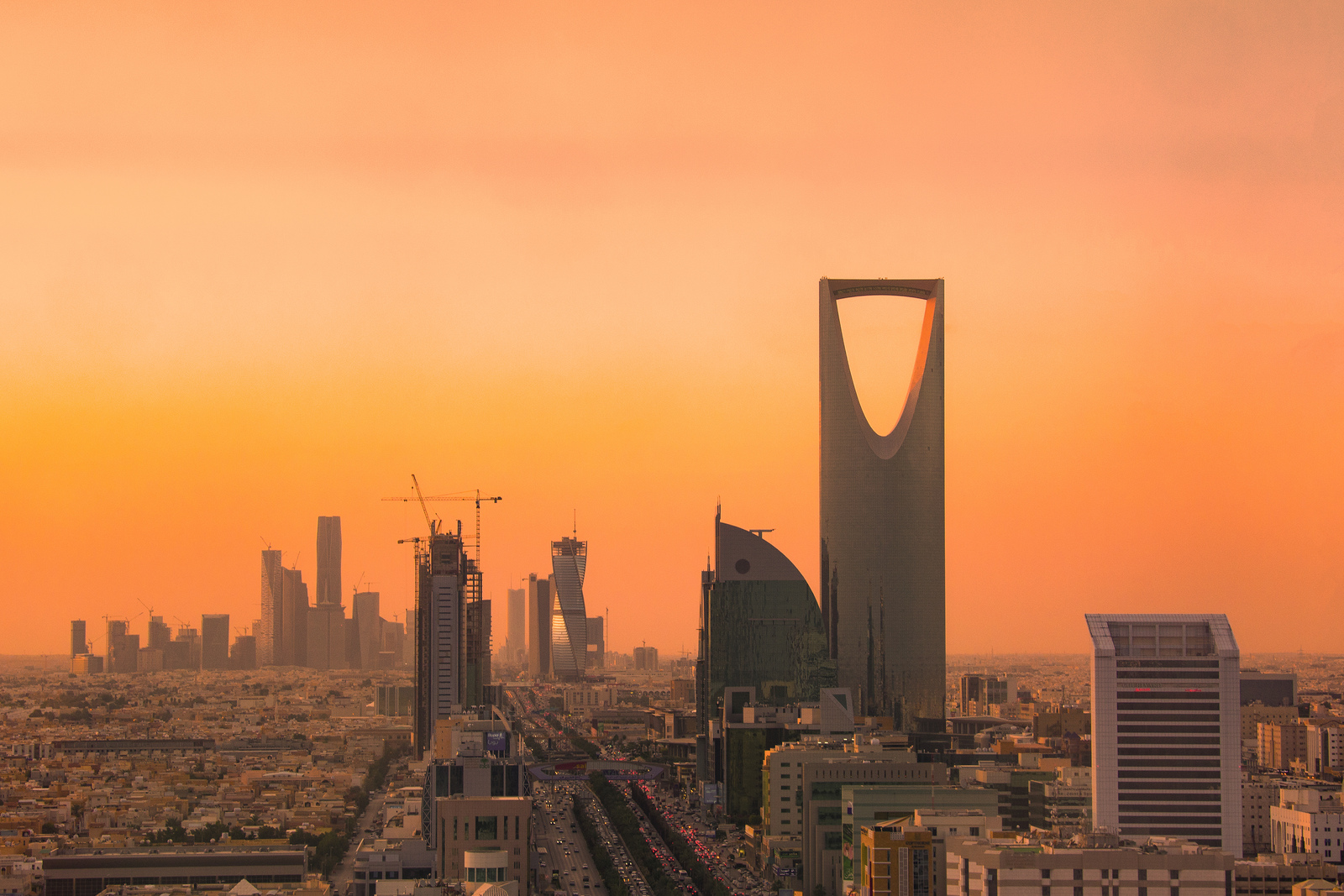
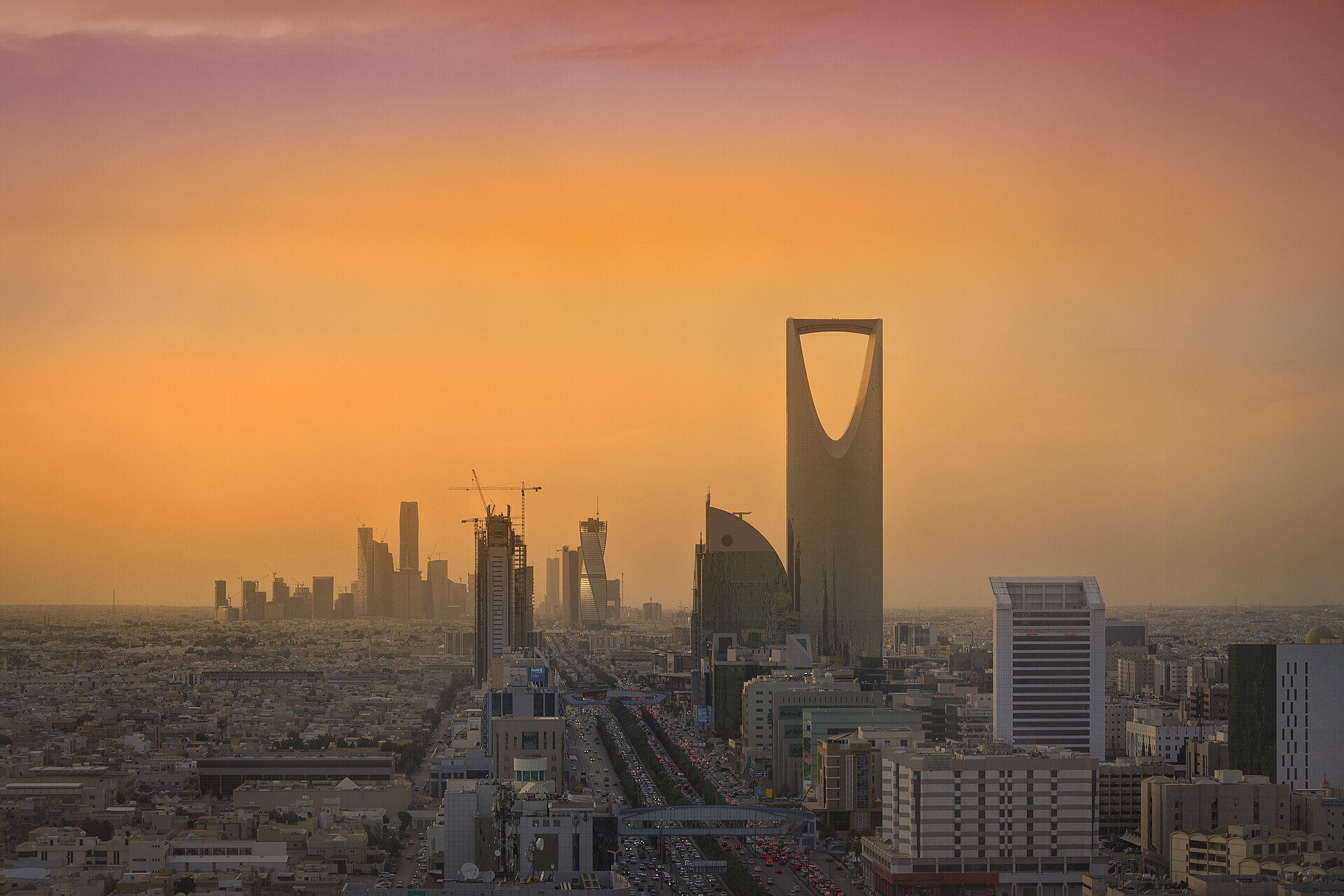
Riyadh is the country's main air hub and the usual way in. You are met at the airport and taken to your hotel. Nothing is scheduled beyond going through the week's timings, which are set the evening before each day rather than fixed in advance.
Diriyah at the end of the day
The morning is free. In the late afternoon you go out to At-Turaif at Diriyah, about twenty minutes from the centre: the mud-brick capital of the first Saudi state, a World Heritage Site since 2010, restored and walkable, with thick walls, stepped parapets and triangular openings cut high for light and air. Low sun on mud brick is the whole reason for the timing.
Wadi Hanifa runs directly below the district as a green corridor of paths and water channels, so the walk carries on after the light has gone off the walls.
Edge of the World at sunrise
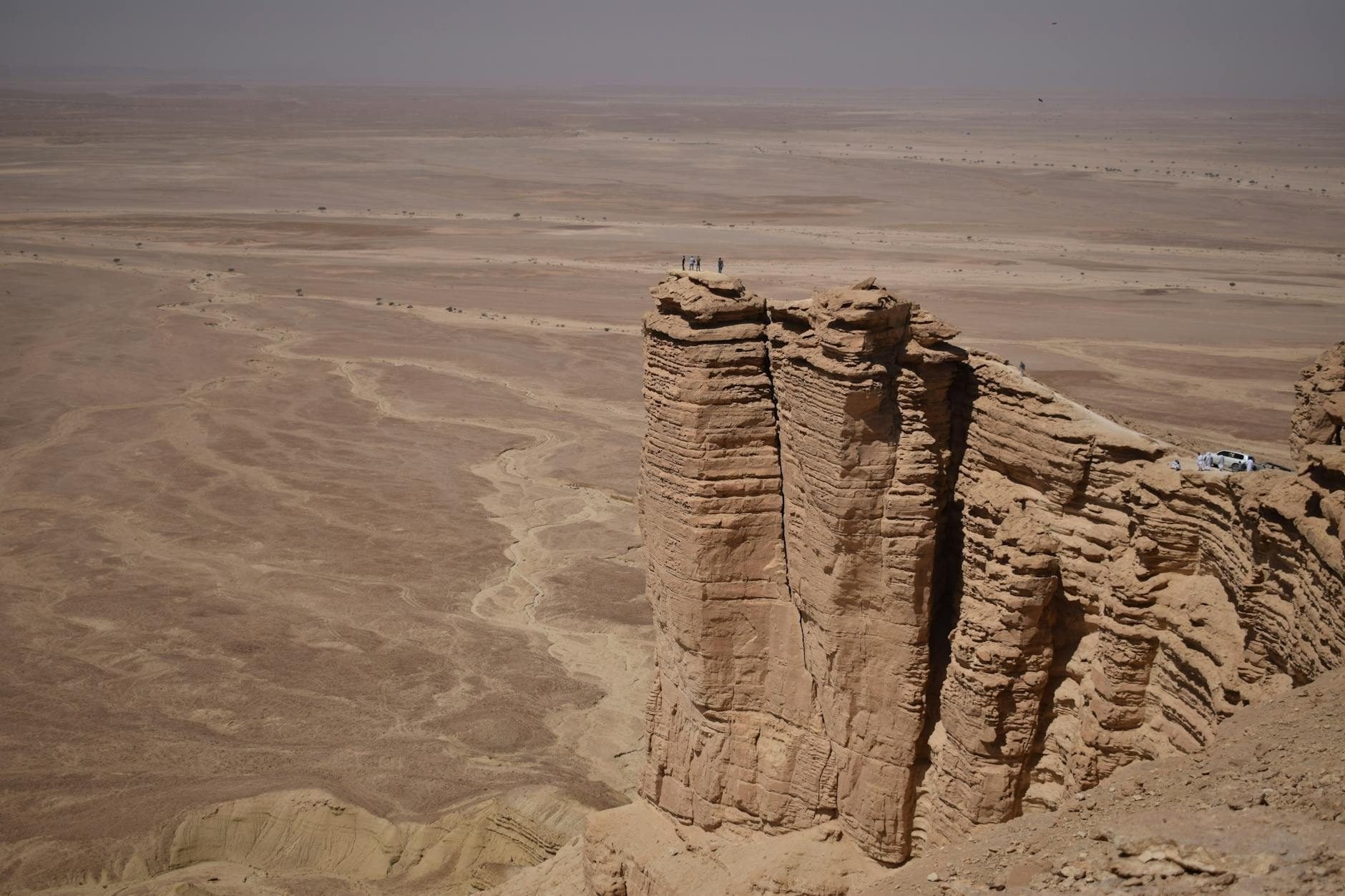
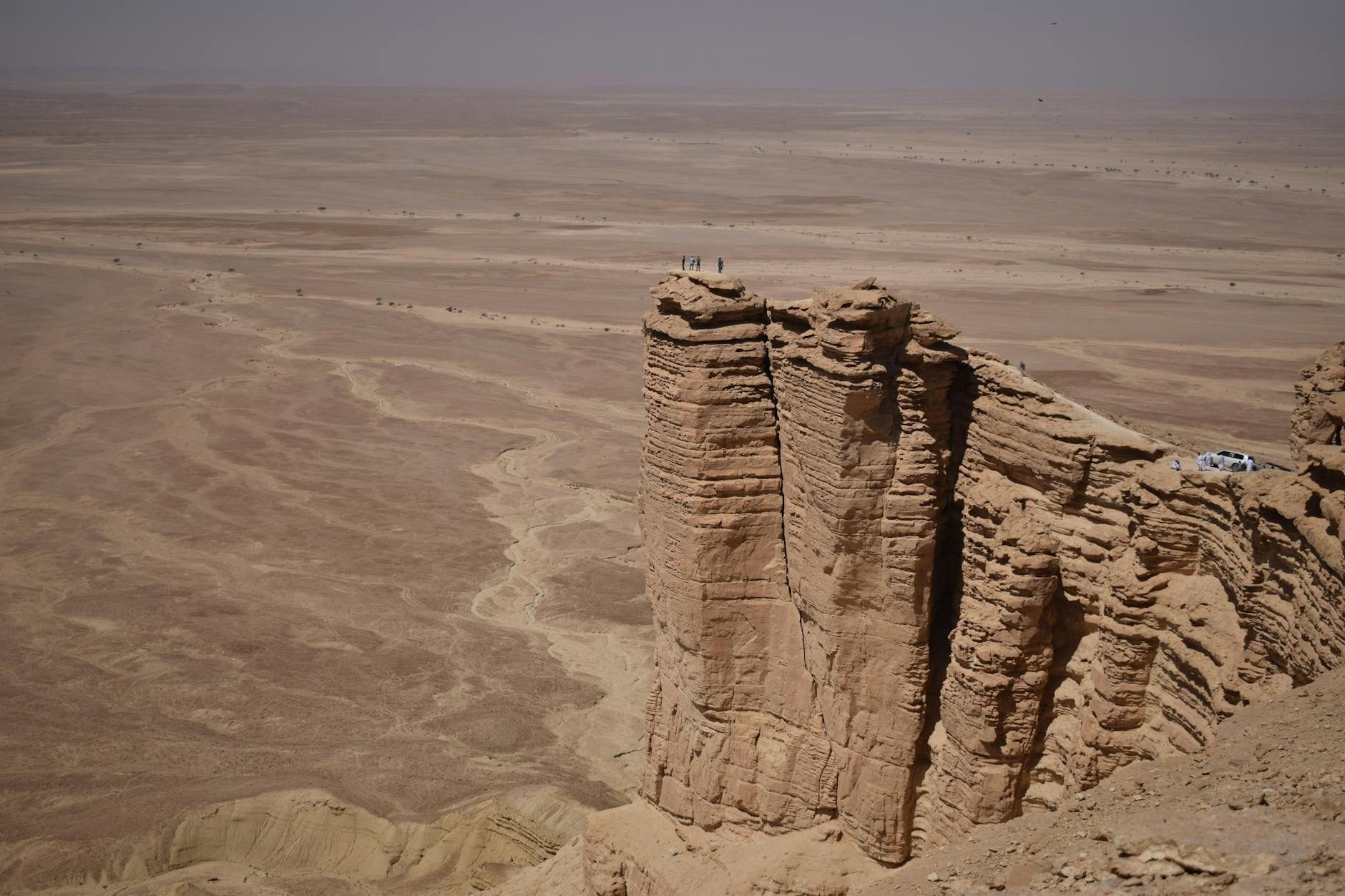
An early start for the escarpment about 100 km north-west of the city, where the Tuwaiq wall breaks off above a flat desert floor that runs to the horizon with nothing on it. Sunrise and sunset are the two times worth planning around at the Edge of the World, both for the light along the cliff and because the middle of the day is exposed and hot.
The final approach is rough track in four-wheel drive. There is no water, food or fuel at the site and mobile coverage drops out, so everything is carried in. You are in position before first light and back in the city by the middle of the day. The rock holds marine fossils, snails and shells, if you want something close-range while the sun climbs.
On to AlUla, and Elephant Rock at dusk
You travel to AlUla in the morning - a sandstone valley settled for thousands of years because it has water, on the old incense road north out of southern Arabia.
Late in the afternoon you go out to Elephant Rock, a 52-metre outcrop weathered into the shape of an elephant with its trunk to the ground, standing alone on open sand. The sandstone turns deep red as the light drops, and sunken seating areas have been cut into the sand around the base, so you can sit out the whole of the change rather than shooting and leaving. There is no ticket.
Hegra in the morning
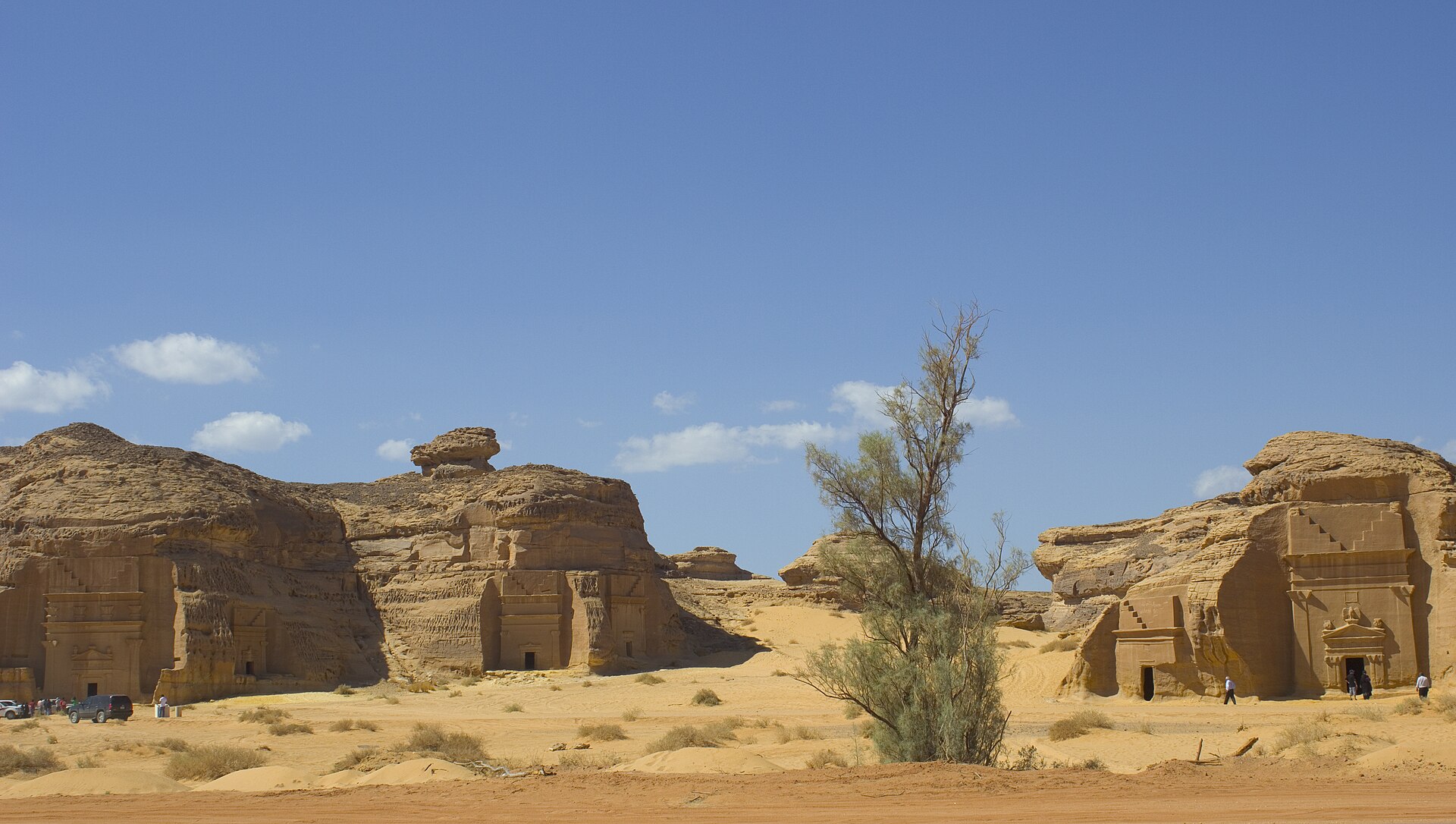
Hegra is the largest surviving Nabataean city after Petra and the first Saudi site inscribed on the World Heritage List. More than 110 tombs are cut into sandstone outcrops scattered across the desert floor, their facades carved directly into the rock.
Access is by guided tour with an AlUla Rawi, moving between the tomb clusters by vehicle, and daily numbers are capped, so your place is booked before you travel. The tour is taken in the morning: the facades face different ways and low sun separates the carving from the rock behind it.
Dadan, Jabal Ikmah and the Old Town
Dadan first, where the tombs of the Dadanite and Lihyanite capital sit almost 50 metres up the cliff face, cut as square openings in a line, two of them guarded by carved lions. From the valley floor they read as dark squares in red stone, and the scale only registers against the people below them.
Then Jabal Ikmah, a desert canyon whose walls carry hundreds of pre-Arabic inscriptions in Dadanitic, Thamudic, Minaic and Nabataean scripts. The canyon is short and mostly level, the inscriptions are close enough to the path to read without climbing, and there is no ticket. The evening is in AlUla Old Town - mud brick from the 12th century, a fort above it 45 metres up, busiest after three and open late.
On to Abha
A travel day south to Abha, the main town of the Asir highlands. The escarpment catches monsoon cloud, so the ground is green, terraced and farmed, with juniper forest instead of desert - a complete break from the sandstone behind you.
The cable car down the escarpment is the late afternoon, cloud permitting. Cloud moving over the ridge is the thing to shoot here rather than the thing to wait out.
Rijal Almaa
Down the escarpment road to Rijal Almaa, a village of dark stone tower houses with lines of white quartz set into the walls to throw off rain, stacked so tightly up the mountainside that it reads as a single structure from the valley. The drive itself is a large part of the day and it is driven with stops.
Inside, the walls carry Al-Qatt Al-Asiri - geometric bands of bright colour applied directly to the plaster by the women of the house. UNESCO added the practice to its intangible heritage list in 2017. Several houses are open as a museum, so there is interior work as well as the exteriors.
Depart
The last morning is held free for whatever the weather took from you earlier in the week, or for a second pass at anything worth returning to. You are then collected from your hotel and transferred for your flight out.
What is included
- Private vehicle with driver throughout, including four-wheel drive for the escarpment day
- English-speaking guide at each site on the itinerary
- Eight nights' hotel accommodation
- Daily breakfast
- Guided Hegra tour with an AlUla Rawi, booked before you travel
- All internal transport between Riyadh, AlUla and Abha
- Site entry and permits where they are required
- Airport transfers on arrival and departure
- Start times set the evening before, around the light rather than a fixed schedule
What is not
- International flights
- The Saudi tourist eVisa, which you apply for yourself through the official portal
- Travel insurance and camera equipment cover
- Lunches and dinners
- Personal expenses and tips
The places on this trip
Send us your dates
We come back with the itinerary written out and one clear cost.