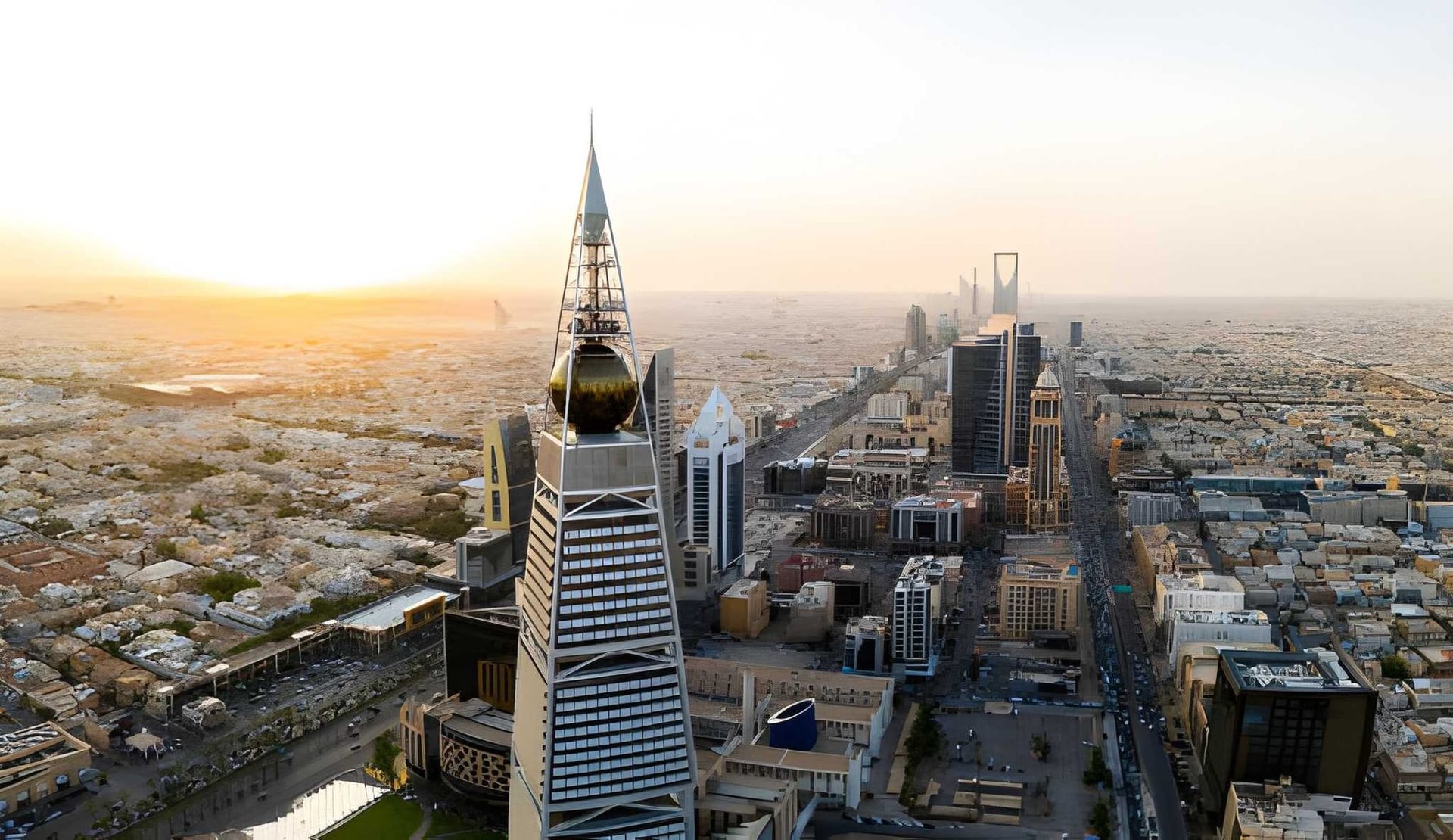
Fourteen days and seven bases, arranged as a loop rather than an out-and-back. It opens in Riyadh, runs east to the Gulf oasis, north into the Nafud sand sea, on to AlUla, then to Abha and out through Jeddah.
The order is deliberate. Riyadh comes first because the National Museum lays out the peninsula from prehistory to unification in one sequence of halls, and the sites that follow at Diriyah, Hail and AlUla are easier to read afterwards.
This is a moving trip: internal flights and rail carry the long legs, but you change base roughly every other day. It suits travellers who want the shape of the whole country in one visit rather than a single region in depth.
Day by day
Arrive Riyadh
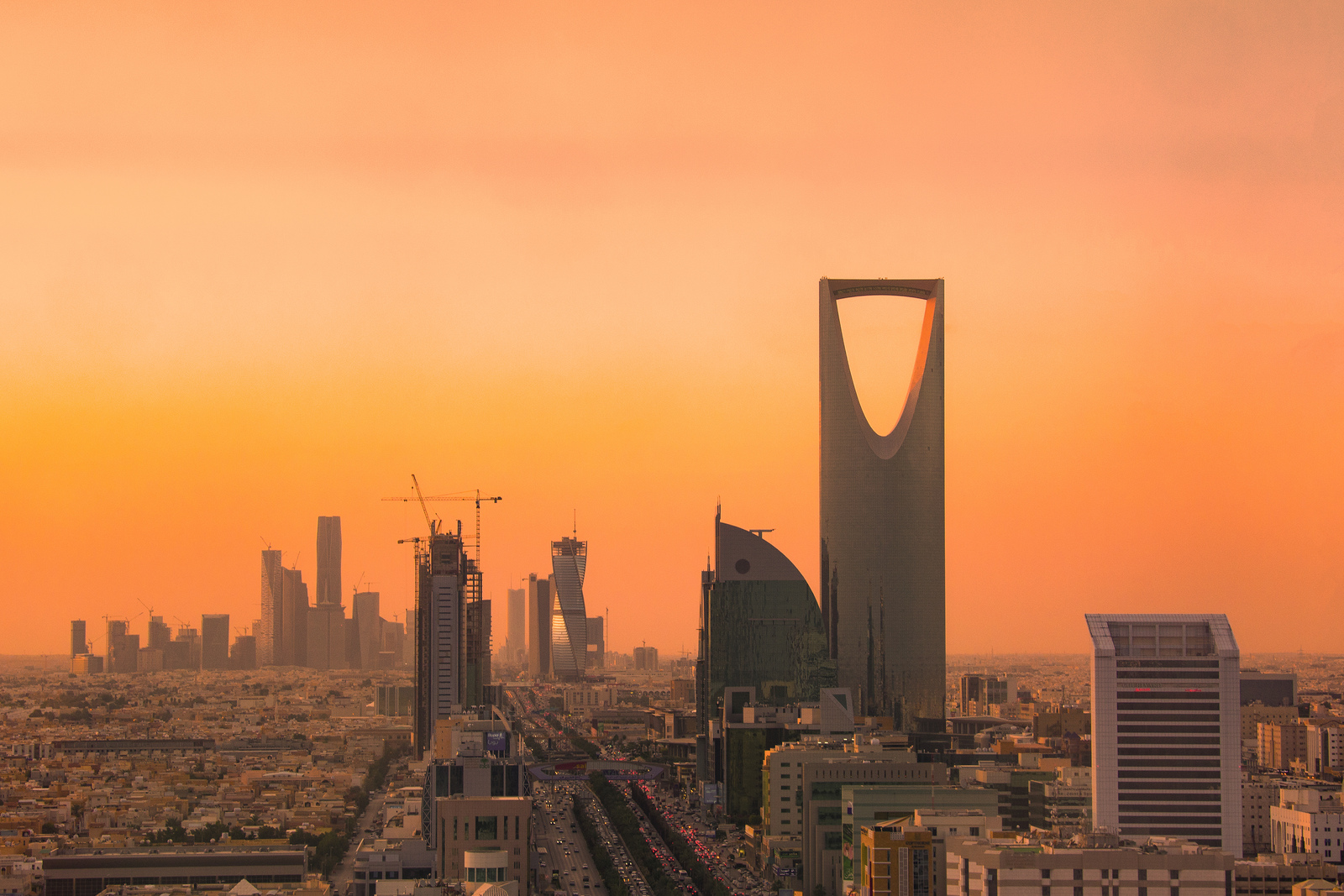
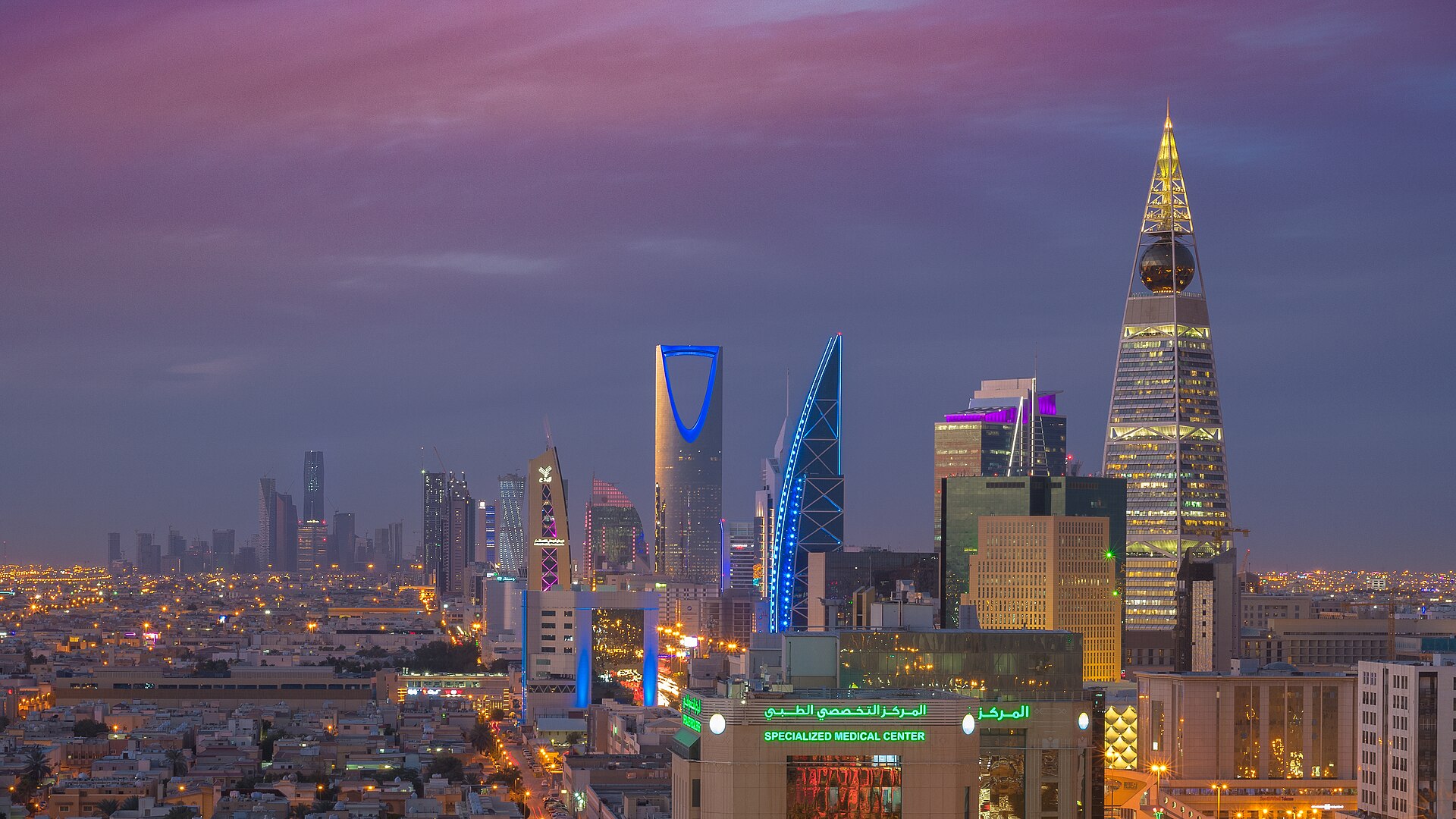
Riyadh is the country's main air hub, so it is the usual arrival point. You are met and driven to your hotel. Distances inside the city are large and it is built for driving, so nothing is scheduled on the first evening.
The National Museum and Al Masmak
The National Museum of Saudi Arabia is arranged as halls that run in order, so you can walk the whole span in one visit without doubling back: geology, pre-Islamic Arabia, the life of the Prophet, the successive Saudi states and the unification. Al Masmak stands a short drive away, in the old centre. It is a clay fort with four watchtowers and a single studded door, built as a garrison rather than an ornamental palace, and the capture of the city here in 1902 began the state that exists today.
Diriyah and Wadi Hanifa
About twenty minutes out of the centre, At-Turaif at Diriyah was the seat of the Emirate of Diriyah, which ran from 1727 to 1818, and has been a UNESCO World Heritage Site since 2010. It is the most complete Najdi architecture at this scale anywhere: thick mud-brick walls, stepped parapets and triangular openings cut high for light and air. The district has been restored as a walkable museum quarter, so you go through the streets rather than around a fence. Wadi Hanifa runs directly below, 120 kilometres of reclaimed valley through the city, and takes the late afternoon.
East to Al Ahsa
Rail east to Al Ahsa, the largest oasis in the world by palm count and a UNESCO World Heritage cultural landscape inscribed in 2018. Around 2.5 million palms are watered from natural springs in the middle of desert, and the listing covers the working system rather than one building: gardens, canals, springs, wells and drainage. The afternoon is at Qasr Ibrahim in Hofuf, a fortified palace of more than 18,000 square metres built under the Al-Jabri dynasty, with watchtowers, stables and a prayer hall with a mihrab.
Al Qarah Mountain, then north to Hail
Al Qarah is a limestone hill inside the oasis, about 1.5 kilometres long and cut through by 28 tall, narrow caverns. The rock pulls heat out of the air, so the passages stay cool while the oasis outside is well past 40 degrees, which is why they were used as shelter. The caves are walkable and lit in sections, with a visitor centre at the base. In the afternoon you leave the oasis and travel north to Hail.
Hail city and the Aja mountains
Hail was a stop on the old northern trade routes and the city still carries its forts. A'arif Fort has stood on its hilltop since 1256 AH, built as a military stronghold guarding the southern approach; Barzan Palace keeps two towers of around 12 metres. In the afternoon you drive west into the Aja mountains, a granite range roughly 100 kilometres long standing dark red straight out of pale Nafud sand, with palm settlements in the gaps between the ridges.
Jubbah and the rock art at Umm Senman
Out into the Nafud sand sea to Jubbah, about 90 kilometres north-west of the city, for the carvings on Umm Senman, inscribed by UNESCO in 2015. The sandstone here once stood on the shore of a lake, and the carvings show human figures, cattle, ibex and hunting scenes belonging to a wetter Arabia than the one around the rock now. That is what gives the site its weight: it is a dated record of a climate changing. This is a half day at minimum, so plan on being out until the afternoon.
On to AlUla
A travel day into the AlUla valley. It is a sandstone valley that was farmed and settled for thousands of years because it has water, and it sat on the incense road running north out of southern Arabia. You arrive with the afternoon free and the following two days already booked.
Hegra
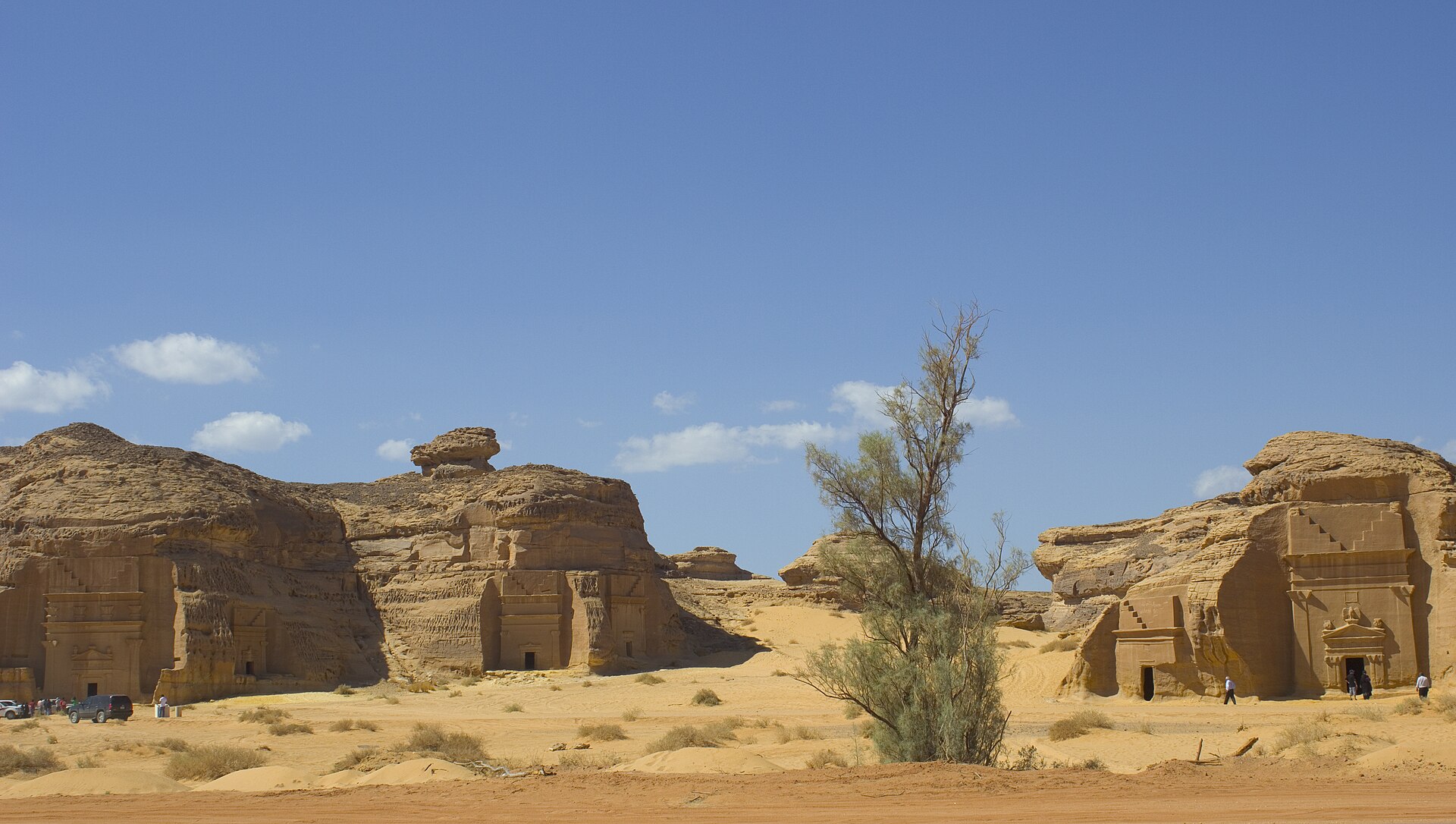
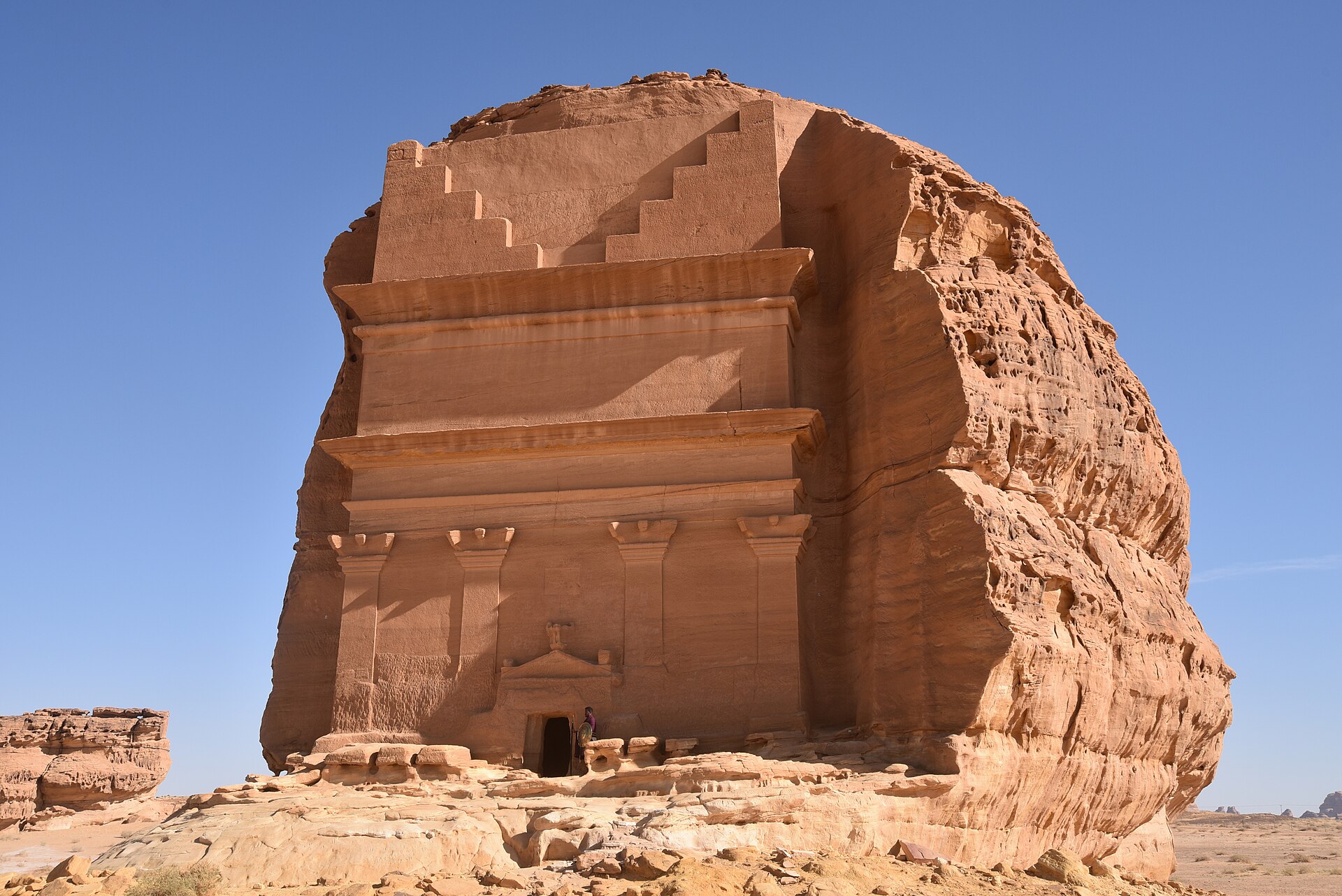
The Nabataean city of Hegra, the first place in Saudi Arabia inscribed on the World Heritage List and the largest surviving Nabataean site after Petra. More than 110 tombs stand cut into sandstone outcrops across the desert floor, with facades carved directly into the rock; some chambers carry inscriptions naming the person laid inside. Entry is only by guided tour with an AlUla Rawi and daily numbers are capped, so the booking is made before you travel.
Dadan, Jabal Ikmah and the Old Town
Dadan was the capital of the Dadanite and Lihyanite kingdoms, its tombs cut almost 50 metres up the cliff face, two of them flanked by carved lions. Jabal Ikmah is a canyon carrying hundreds of pre-Arabic inscriptions on both walls, added to UNESCO's Memory of the World Register, which recognises documentary heritage and is a different list from the World Heritage one. There is no ticket and the path is level. The evening is in AlUla Old Town, mud-brick houses from the 12th century behind fourteen gates, with a fort of around the 10th century 45 metres above.
On to Madinah
You travel on to Madinah, a city of orchards and old lava fields in the Hejaz. It is open to visitors of any faith, though access to the sacred areas at its centre, including Al Masjid an Nabawi, is restricted to Muslims. The afternoon covers what is open to you: the historic neighbourhoods, the date farms, the museums and Uhud mountain. Muslim travellers who want to enter Al Rawdah Al Sharifah need a permit booked in advance through Nusuk.
Flight to Abha and the escarpment
A flight to Abha, high enough in the Asir mountains to stay cool when the rest of the country is not. The escarpment catches monsoon cloud, so the ground is green, terraced and forested. You drive down the escarpment road to Rijal Almaa, a village of dark stone tower houses stacked so tightly up the mountainside that it reads as one building from the valley floor, with white quartz set into the walls and interiors painted in Al-Qatt Al-Asiri. UNESCO added the painting practice to its intangible heritage list in 2017.
On to Jeddah and Al-Balad
A flight to Jeddah, the Red Sea port that has been the sea gateway to Makkah since the 7th century. The pilgrim and Indian Ocean trade paid for Al-Balad, the old quarter listed by UNESCO in 2014: coral-stone tower houses faced in roshan, the carved wooden bay windows. A good part of it is propped and under restoration. The evening is on the corniche.
Depart Jeddah
Free time in the morning as the flight allows, then a transfer to the airport.
What is included
- Thirteen nights of accommodation across seven bases
- Private vehicle and driver at every stop
- English-speaking guide throughout the route
- Internal flights and rail legs as shown in the itinerary
- Hegra tour with an AlUla Rawi, booked in advance
- All site entries listed in the itinerary
- Airport transfers on arrival and departure
- Daily breakfast
- A contact on the ground for the length of the trip
What is not
- International flights to and from Saudi Arabia
- Saudi entry visa, applied for through the official portal
- Lunches and dinners other than those stated
- Travel insurance
- Personal spending and gratuities
The places on this trip
Send us your dates
We come back with the itinerary written out and one clear cost.