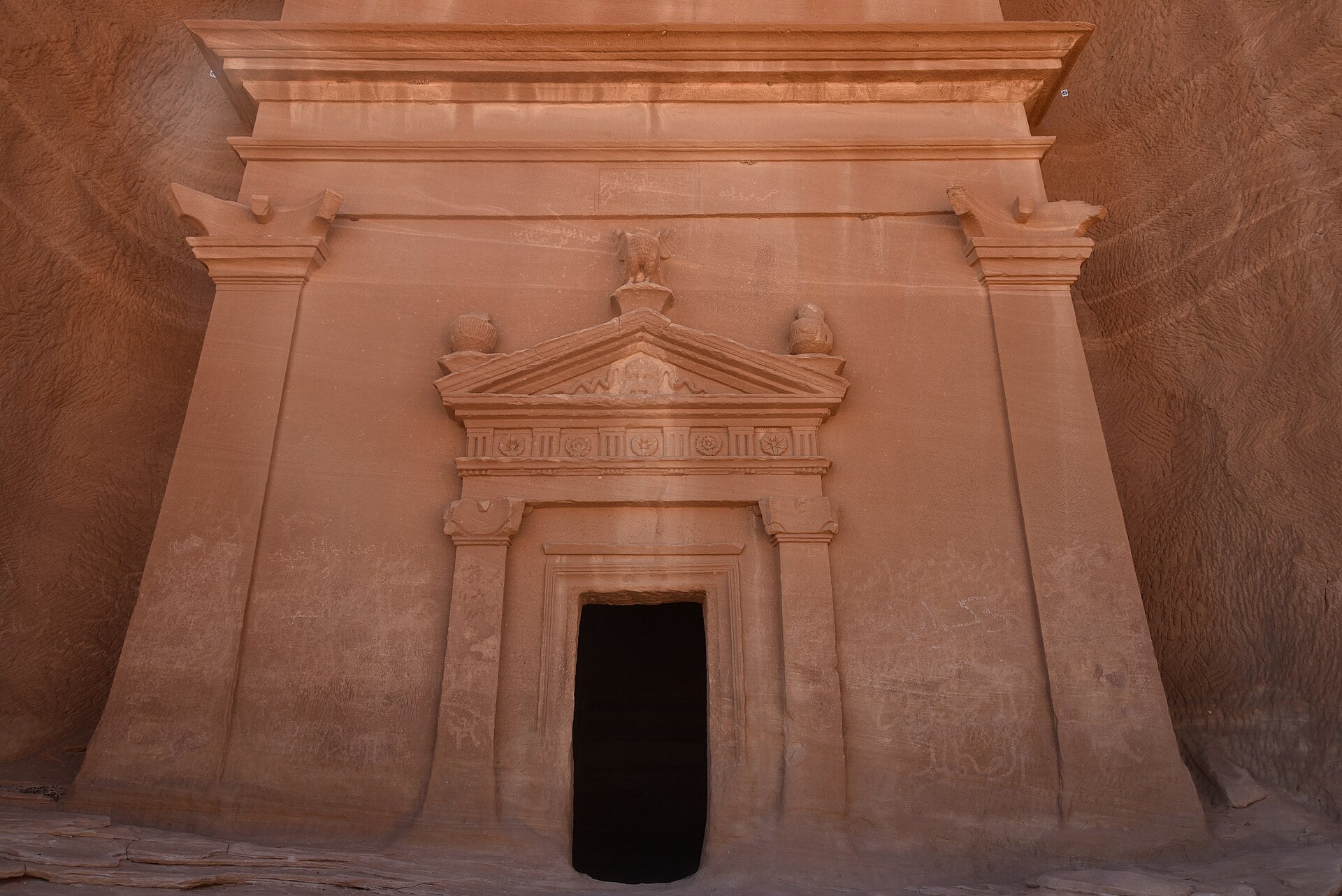
Six days on the archaeology of AlUla and the road south out of it. Hegra was the southern limit of the Nabataean kingdom, and Dadan was the capital that controlled the same oasis for centuries before the Nabataeans arrived.
The point of taking them together, rather than Hegra on its own, is sequence: the Dadanite and Lihyanite cliff tombs, then the inscription canyon, then the Nabataean facades, read as one story of who held the incense road and when.
The trip ends in Madinah, which was the terminus of the Hejaz Railway and has an international airport, so you fly out from there rather than doubling back.
Day by day
Arrive AlUla
You are met on arrival in AlUla and taken to your hotel.
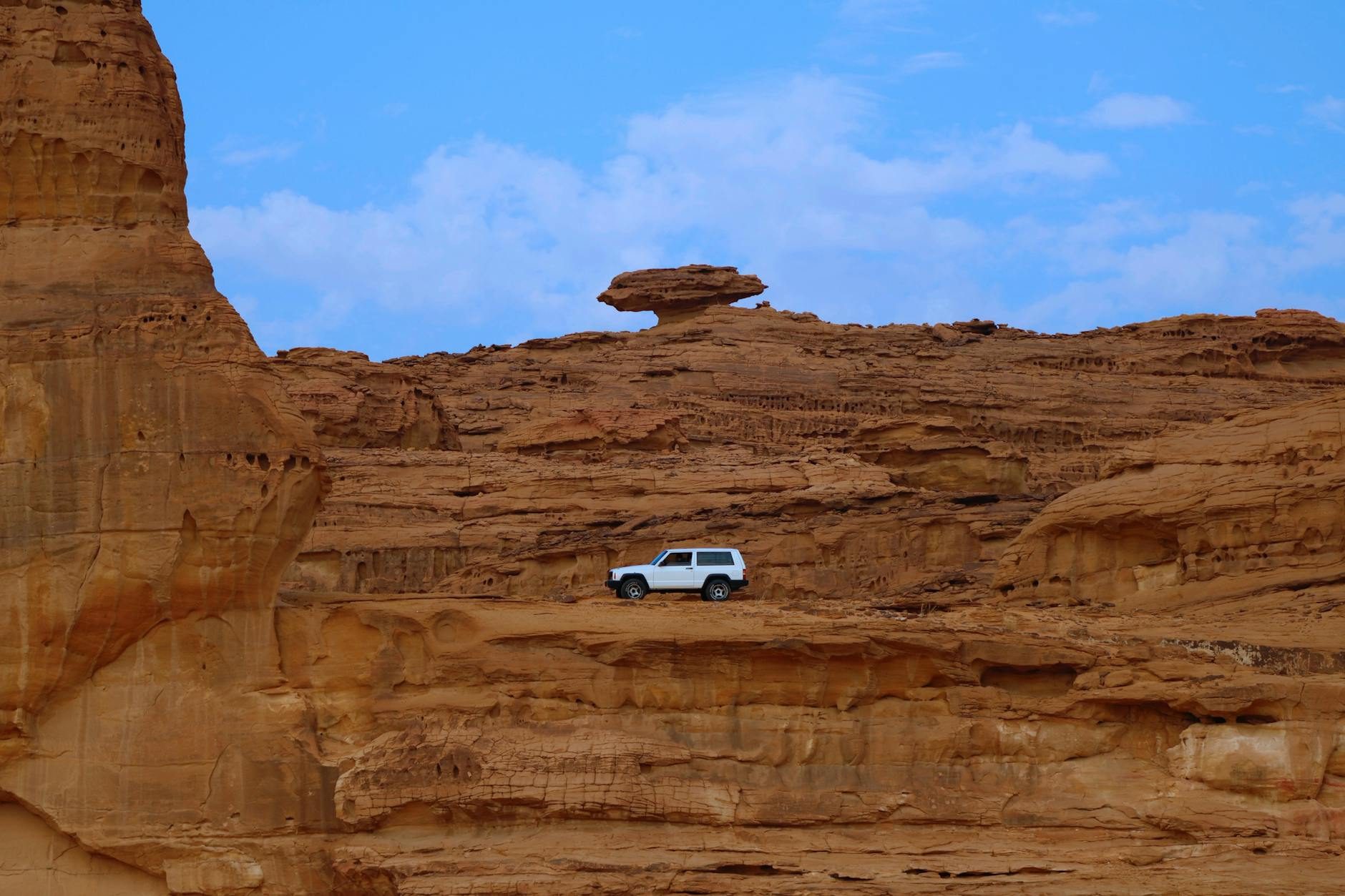
The valley was farmed and settled for thousands of years because it has water, and it sat on the incense road running north out of southern Arabia. That combination left four distinct sites within a short drive of each other, which is what the next three days cover. The evening is free.
Hegra
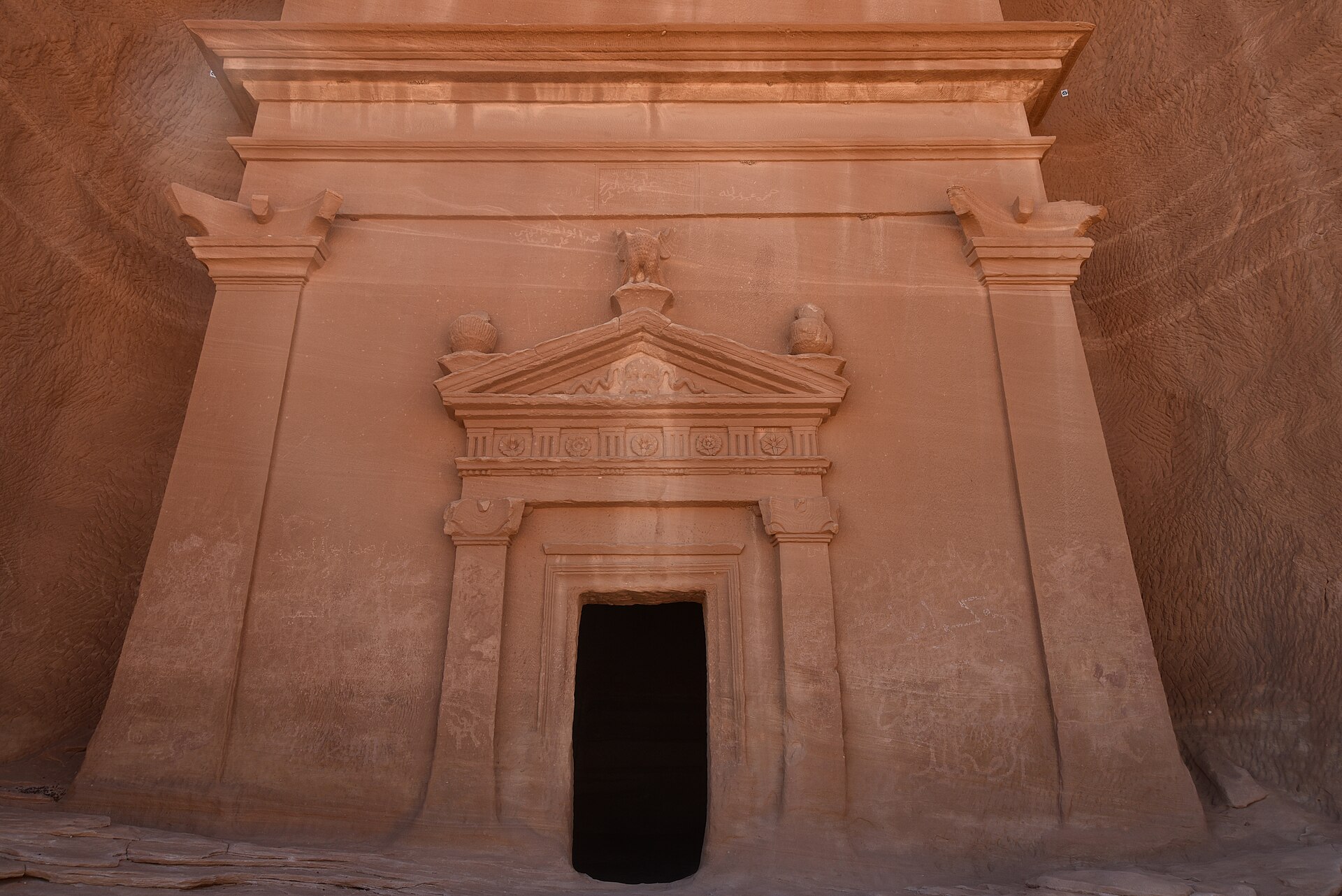
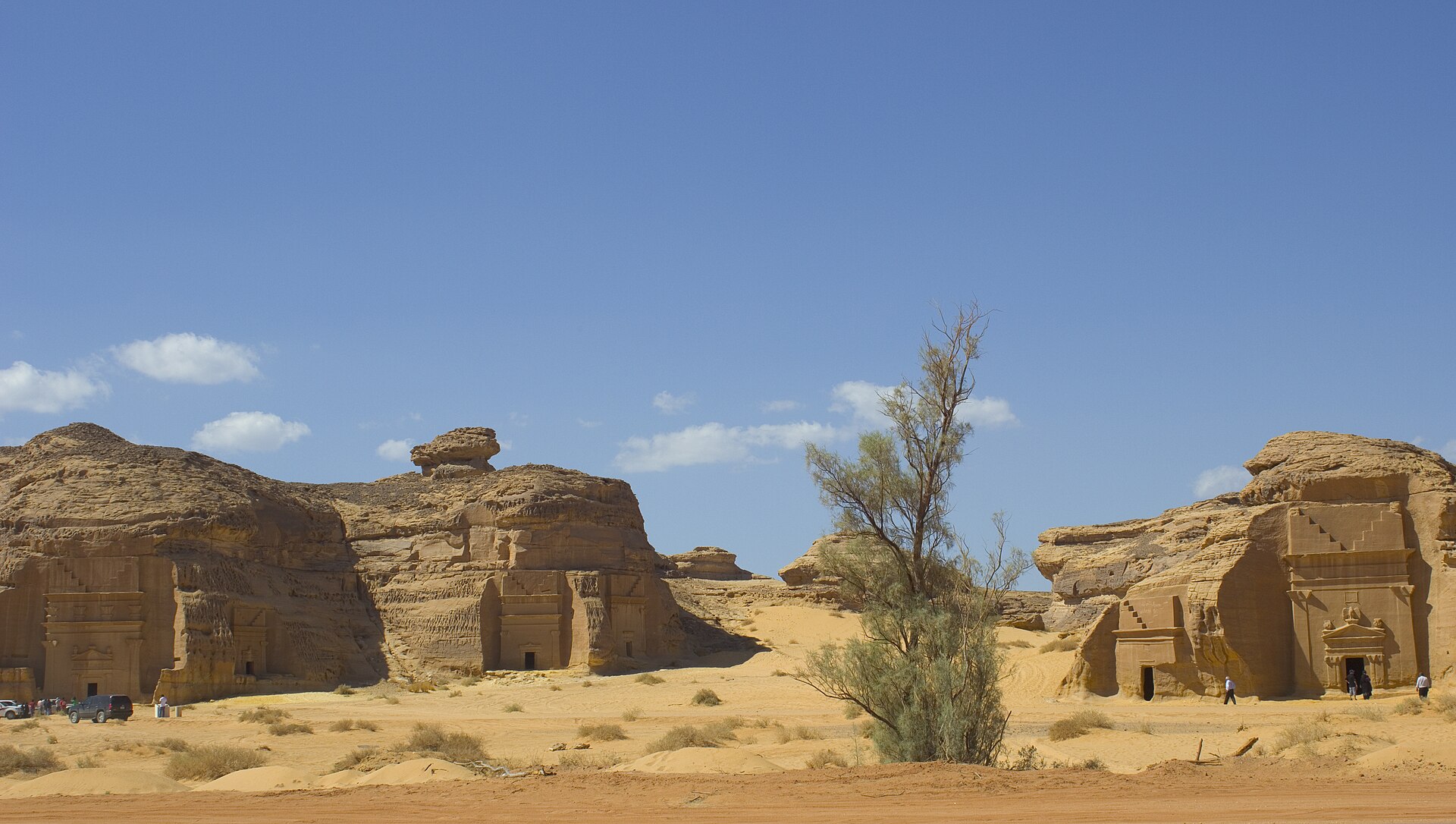
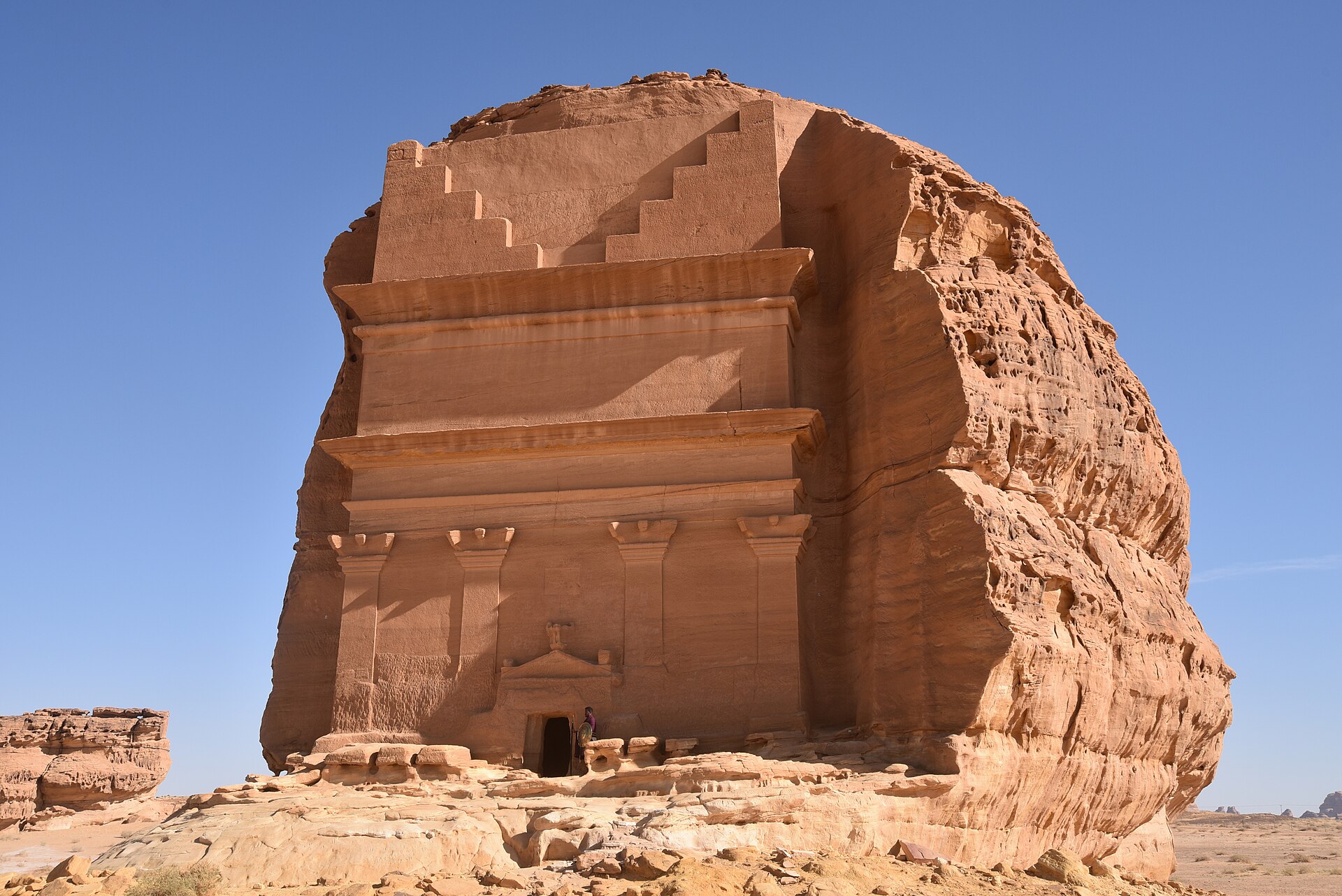
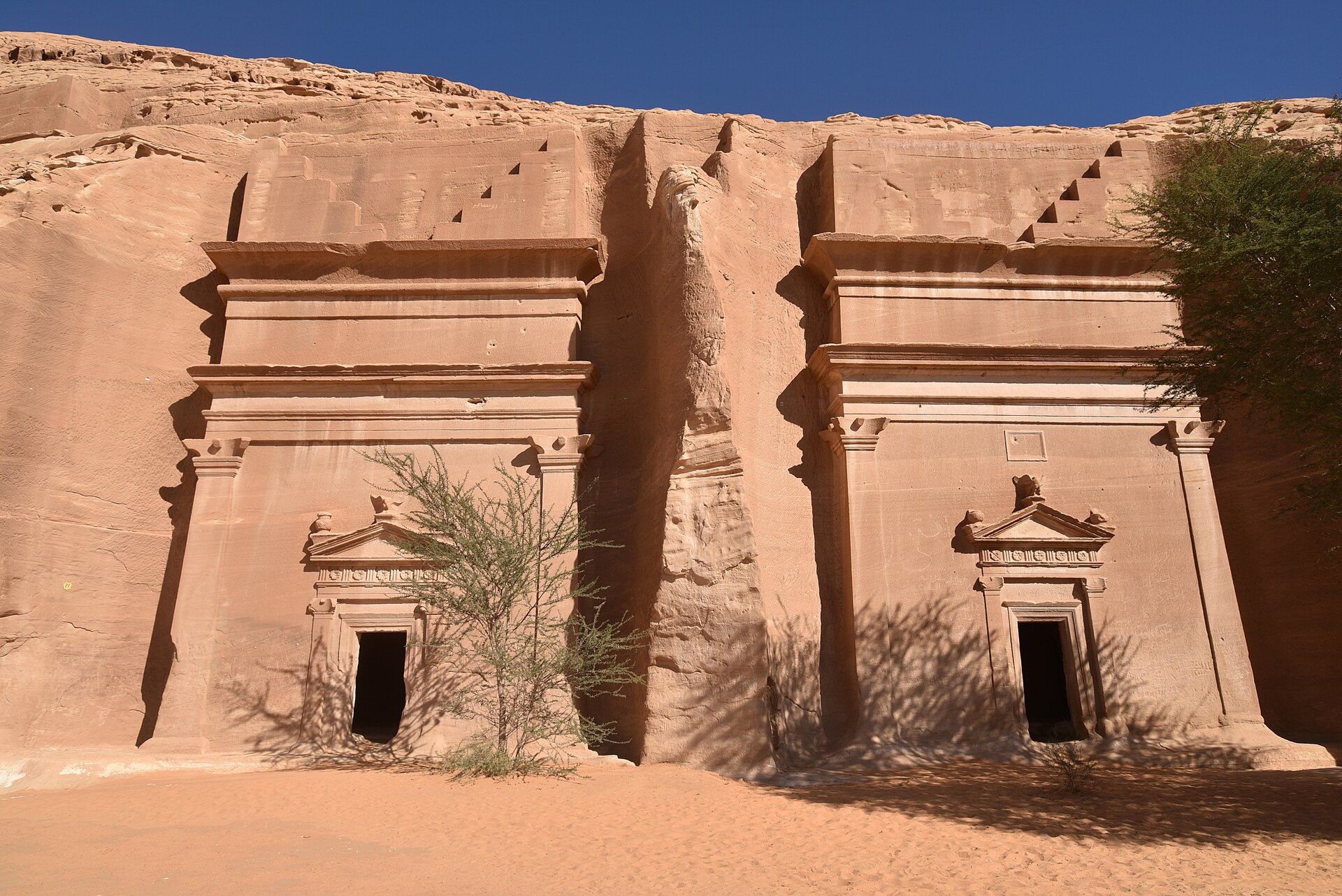
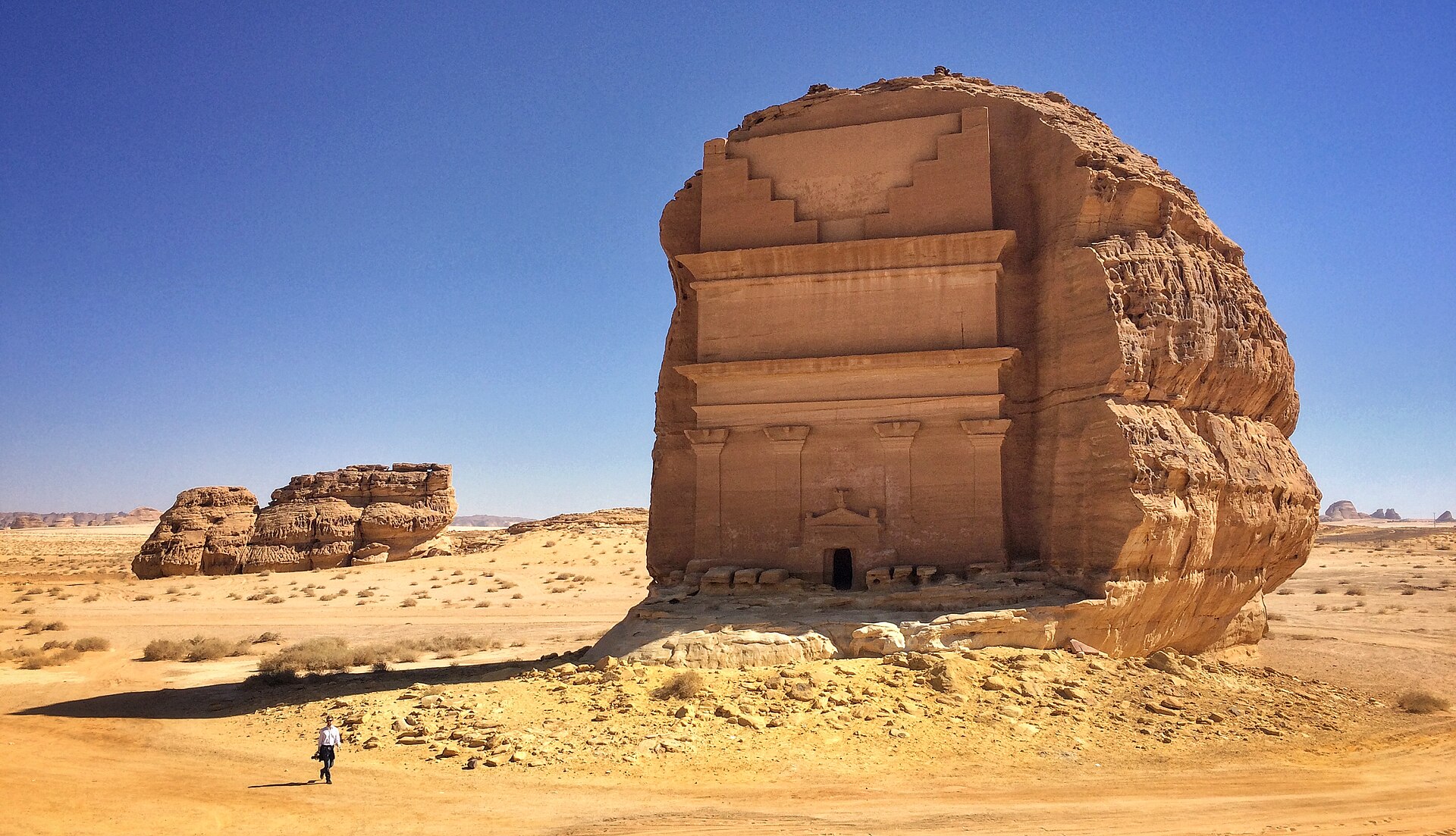
Hegra is the largest conserved Nabataean site south of Petra and the first place in Saudi Arabia inscribed on the UNESCO World Heritage List. More than 110 monumental tombs are cut into sandstone outcrops across the desert floor, most of them with decorated facades, dating from the 1st century BC to the 1st century AD. The site also carries some 50 inscriptions from the pre-Nabataean period and cave drawings.
Access is by guided tour with an AlUla Rawi, moving between tomb clusters by vehicle; numbers each day are capped and the booking is made before you travel. At the visitor centre is the reconstruction of Hinat, a Nabataean woman excavated from one of the tombs in 2008.
Dadan and Jabal Ikmah
Dadan was the capital of the Dadanite and Lihyanite kingdoms more than 2,000 years ago, carved into the cliff face above the oasis. The tombs sit almost 50 metres up the rock, cut as square openings in a line, two of them guarded by carved lions. The kingdoms based here held the oasis and its trade for centuries before the Nabataeans reached Hegra, a short drive north, and excavation is still ongoing.
Then Jabal Ikmah, a desert canyon carrying more than 300 carved inscriptions on both walls — the largest concentration of Dadanitic and Lihyanite writing anywhere, alongside Thamudic, Minaic and Nabataean script. They are dedications, names and offerings rather than proclamations, which is what makes the canyon read more like a noticeboard left open for two and a half thousand years. It is on UNESCO's Memory of the World Register, a documentary-heritage list distinct from the World Heritage List, and there is no ticket.
The Old Town and Elephant Rock
AlUla Old Town shows what happened to the valley after antiquity: mud-brick houses built from the 12th century on the same incense route and on the pilgrim road from Damascus to Makkah, walled with fourteen gates and overlooked by a fort of around the 10th century, 45 metres up. The climb is the quickest way to see the plan, hundreds of clay houses packed along alleys narrow enough to stay shaded.
Late in the day, Elephant Rock, a 52-metre sandstone outcrop standing alone on open sand, weathered into the shape of an elephant with its trunk to the ground. There is no ticket, and seating is cut into the sand around the base for the last of the light.
South to Madinah
You travel from AlUla to Madinah and are taken to your hotel.
Madinah was the southern terminus of the Hejaz Railway, which was begun in 1900, took eight years to build, and ran pilgrims and freight down from Damascus before the line was broken during the First World War. Madinah is one of the two holiest cities in Islam and is open to visitors of any faith, though access to the sacred areas at its centre, including Al Masjid an Nabawi, is for Muslims only. The afternoon covers the historic neighbourhoods, the date farms and the old lava fields on the edge of the city.
Depart Madinah
The morning is free depending on your flight time.
You are collected from the hotel and taken to Madinah's international airport for your departure.
What is included
- Private air-conditioned vehicle with driver throughout
- English-speaking guide on all sightseeing days
- Hotel accommodation with breakfast, five nights
- Transfer from AlUla to Madinah
- Airport arrival and departure transfers
- Hegra guided tour with an AlUla Rawi, booked in advance against the daily cap
- Entrance fees and site permits where they apply
- Bottled water in the vehicle
- A contact number staffed for the length of the trip
What is not
- International flights
- Saudi entry visa and any associated fees
- Travel insurance
- Lunches and dinners unless stated in the day
- Nusuk permits for Al Rawdah Al Sharifah, which are booked by the traveller
The places on this trip
Send us your dates
We come back with the itinerary written out and one clear cost.