Abha is the main town of the Asir highlands, high enough in the mountains to stay cool when the rest of the country is not. The escarpment catches monsoon cloud, so the ground here is green, terraced and farmed - juniper forest rather than desert. That climate is the entire reason Saudis themselves travel here in summer, and summer is the high season, which is the reverse of everywhere else in the country.
The route pairs it with Taif, the mountain town in the Sarawat range east of Makkah known for rose farms and for air that stays mild when the lowland is at its worst, and drops down the escarpment road to Rijal Almaa, the stone village whose interiors are painted in the Al-Qatt Al-Asiri style.
It suits travellers who want mountain roads, terraced valleys and cool evenings rather than desert and ruins. The days are short and there is no early start in the week except by choice.
Day by day
Arrive Abha
Abha has its own airport. You are met and taken to your hotel. The town sits high in the Sarawat mountains and the evenings are cool, so the first afternoon is deliberately left open - the altitude is a change if you have come from the coast.
The escarpment and Al Habala
Around Abha are cable cars down the escarpment and the trails of Asir National Park. The morning is walking a section of the trails, in juniper and over terraced ground.
Later you go on to Al Habala Park, named for the rope ladders once used to reach the village on the cliff below it, and now reached by cable car instead. The park sits at high altitude and the views run out across the valleys. The rest of the afternoon is in the town's markets.
Rijal Almaa
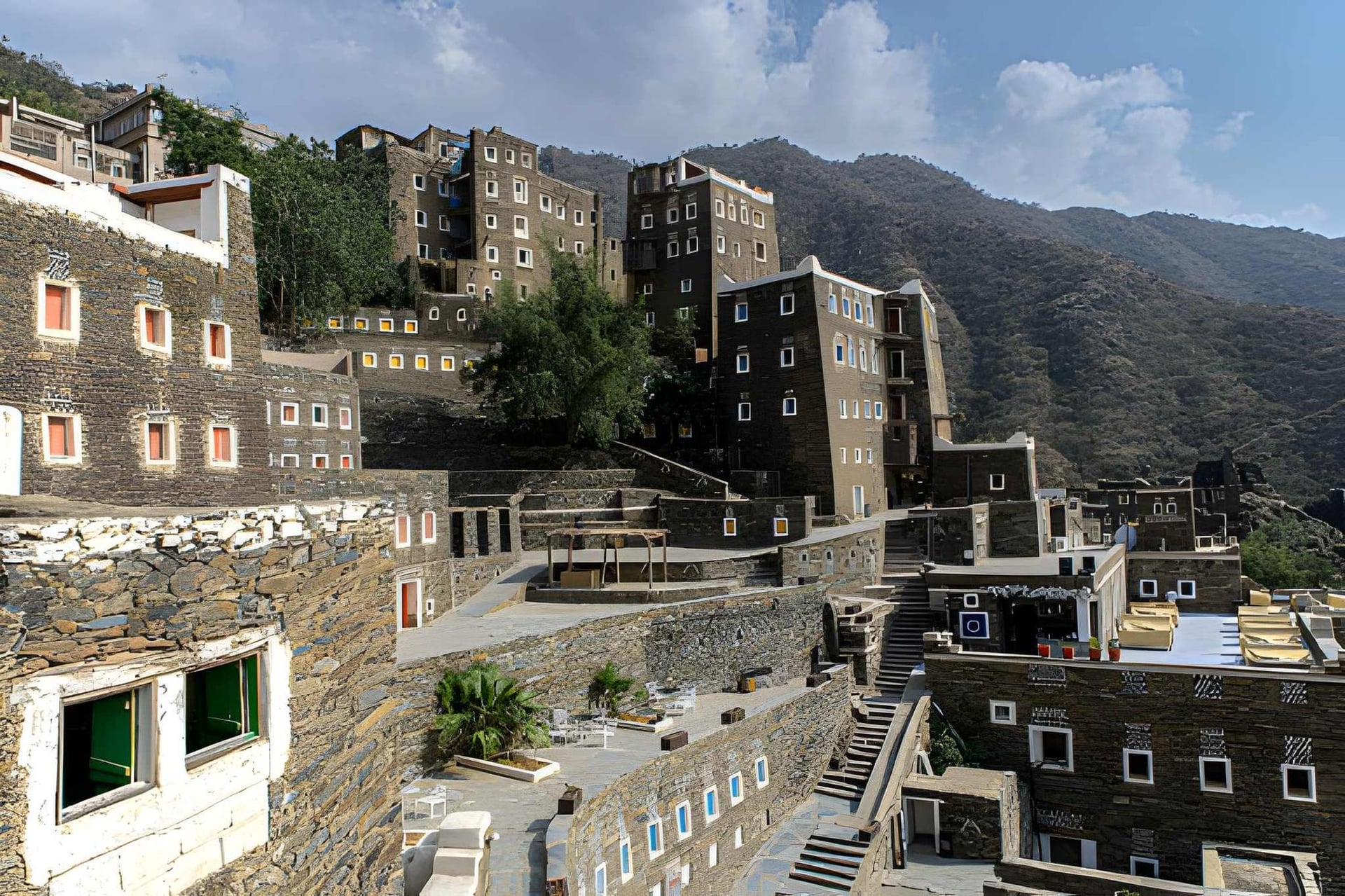
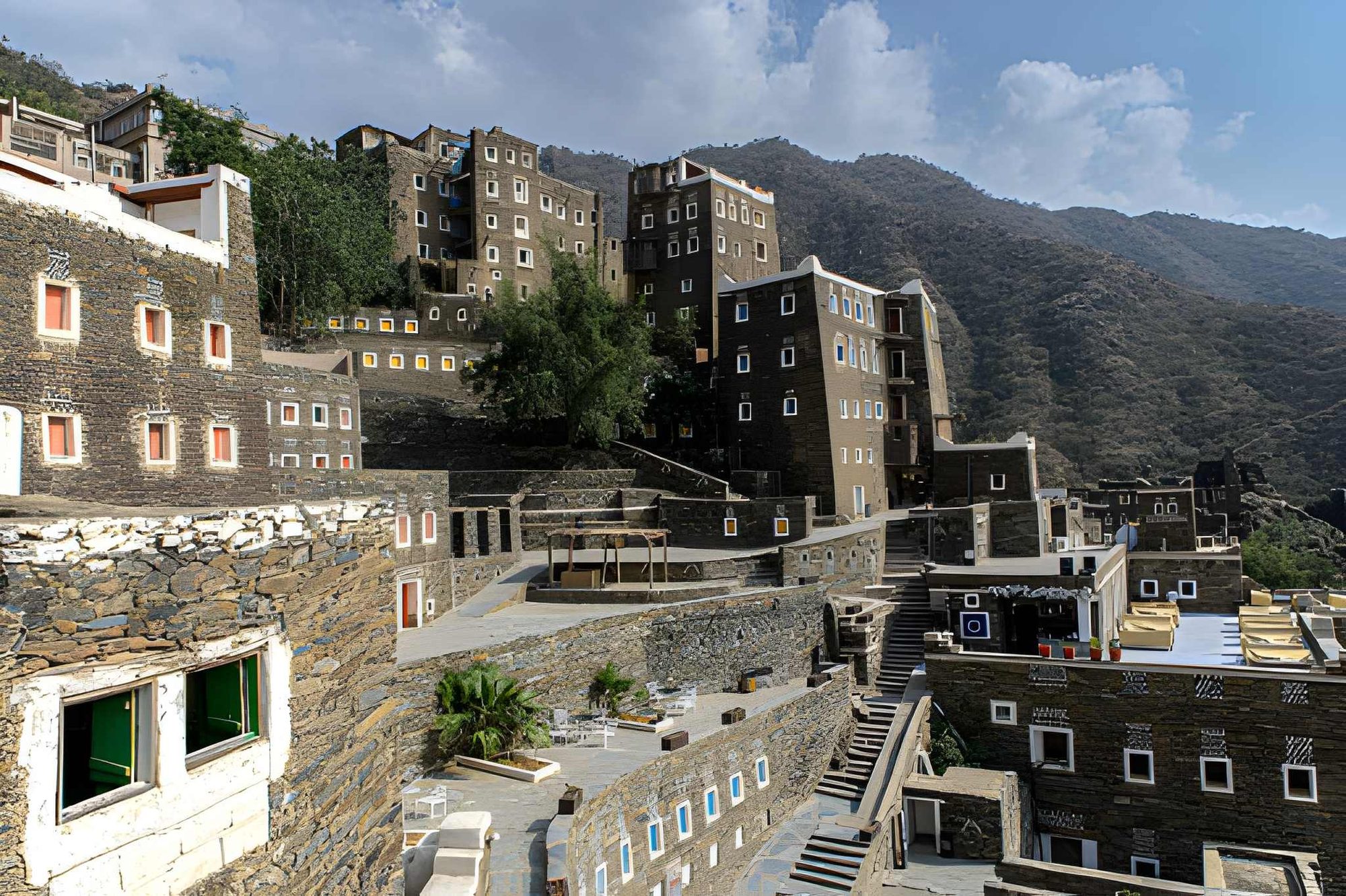
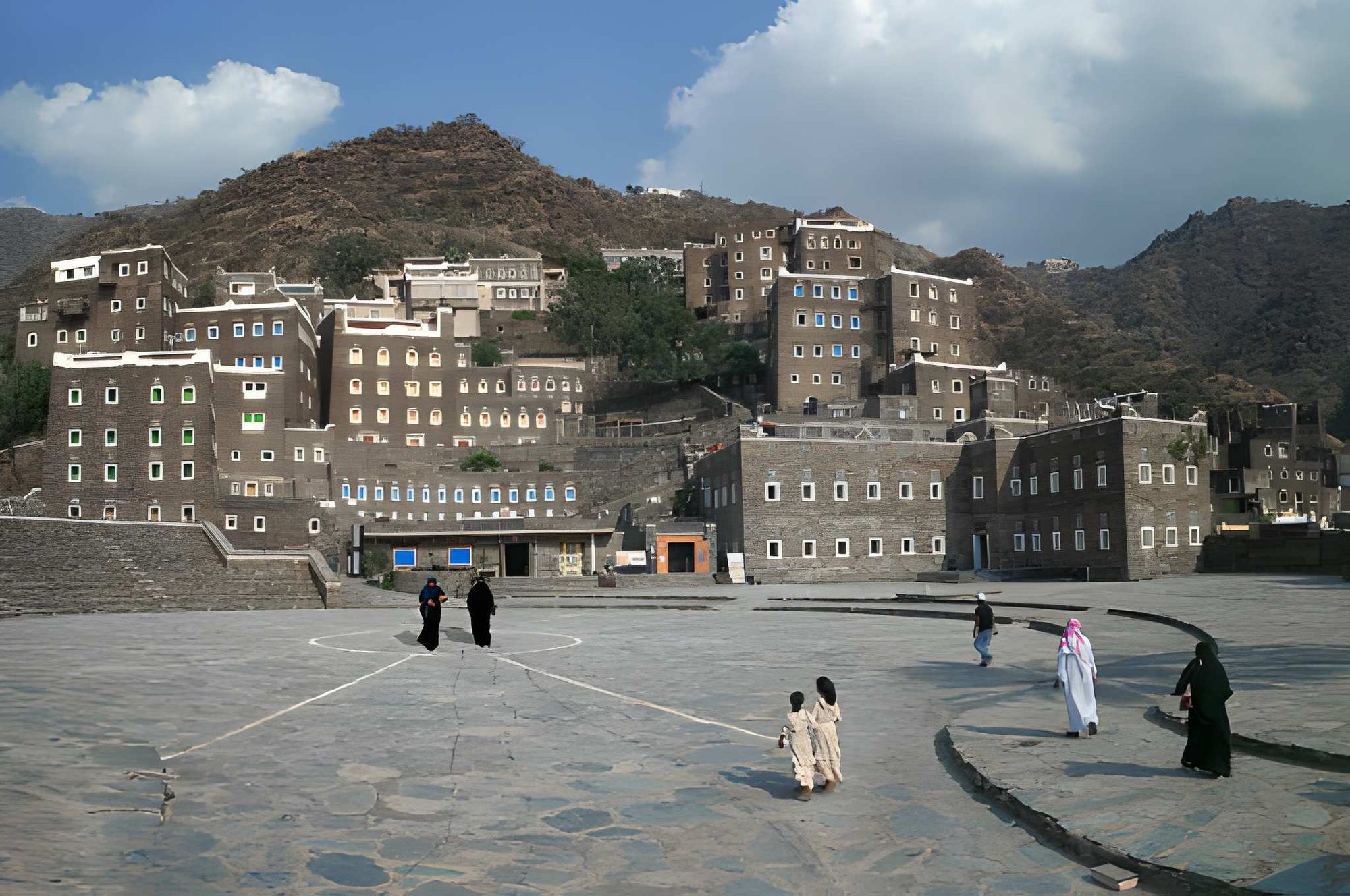
The escarpment road down to Rijal Almaa is a large part of why people make the trip, and it is driven slowly with stops. The village is dark stone laid in courses, several storeys high, with lines of white quartz set into the walls to throw off rain, stacked up the mountainside so tightly that it reads as one building from the valley floor.
Inside, the walls carry Al-Qatt Al-Asiri: geometric bands of bright colour painted by the women of the house directly onto the plaster. UNESCO added the practice to its intangible heritage list in 2017. Several houses are open as a museum and there is a visitor centre at the village.
Al Soudah, then on to Taif
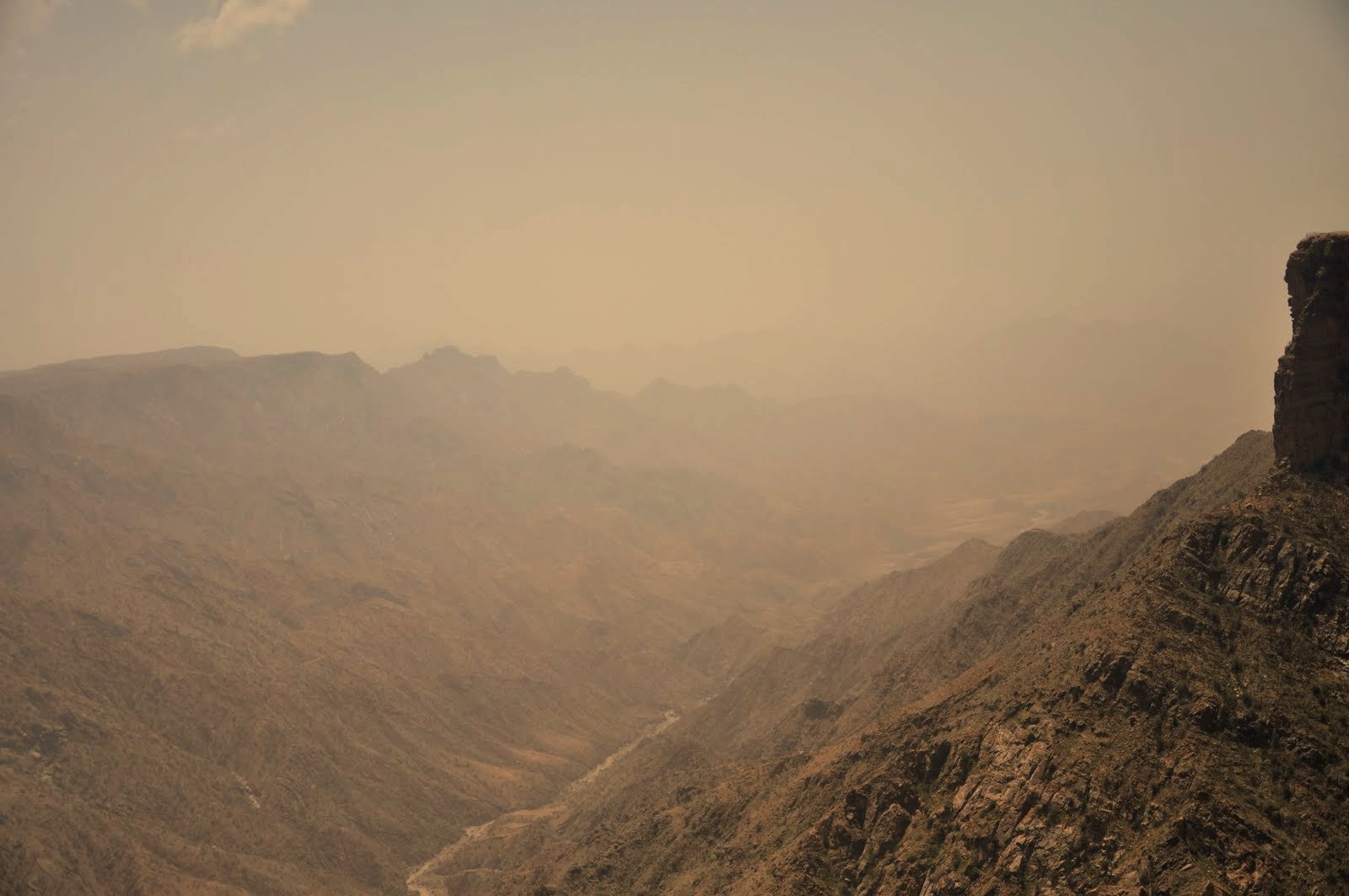
The morning is on the high ground at Al Soudah, the highest peak in Saudi Arabia, among the Sarawat mountains, forest and valleys the region is made of.
In the afternoon you travel on to Taif, arriving in the evening.
Al Hada, Al Shafa and the roses
Al Hada Mountain is part of the Sarawat range, which runs in a curved line of about 87 km between Taif and Makkah. The Al Hada road has been in use for a thousand years - it was Darb Al-Jammalah, the way the camel caravans carrying goods went - and it climbs in switchbacks at around 2,177 metres, with acacia and juniper along it and vendor booths selling rose water, fruit and warm drinks. There is a cable car as well.
Al Shafa rises over 2,500 metres about 30 km from town, cool and green at the top, looking out over the Tihama plains and orchards of pomegranate, grape and fig, with heritage villages and old stone forts on its slopes. There is no ticket for either mountain.
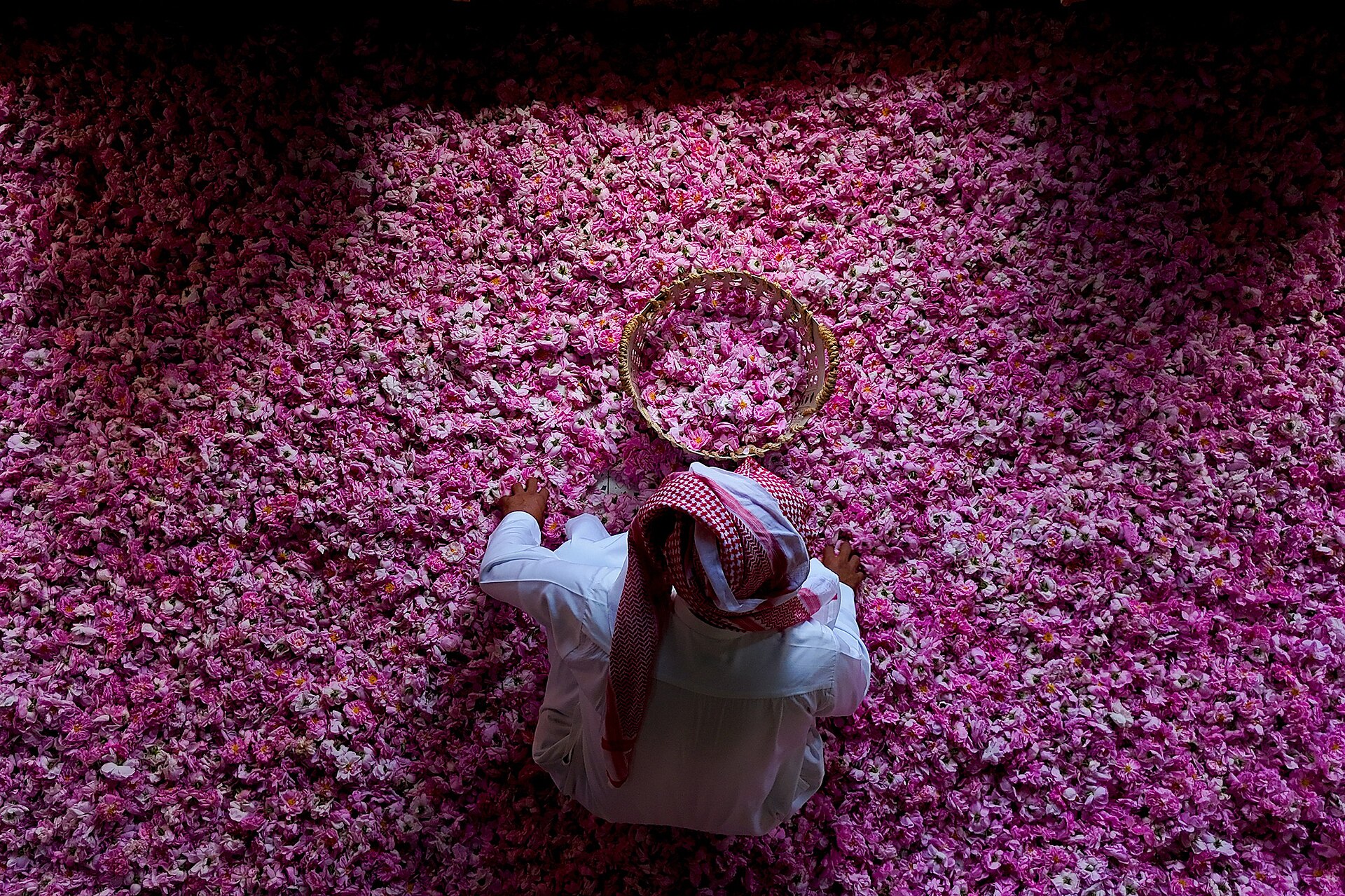
Roses are the town's real industry rather than a tourist story. Growers return to the fields each December and about 55 days later the crop goes to the extraction factories to be distilled into rose water and perfume oil, which is where the afternoon ends. The Taif Rose Festival is held annually at Al Rudaf Park.
Depart Taif
Taif is roughly 90 minutes from Makkah and is reachable from Jeddah, so the last morning is either a slow one in the mountains or an early transfer down for your flight out.
If you would rather add the Al Wahbah crater - the largest and deepest volcanic crater in the country, 3,000 metres across, with a salt dome at the bottom of it - note that it sits about 250 km from Taif and is a long day trip rather than a short outing, so it needs an extra night.
What is included
- Private air-conditioned vehicle with driver throughout
- English-speaking guide on the Rijal Almaa and Taif days
- Five nights' hotel accommodation
- Daily breakfast
- All transport between Abha and Taif
- Cable car tickets where the itinerary uses them
- Airport transfers on arrival and departure
- A local contact reachable for the length of the trip
What is not
- International and domestic flights
- The Saudi tourist eVisa, which you apply for yourself through the official portal
- Travel insurance
- Lunches and dinners
- The Al Wahbah crater extension and the extra night it needs
The places on this trip
Send us your dates
We come back with the itinerary written out and one clear cost.